

If you’re looking for a festive Easter dessert that’s both adorable and delicious, Mini Egg Easter Cookie Cups are the perfect choice. These bite-sized treats combine a soft chocolate chip cookie base with a rich chocolate topping and colorful pastel mini eggs.
The result is a dessert that looks beautiful on any Easter table and tastes amazing. Each cookie cup has a soft, chewy center, a smooth chocolate layer, and crunchy candy eggs that bring a pop of color and texture.
Mini Egg Easter Cookie Cups are ideal for:
- Easter brunch
- Spring parties
- School celebrations
- Dessert trays
- Holiday gift boxes
Because they’re made in a mini muffin pan, they’re easy to portion and perfect for serving a crowd.
In this guide, you’ll learn everything you need to know about making the perfect Mini Egg Easter Cookie Cups—from ingredients and baking techniques to decoration tips and storage advice.
Mini Egg Easter Cookie Cups
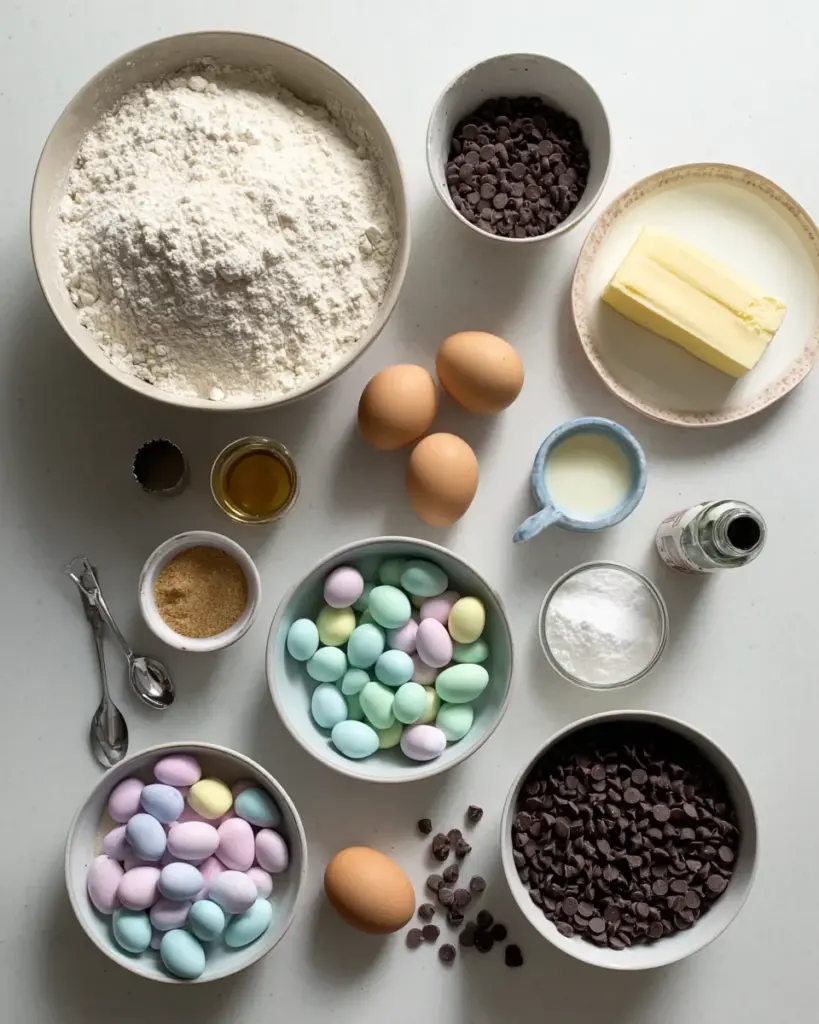
Ingredients
For the Cookie Base
| Ingredient | Amount | Purpose |
|---|---|---|
| Unsalted butter, softened | 1 cup | Creates rich flavor and soft texture |
| Brown sugar, packed | ¾ cup | Adds moisture and chewiness |
| Granulated sugar | ½ cup | Sweetness and structure |
| Eggs (room temperature) | 2 large | Binds ingredients together |
| Vanilla extract | 1 teaspoon | Adds flavor |
| All-purpose flour | 2 ¼ cups | Forms the dough structure |
| Baking soda | 1 teaspoon | Helps cookies rise |
| Salt | ½ teaspoon | Enhances flavor |
| Semi-sweet chocolate chips | ½ cup | Adds chocolate pockets |
For the Chocolate Topping
| Ingredient | Amount |
|---|---|
| Semi-sweet chocolate chips | 1 ½ cups |
| Pastel mini eggs (lightly crushed) | 1 cup |
The mini eggs add color, crunch, and an Easter theme to the cookie cups.
Equipment Needed
To prepare Mini Egg Easter Cookie Cups, you’ll need a few basic baking tools:
- Mini muffin pan
- 24 mini muffin paper liners
- Mixing bowls
- Hand mixer or stand mixer
- Rubber spatula
- Microwave-safe bowl
- Spoon or small cookie scoop
Using paper liners helps the cookie cups hold their shape and release easily after baking.
Step-by-Step Instructions
1. Prepare the Oven and Pan
Preheat your oven to 350°F (175°C).
Line each cavity of your mini muffin pan with mini paper liners. This prevents sticking and makes the cookie cups easy to remove once baked.
Set the prepared pan aside while you make the dough.
2. Make the Cookie Dough
In a large mixing bowl, combine:
- Softened butter
- Brown sugar
- Granulated sugar
Using a hand mixer or stand mixer, beat the mixture for about 3 minutes until it becomes light, fluffy, and creamy.
This step is very important because creaming the butter and sugar incorporates air into the dough, which helps produce soft cookies.
Next, add the eggs one at a time, mixing well after each addition.
Then stir in the vanilla extract.
3. Combine the Dry Ingredients
In a separate bowl, whisk together:
- All-purpose flour
- Baking soda
- Salt
Mixing these ingredients separately ensures the baking soda is evenly distributed throughout the dough.
Gradually add the dry ingredients into the wet ingredients while mixing on low speed.
Mix just until the dough forms. Avoid overmixing because it can make the cookie cups dense instead of soft.
Finally, fold in the semi-sweet chocolate chips using a spatula.
4. Fill the Mini Muffin Liners
Using a spoon or cookie scoop, place about 1 tablespoon of cookie dough into each mini muffin liner.
Each liner should be filled about three-quarters full.
The dough will spread slightly as it bakes, so it doesn’t need to be pressed down.
5. Bake the Cookie Cups
Place the muffin pan in the oven and bake for 10–12 minutes.
You’ll know the cookies are ready when:
- The edges turn lightly golden
- The centers remain slightly soft
Slight underbaking is recommended because the cookies will continue to set while cooling.
Remove the pan from the oven and allow the cookie cups to cool for 5 minutes before adding the topping.
6. Melt the Chocolate
Place 1 ½ cups of semi-sweet chocolate chips in a microwave-safe bowl.
Microwave in 20-second intervals, stirring after each interval.
Continue heating and stirring until the chocolate becomes completely smooth and glossy.
Short heating intervals prevent the chocolate from burning or becoming grainy.
7. Add the Chocolate Layer
Spoon about 1 tablespoon of melted chocolate onto each cookie cup.
Because the cookies are still slightly warm, the chocolate will spread smoothly across the top.
This layer acts like a rich frosting and helps hold the mini eggs in place.
8. Decorate with Mini Eggs
Immediately sprinkle the lightly crushed pastel mini eggs over the melted chocolate.
Press the candy pieces gently so they stick.
Leave some larger pieces visible to create a colorful, textured topping.
This decoration gives the cookie cups their signature Easter appearance.
9. Let the Chocolate Set
Allow the cookie cups to sit at room temperature for 20–30 minutes.
During this time, the chocolate topping will firm up and hold the mini eggs securely in place.
Once the chocolate is set, the cookie cups are ready to serve.
Tips for Perfect Cookie Cups
Use Room Temperature Ingredients
Room temperature eggs and butter mix more evenly into the dough.
Do Not Overmix the Dough
Overmixing develops gluten, which can make cookies tough.
Slightly Underbake
Soft centers create the best chewy cookie texture.
Use Quality Chocolate
Good chocolate chips melt smoothly and taste better.
Fun Decorating Ideas
Mini Egg Easter Cookie Cups can be customized with fun decorations.
Easter Nest Cookie Cups
Add:
- Toasted coconut
- Candy eggs
This creates a bird nest appearance.
Bunny Cookie Cups
Decorate with:
- Mini marshmallows for ears
- Candy eyes
- Pink candy for the nose
Kids love these adorable bunny designs.
Spring Sprinkle Cookie Cups
Add pastel sprinkles to the melted chocolate before placing the eggs.

How to Store Mini Egg Easter Cookie Cups
Proper storage keeps them fresh and delicious.
Room Temperature Storage
Store in an airtight container for up to 4 days.
Refrigeration
If your home is warm, refrigerate them for up to 1 week.
Freezing
These cookie cups freeze well.
Steps:
Advanced Baking Tips for Perfect Mini Egg Easter Cookie Cups
While Mini Egg Easter Cookie Cups are fairly simple to make, a few professional baking techniques can elevate them from good to bakery-quality.
1. Cream the Butter and Sugar Properly
One of the most important steps in cookie baking is properly creaming the butter and sugar. When you beat them together for about three minutes, tiny air pockets form in the mixture. These pockets expand during baking and help create a soft, tender cookie texture.
To get the best results:
- Use softened butter, not melted butter
- Beat until the mixture becomes light and fluffy
- Scrape the sides of the bowl to ensure everything mixes evenly
Skipping this step or rushing through it can result in cookie cups that are dense instead of soft.
2. Measure Flour Accurately
Too much flour is one of the most common reasons cookies turn out dry.
The best way to measure flour is:
- Fluff the flour in the container with a spoon.
- Spoon it into the measuring cup.
- Level it with a knife.
Avoid scooping directly from the bag because that packs the flour and can add extra weight.
3. Use a Cookie Scoop for Even Baking
Using a small cookie scoop helps ensure that each cookie cup is the same size. This allows them to bake evenly.
If some cookie cups contain more dough than others, you may notice that:
- Larger ones remain underbaked
- Smaller ones become too crispy
Consistency is key for perfect cookie cups.
4. Press the Centers (Optional)
Sometimes cookie cups rise slightly in the center during baking.
If you prefer a deeper chocolate topping layer, gently press the center with the back of a spoon while the cookies are still warm. This creates a small indentation that holds the melted chocolate nicely.
Frequently Asked Questions
1. Can I make Mini Egg Easter Cookie Cups ahead of time?
Yes. They can be made 1–2 days in advance and stored in an airtight container.
2. Can I use different candy instead of mini eggs?
Absolutely. You can use:
- M&M’s
- Chocolate eggs
- Caramel candies
3. Why are my cookie cups hard?
This usually happens if they are overbaked. Try baking for a slightly shorter time.
4. Can I use milk chocolate instead of semi-sweet?
Yes. Milk chocolate creates a sweeter topping.
5. Do I need paper liners?
While optional, liners make the cookie cups much easier to remove from the pan.
6. Can kids help make these cookies?
Definitely. Kids enjoy:
- Crushing mini eggs
- Adding chocolate
- Decorating the cookie cups
Conclusion
Mini Egg Easter Cookie Cups are a simple yet impressive dessert that perfectly captures the spirit of Easter. With their soft cookie base, smooth chocolate topping, and colorful candy eggs, they bring both flavor and festive charm to the holiday table.
Because they’re easy to prepare and fun to decorate, they’re ideal for family baking sessions, holiday parties, and dessert trays.
Whether you’re hosting an Easter brunch or looking for a sweet spring treat, these cookie cups are guaranteed to be a crowd favorite.
So grab your muffin pan, mix up the dough, and enjoy baking these delightful Mini Egg Easter Cookie Cups.
Print
Mini Egg Easter Cookie Cups
Description
Learn how to make Mini Egg Easter Cookie Cups, soft chocolate chip cookie cups topped with melted chocolate and pastel mini eggs. A perfect Easter dessert for parties and family celebrations.
Ingredients
For the Cookie Base
1 cup unsalted butter, softened
¾ cup brown sugar, packed
½ cup granulated sugar
2 large eggs, room temperature
1 teaspoon vanilla extract
2 ¼ cups all-purpose flour
1 teaspoon baking soda
½ teaspoon salt
½ cup semi-sweet chocolate chips
For the Chocolate Topping
1 ½ cups semi-sweet chocolate chips
1 cup pastel mini eggs, lightly crushed
Mini muffin pan
24 mini muffin paper liners
Mixing bowls
Hand mixer or stand mixer
Rubber spatula
Microwave-safe bowl for melting chocolate
Spoon or small cookie scoop
Instructions
1. Prepare the Oven and Pan
Preheat your oven to 350°F (175°C). Place mini paper liners into a mini muffin pan so each cavity is lined. Using liners helps the cookie cups hold their shape and makes them easier to remove after baking.
2. Make the Cookie Dough
In a large mixing bowl, add the softened butter, brown sugar, and granulated sugar. Beat the mixture with a hand mixer or stand mixer for about 3 minutes, until it becomes light, fluffy, and creamy. This step is important because it incorporates air into the dough and creates a soft cookie texture.
Add the eggs one at a time, mixing well after each addition. Stir in the vanilla extract.
In a separate bowl, whisk together the flour, baking soda, and salt until evenly combined. Gradually add the dry ingredients into the wet ingredients, mixing just until the dough forms. Avoid overmixing, as that can make the cookie cups dense instead of tender.
Using a spatula, fold in the chocolate chips.
3. Fill the Mini Muffin Liners
Scoop about 1 tablespoon of cookie dough into each mini muffin liner. The dough will spread slightly while baking, so it doesn’t need to be pressed flat.
Each liner should be about ¾ full to allow the cookies to rise and create a soft center.
4. Bake the Cookie Cups
Place the muffin pan in the preheated oven and bake for 10–12 minutes.
The edges should turn lightly golden while the centers remain soft. Slightly underbaking is recommended because the cookies will continue to set as they cool and will stay soft and chewy.
Remove the pan from the oven and allow the cookie cups to cool in the pan for about 5 minutes.
5. Melt the Chocolate
Place the semi-sweet chocolate chips in a microwave-safe bowl.
Microwave in 20-second intervals, stirring after each interval until the chocolate is completely melted and smooth. Heating in short bursts prevents the chocolate from burning or becoming grainy.
6. Add the Chocolate Layer
Spoon about 1 tablespoon of melted chocolate onto the top of each warm cookie cup. The chocolate should spread slightly across the surface of the cookie.
Because the cookies are still a little warm, the chocolate will settle smoothly into an even layer.
7. Decorate with Mini Eggs
Immediately sprinkle the lightly crushed pastel mini eggs over the melted chocolate.
Press the candy pieces gently into the chocolate so they stay in place. Try to keep some larger chunks visible for a colorful, textured topping.
8. Let the Chocolate Set
Allow the cookie cups to sit at room temperature for 20–30 minutes so the chocolate layer can firm up.
Once set, the cookie cups are ready to serve.
Notes
Do not overbake the cookie base.
The cookies should look slightly soft in the center when removed from the oven. Overbaking will make the base firm instead of soft and chewy.
Use mini muffin liners.
Paper liners help maintain the shape of the cookie cups and make them easier to remove without breaking.
Crush the mini eggs lightly.
Place them in a sealed plastic bag and tap them gently with a rolling pin. Aim for a mix of small pieces and larger chunks for a better appearance.
Add toppings while the chocolate is warm.
If the chocolate cools before adding the candy, the mini eggs may not stick properly.
Room temperature eggs mix better.
Using room temperature eggs helps the dough blend smoothly and evenly.