
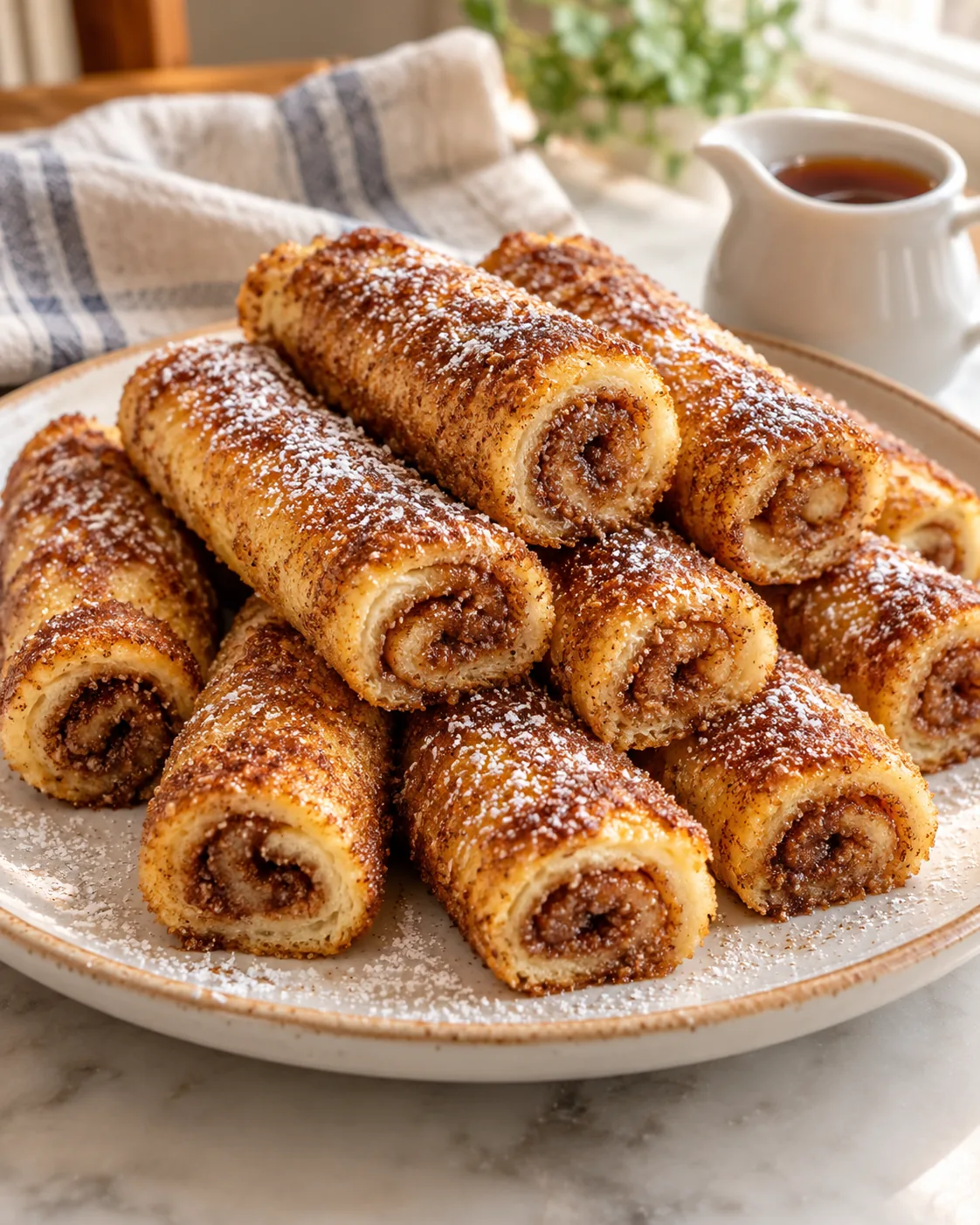
Cinnamon French Toast Roll-Ups take the warm, buttery flavor of classic French toast and wrap it around a simple cinnamon-brown-sugar filling. Each slice of sandwich bread is trimmed, flattened, spread, and rolled before a quick dip in egg custard and a turn in the skillet. The result is a handheld breakfast with crisp golden edges, a soft center, and a cinnamon spiral in every bite.
The recipe uses familiar ingredients and requires no oven, yeast, or specialty pan. It is festive enough for a weekend brunch yet practical enough for a family breakfast. A light cinnamon-sugar coating adds sparkle and texture, while powdered sugar or maple syrup can be offered at the table. Because the sweetness is already built into the filling, the finished roll-ups remain enjoyable even without a heavy topping.
Why You’ll Love These French Toast Roll-Ups
These roll-ups are fun to eat, but their appeal is not only visual. Flattening the bread creates a thin, flexible wrapper that cooks quickly and develops more golden surface area than a standard slice of French toast. The cinnamon butter filling melts into the bread instead of spilling from a thick pocket, and the tight cylinder gives the center a tender, almost pastry-like texture.
The recipe also offers useful control. You can assemble all 10 to 12 rolls before heating the skillet, which keeps the cooking stage calm and consistent. Each roll receives only a quick coating of egg and milk, preventing it from becoming soggy. Cooking in small batches leaves room to turn every side, so the exterior browns evenly instead of remaining pale in spots.
For entertaining, the small shape fits naturally on a brunch platter and can be served without a knife. For children, the rolls are easier to hold than a syrup-soaked slice of French toast. Adults appreciate that they can be made with standard pantry ingredients and adjusted with simple garnishes rather than a complicated filling.
Ingredients for Cinnamon French Toast Roll-Ups
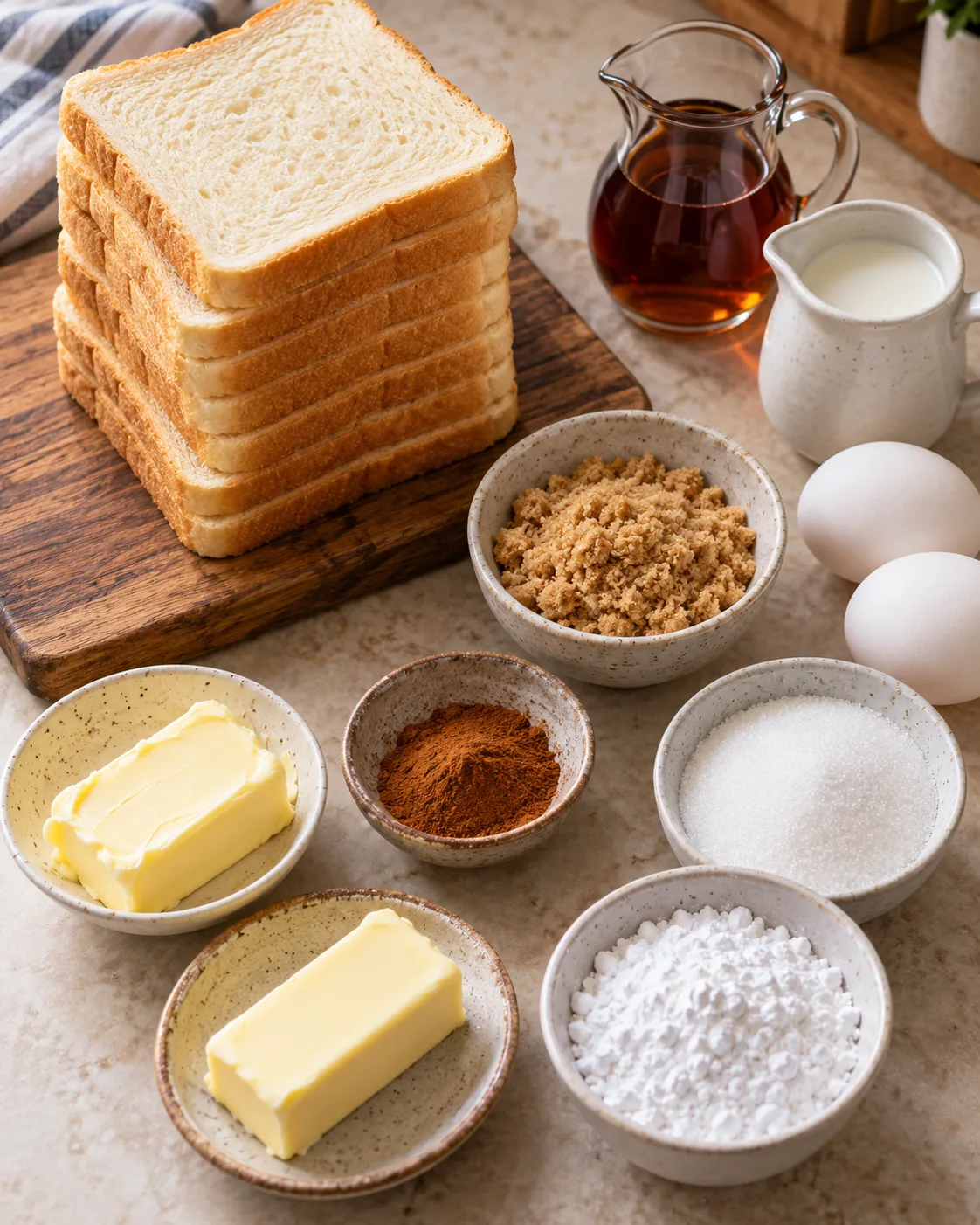
- 10–12 slices soft white sandwich bread
- ½ stick (4 tablespoons) unsalted butter, softened
- ¼ cup packed light brown sugar
- 3 teaspoons ground cinnamon, divided
- 2 large eggs
- 3 tablespoons milk
- 2 tablespoons granulated sugar
- Powdered sugar, optional
- 2–3 tablespoons unsalted butter, for cooking
- Maple syrup, optional
The Best Bread to Use
Soft, fresh white sandwich bread is the most dependable choice because it flattens without cracking and rolls into a tight cylinder. Standard-size square slices are easier to cook evenly than oversized bakery slices. Bread that is very dry may split along the edges, while very thick artisanal bread resists rolling. If your loaf is especially fresh and delicate, use light pressure with the rolling pin so the bread becomes thin without tearing.
Removing the crust is important. The crust does not compress as easily as the center and can cause the roll to spring open in the skillet. Save the trimmed pieces for breadcrumbs, breakfast strata, or croutons rather than discarding them. Once flattened, each slice should be about one-eighth inch thick and flexible enough to roll without force.
Cinnamon Butter Filling
Softened butter, brown sugar, and one teaspoon of cinnamon form the filling. The butter should be pliable but not melted. Melted butter soaks through the bread and makes the rolls difficult to handle, while cold butter tears the flattened slices. Light brown sugar dissolves into the butter as it cooks and brings a gentle molasses flavor. Spread a thin layer all the way across the bread, leaving only a narrow edge so the filling stays balanced.
Egg Custard and Cinnamon Sugar
Two eggs and three tablespoons of milk make a light custard that coats the rolls without saturating them. Whisk until no streaks of egg white remain. The final cinnamon-sugar mixture uses granulated sugar and another teaspoon of cinnamon; it clings best while the cooked rolls are still warm. The remaining cinnamon reinforces the flavor without making the coating dusty or bitter.
How to Make Cinnamon French Toast Roll-Ups
1. Mix the Filling and Coatings
Combine the four tablespoons of softened butter, brown sugar, and one teaspoon cinnamon in a small bowl. Mash and stir until the mixture is smooth and evenly colored. In a shallow dish, whisk the eggs with the milk. In a second shallow dish, stir the granulated sugar with one teaspoon cinnamon for the final coating. Arrange the three bowls in order near your work surface.
2. Trim and Flatten the Bread
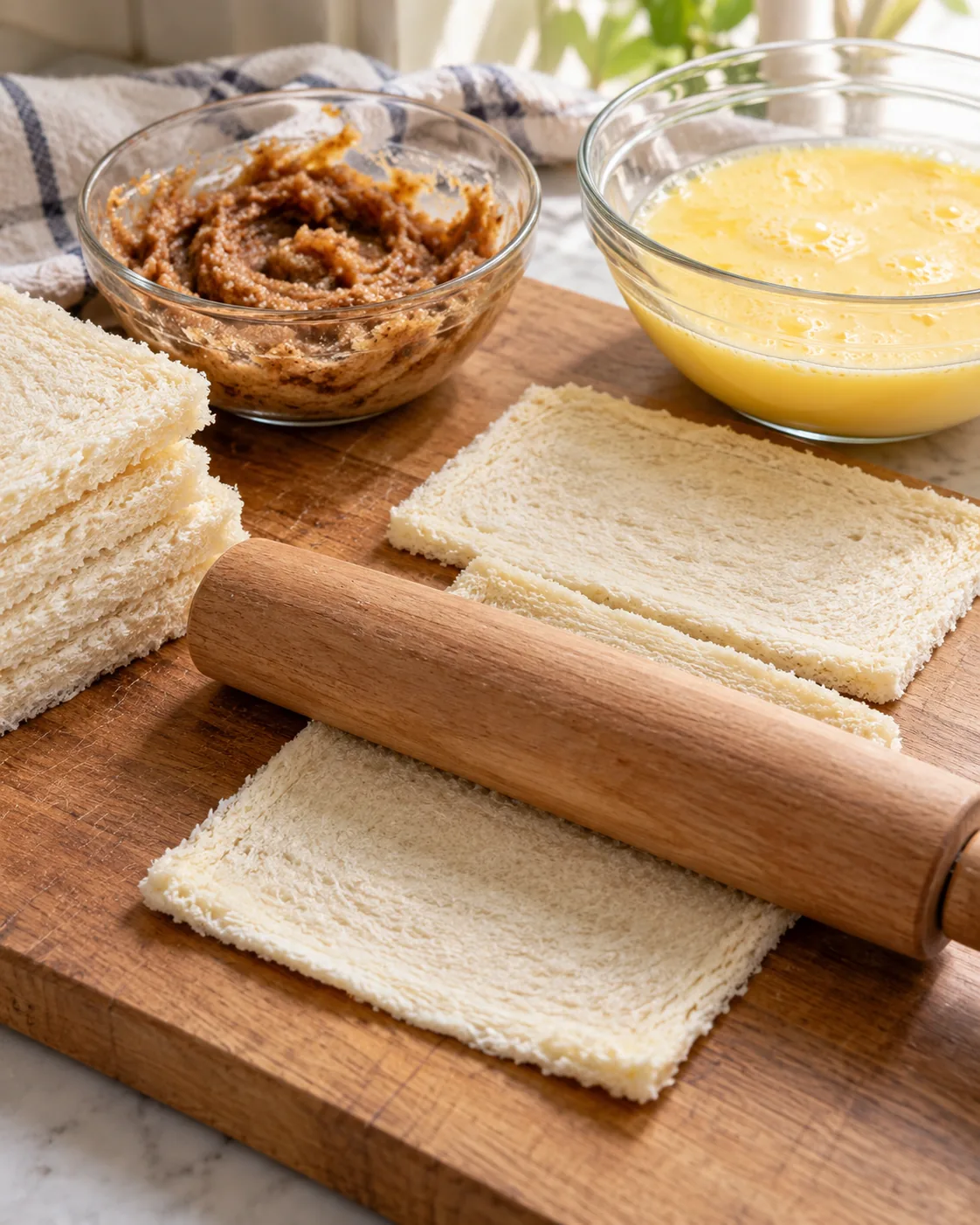
Use a serrated knife to remove the crusts without compressing the bread. Place one slice on a clean board and roll from the center toward the edges. Turn the slice and repeat until it is uniformly thin. Uneven bread creates thick spots that resist rolling and thin spots that tear, so take a few extra seconds to flatten each piece consistently.
3. Fill and Roll Tightly
Spread a thin, even layer of cinnamon butter across a flattened slice. Too much filling can leak and scorch in the pan, so use enough to cover without creating a mound. Starting at one edge, roll the bread into a compact cylinder. Place it seam-side down while you finish the remaining slices. Gentle pressure at the seam helps the softened bread hold its shape.
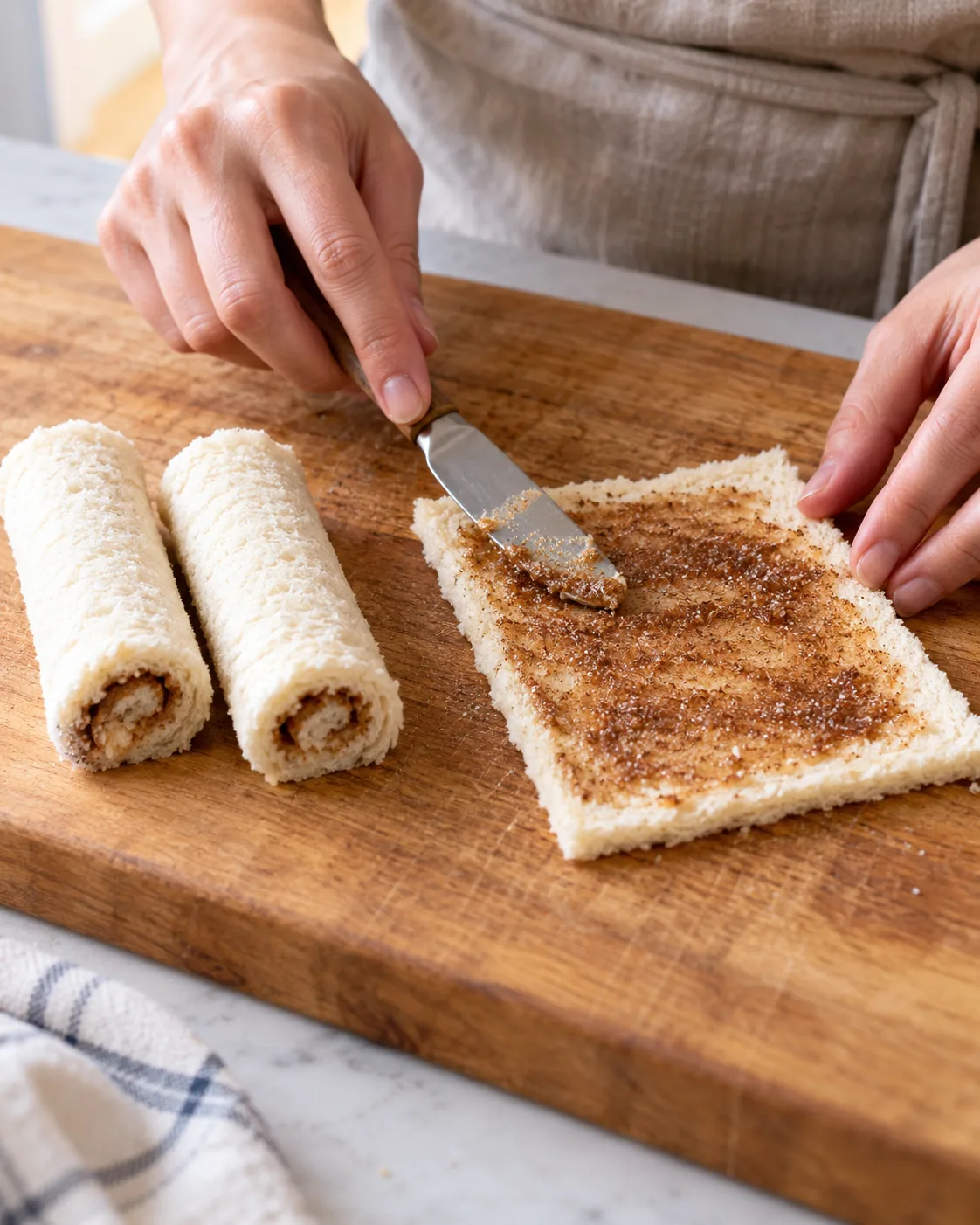
Complete all the rolls before heating the skillet. This prevents the first batch from waiting in custard while later pieces are assembled. If a roll tries to open, set it seam-side down and let the weight of the cylinder hold it closed. Toothpicks are unnecessary and can make dipping and turning awkward.
4. Dip Briefly
Melt about one tablespoon of the cooking butter in a large skillet over medium heat. Working with only as many rolls as fit without crowding, dip each cylinder quickly in the egg mixture and turn to coat every side. Lift it immediately and allow the excess to drip back into the dish. A brief dip moistens the surface; soaking makes the bread fragile and prevents crisp browning.
5. Cook Until Golden
Place the dipped rolls seam-side down in the buttered skillet. Cook for roughly two minutes, then rotate with tongs. Continue turning until the broad sides and narrow edges are golden and the egg coating is fully cooked. Moderate heat is better than high heat: the exterior needs time to set while the cinnamon filling warms and melts.
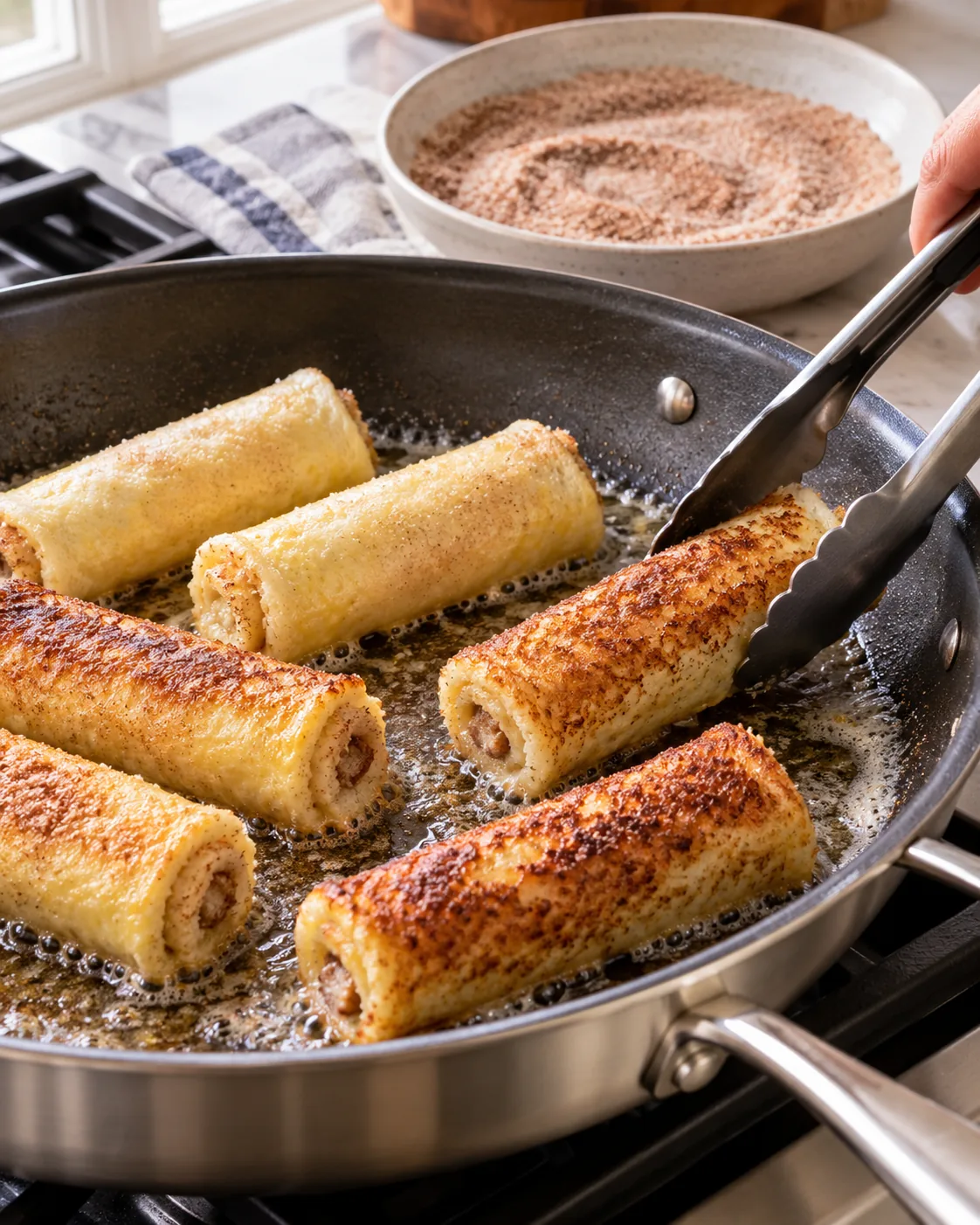
Add a little more butter between batches as needed, wiping out any dark sugar residue before it burns. Transfer cooked rolls directly to the cinnamon sugar and roll them gently while warm. Place them on a rack or platter rather than stacking them immediately, which helps preserve the crisp surface.
Expert Tips for Consistent Results
- Soften, do not melt, the filling butter. A spreadable consistency keeps the filling inside the bread.
- Flatten every slice evenly. Uniform thickness makes the rolls cook at the same rate.
- Keep the filling thin. A heavy layer squeezes out, caramelizes on the skillet, and can taste burnt.
- Dip quickly. These thin rolls absorb custard faster than a thick slice of French toast.
- Start seam-side down. The egg coating sets the seam and helps the cylinder remain closed.
- Control the heat. If the butter browns before the egg sets, lower the burner and wipe the pan between batches.
Variations and Substitutions
For a richer cinnamon flavor, add a tiny pinch of nutmeg to the filling. Orange zest provides a bright holiday note, while a drop of vanilla can be whisked into the egg mixture. Keep additions dry and finely textured so the bread remains easy to roll. Chopped nuts are best served on top rather than inside, where sharp pieces can tear the thin bread.
Whole-wheat sandwich bread can work if it is soft and flexible, though the flavor will be nuttier and the rolls may be slightly firmer. A sturdy gluten-free sandwich loaf may also work, but brands vary widely; choose slices that bend without crumbling. Dairy-free butter and unsweetened plant milk can replace their dairy counterparts in equal amounts, provided the butter is suitable for skillet cooking.
If you want fruit flavor, serve sliced strawberries or blueberries beside the roll-ups rather than stuffing juicy fruit inside. Fresh fruit releases liquid as it heats and can make the seam open. A very thin smear of smooth fruit preserves is possible, but reduce the cinnamon butter slightly and expect a softer center.
Serving Suggestions
Serve the roll-ups warm, either whole or cut diagonally to display the cinnamon spiral. A light powdered-sugar dusting is elegant for brunch, while a small pitcher of warm maple syrup lets each person control the sweetness. Yogurt and fresh fruit add contrast, and crisp breakfast sausage or scrambled eggs turn the plate into a more substantial meal.
For a brunch buffet, arrange the rolls in a single layer on a warmed platter and provide syrup in a bowl deep enough for dipping. Avoid pouring syrup over the entire platter in advance because it softens the golden exterior. Small napkins or appetizer forks make them easy to serve without creating a sticky table.
For another bite-size breakfast idea, try the Cinnamon Roll French Toast Bites, which use refrigerated cinnamon-roll dough rather than sandwich bread. If you are planning a larger make-ahead brunch, the Sausage, Egg and Cream Cheese Hashbrown Casserole adds a savory option.
Make-Ahead Guidance
The cinnamon butter and cinnamon sugar can be mixed one or two days ahead and refrigerated in separate covered containers. Bring the filling to room temperature before spreading so it does not tear the bread. The bread can be trimmed several hours in advance if wrapped very tightly to prevent drying.
You may assemble the rolls a few hours before cooking. Arrange them seam-side down in a covered container and refrigerate. Do not dip them in egg custard until the skillet is ready, because prolonged soaking ruins the texture. Let chilled rolls sit at room temperature for about 10 minutes while you whisk the custard and heat the pan.
Storage and Reheating
Cool leftovers promptly and refrigerate them in an airtight container for up to three days. Separate layers with parchment so the cinnamon coating does not stick. Reheat in a 350°F oven or toaster oven for about six to eight minutes, turning once, until the center is hot. An air fryer at a moderate temperature also restores the exterior quickly; check early because the sugar can darken.
A microwave is convenient but produces a softer result. Heat one or two rolls in short intervals and let them stand briefly before eating because the filling can become hotter than the surface. To freeze, cool completely, freeze in a single layer, then transfer to a freezer container for up to one month. Reheat from frozen in the oven, adding a few minutes to the normal time.
Common Mistakes to Avoid
Using dry bread leads to cracked rolls. Leaving the crusts attached makes the cylinders bulky and likely to open. Melting the filling butter causes it to soak through before cooking, and overfilling sends sugary butter into the skillet where it burns.
Soaking the assembled rolls is another frequent problem. A quick turn in custard is enough. Finally, avoid a skillet that is either barely warm or smoking hot. Low heat allows the bread to absorb butter without browning, while excessive heat colors the sugar before the egg coating cooks. Medium heat and patient turning give the most even result.
Frequently Asked Questions
Can I leave the crusts on the bread?
Trimming is strongly recommended. Crusts are firmer, resist flattening, and can make the rolls unfold. Saving them for another recipe prevents waste.
Why are my roll-ups opening in the skillet?
The bread may be too dry, the filling may be too thick, or the roll may not be tight enough. Place each one seam-side down first and leave it undisturbed until the egg coating sets.
Can I bake these instead?
Skillet cooking gives the most even buttery browning and is the method tested for this recipe. Baking is possible, but the texture and timing differ, and the cinnamon-sugar coating may not adhere as well without the skillet butter.
How can I keep cooked batches warm?
Place them on a wire rack set over a sheet pan in a 200°F oven for no more than about 20 minutes. The rack prevents steam from collecting underneath. Add powdered sugar only after they leave the oven.
Can I reduce the sugar?
You can skip the final cinnamon-sugar coating and serve the rolls plain or with fruit. Keep enough brown sugar in the filling to create the intended cinnamon-roll flavor and texture.
Final Thoughts
Cinnamon French Toast Roll-Ups are at their best when the bread is soft, the filling is thin and even, and the custard dip is brief. Assemble before cooking, start every roll seam-side down, and rotate patiently until each surface is golden. Those details keep the shape neat and create a crisp exterior around the warm cinnamon center.
Serve them immediately for a cozy family breakfast or hold them briefly in a low oven for brunch. With powdered sugar, maple syrup, or simply a warm plate and fresh fruit, these easy roll-ups deliver familiar French toast flavor in a playful form without requiring complicated ingredients or equipment.
Print
Cinnamon French Toast Roll-Ups
- Prep Time: 15 minutes
- Cook Time: 15 minutes
- Total Time: 30 minutes
- Yield: 10–12 roll-ups 1x
- Category: Breakfast
- Method: Skillet
- Cuisine: American
Description
If classic French toast had a fun, indulgent upgrade, this would be it. Cinnamon French Toast Roll-Ups take everything you love about the original—soft bread, warm spices, buttery richness—and transform it into a handheld treat that feels almost like a cross between French toast and a cinnamon roll.
Ingredients
10–12 slices soft white sandwich bread
½ stick (4 tablespoons) unsalted butter, softened
¼ cup light brown sugar, packed
3 teaspoons ground cinnamon, divided
2 large eggs
3 tablespoons milk
2 tablespoons granulated sugar
Powdered sugar, for dusting (optional)
2–3 tablespoons unsalted butter, for cooking
Maple syrup, for serving (optional)
Instructions
Make the cinnamon butter filling
In a small bowl, combine the softened butter, brown sugar, and 1 teaspoon of the ground cinnamon. Beat with a fork or small spatula until smooth and well blended. Set aside.
Prepare the two coatings
In a shallow bowl, whisk together the granulated sugar and 1 teaspoon of the ground cinnamon. Set aside (this is for the final coating).
In another shallow bowl, whisk together the eggs and milk until smooth. Set aside (this is the egg wash).
Trim and flatten the bread
Use a serrated knife to cut off the crusts from each slice of bread. Then, using a rolling pin (or a clean glass jar), flatten each slice to about ⅛‑inch thickness. Flattening makes the bread pliable enough to roll without cracking.
Spread the filling and roll
Spread a thin, even layer of the cinnamon butter mixture over each flattened bread slice, covering the entire surface. Starting from one edge, roll the bread up tightly into a log, pressing gently to seal the seam. Repeat with all remaining slices.
Heat the pan
Place a large non‑stick skillet over medium heat. Add 1 tablespoon of the cooking butter and let it melt until it sizzles lightly.
Dip and cook the roll‑ups
Working with 3–4 roll‑ups at a time, dip each roll into the egg wash, turning to coat all sides. Allow any excess to drip off. Place the coated roll‑ups seam‑side down in the hot skillet.
Cook for 1–2 minutes per side, turning with tongs, until all sides are golden brown and crisp. Add more butter to the pan between batches as needed.
Coat in cinnamon sugar
While still warm, roll the cooked roll‑ups in the prepared granulated sugar‑cinnamon mixture until evenly coated. Alternatively, dust them with powdered sugar.
Serve
Serve immediately while warm, with maple syrup on the side for dipping if desired.