
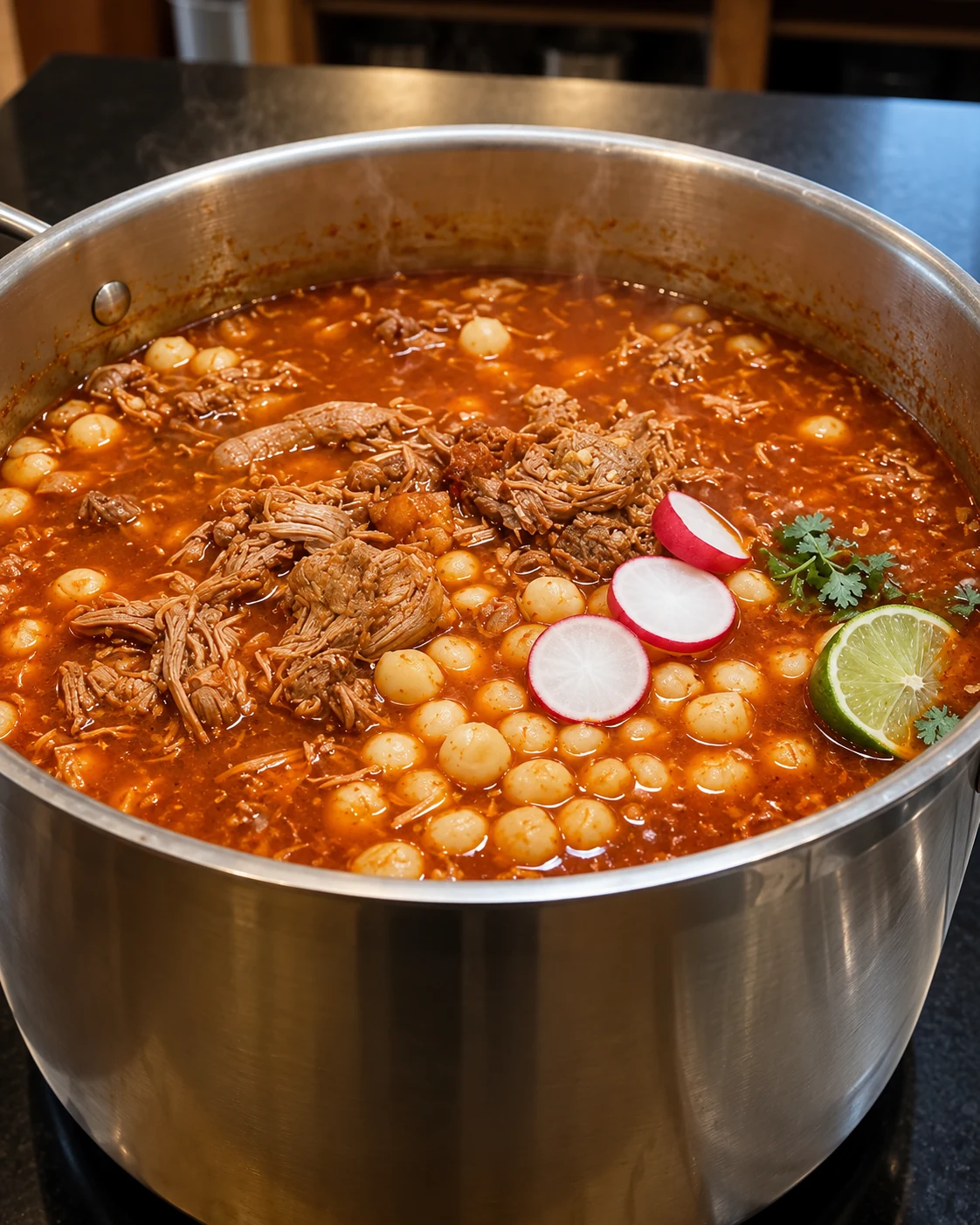
Pork Pozole Rojo is a generous, brothy soup built around tender pork shoulder, plump white hominy, and a smooth red chile sauce. Guajillo and ancho chiles give the broth its deep red-orange color and layered flavor, while optional árbol chiles add direct heat. Every bowl is finished at the table with crunchy cabbage, radishes, cilantro, diced onion, lime, oregano, and tostadas or warm tortillas.
This version uses a straightforward stovetop method that is manageable for a U.S. home kitchen. The pork first simmers with onion, garlic, bay leaves, and oregano. While it becomes tender, the dried chiles are toasted, soaked, blended, strained, and briefly cooked in oil. The sauce, pork broth, shredded meat, and white hominy then simmer together until the flavors are unified. The result stays loose and soupy rather than becoming thick like chili.
Why You’ll Love This Pork Pozole Rojo
One pot makes six to eight satisfying servings, and the toppings let everyone customize a bowl. The pork can be cooked until fully tender without rushing, the chile sauce can be prepared while it simmers, and the entire soup tastes even more cohesive the next day. It is a practical dish for a weekend dinner, family gathering, or make-ahead meal.
The flavor is rich without relying on cream, beans, or excessive fat. Guajillo chiles bring fruity, earthy character; ancho chiles contribute a darker sweetness; and hominy provides a chewy-tender corn texture that ordinary sweet corn cannot replace. Lime and crisp vegetables keep each serving lively.
What Is Pozole Rojo?
Pozole is a Mexican hominy stew with many regional and family variations. The word “rojo” identifies a red version colored and flavored by dried red chiles. This recipe combines pork shoulder with white hominy and a guajillo-ancho sauce. It does not claim to represent every traditional preparation, but it respects the essential distinction between a brothy pozole and unrelated bean chili or creamy soup.
The toppings are more than decoration. Cabbage, radishes, onion, cilantro, lime, and oregano add freshness and contrast to a long-simmered broth. Serve them separately so each person can adjust crunch, acidity, and heat.
Ingredients and Ingredient Notes
Pork Shoulder
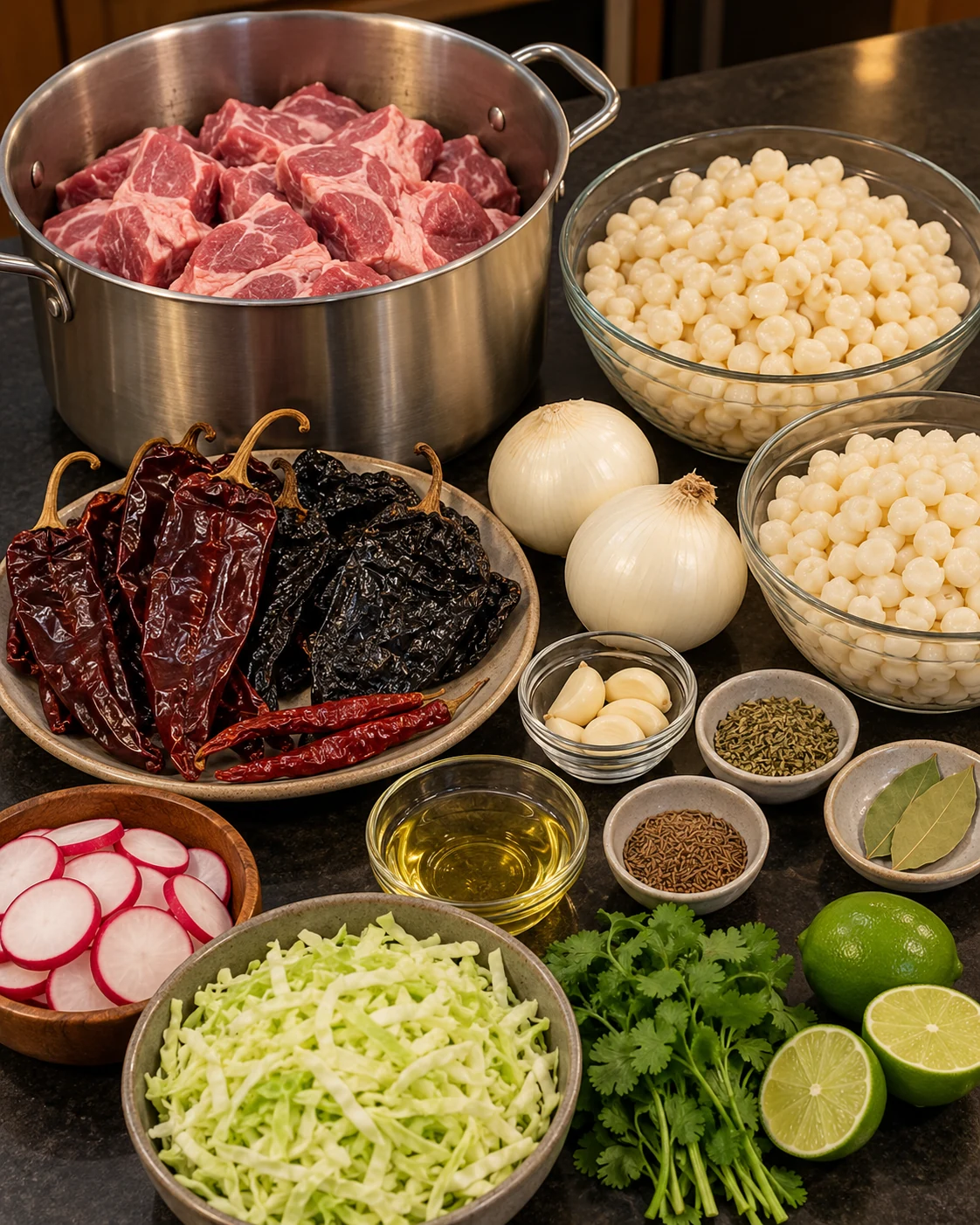
Choose a two-pound boneless pork shoulder with visible marbling. Cut it into large chunks rather than small cubes. Shoulder contains connective tissue that softens during the one-and-a-half to two-hour simmer, giving the broth body while the meat becomes easy to shred.
White Hominy
Two 25-ounce cans provide the generous amount expected in pozole. Drain and rinse thoroughly. The kernels should be large, pale, and pleasantly chewy. Do not substitute yellow sweet corn, which has a completely different flavor and structure.
Dried Chiles
Guajillos are relatively mild and contribute a clear red color and tangy dried-fruit notes. Anchos are dried poblanos with a broad, wrinkled shape and a deeper, slightly sweet flavor. Two small árbol chiles are optional and noticeably hotter. Removing stems and most seeds keeps the sauce smooth and reduces harshness.
Aromatics and Seasonings
White onion, garlic, bay leaves, Mexican oregano, cumin, salt, and black pepper create a savory foundation. Optional smoked paprika adds a faint smoky accent but should not dominate. Vegetable oil is used to cook the strained chile sauce, an important step that rounds out its raw flavor.
Choosing the Best Pork for Pozole
Pork shoulder is preferable to loin or tenderloin because it tolerates long, moist cooking. A lean cut may be tender at first but can become dry before the broth develops. Trim only thick exterior fat; fine marbling is useful. Large chunks are easier to remove after simmering and produce irregular shredded and bite-size pieces that feel natural in the bowl.
If using bone-in shoulder, buy extra to account for the bone and remove it after cooking. Keep the same two-pound quantity of usable meat. Avoid ground pork because it changes both the texture and appearance of the soup.
What Is Hominy?
Hominy is field corn processed with an alkaline solution in a traditional technique called nixtamalization. The process loosens the hull, changes the kernel’s texture and aroma, and makes it suitable for dishes such as pozole. Canned hominy is already cooked, so it needs only to be rinsed and simmered in the finished broth.
Rinse until the water runs clear to remove packing liquid and excess sodium. Add the hominy during final assembly rather than during the entire pork simmer so the kernels stay plump and recognizable.
Choosing Guajillo, Ancho, and Árbol Chiles
Dried chiles should be flexible rather than brittle, with glossy skins and no dusty or moldy spots. Guajillos are long and smooth; anchos are wider and darker. Árbol chiles are small, narrow, and hot. If you prefer a mild broth, omit árbol chiles. For moderate heat, use one. For a more assertive bowl, use both, remembering that toppings and lime brighten heat but do not remove it.
Wear gloves if your skin is sensitive, avoid touching your eyes, and wash tools after handling. Never burn dried chiles: scorched chile skins turn bitter and can make the entire sauce unpleasant.
How to Make the Red Chile Sauce
Remove stems and seeds from five guajillo chiles, three ancho chiles, and the optional árbol chiles. Warm a dry skillet over medium heat and toast each chile for only 15 to 20 seconds per side, just until fragrant and slightly pliable. Transfer them immediately to a heat-safe bowl, cover with hot water, and soak for 15 to 20 minutes.
Blend the softened chiles with three garlic cloves, half a white onion, cumin, Mexican oregano, optional smoked paprika, and one and a half cups hot water or soaking liquid. Blend longer than you think necessary so the skins break down thoroughly. Strain through a fine-mesh sieve, pressing with a spoon, for a smooth broth without tough bits.
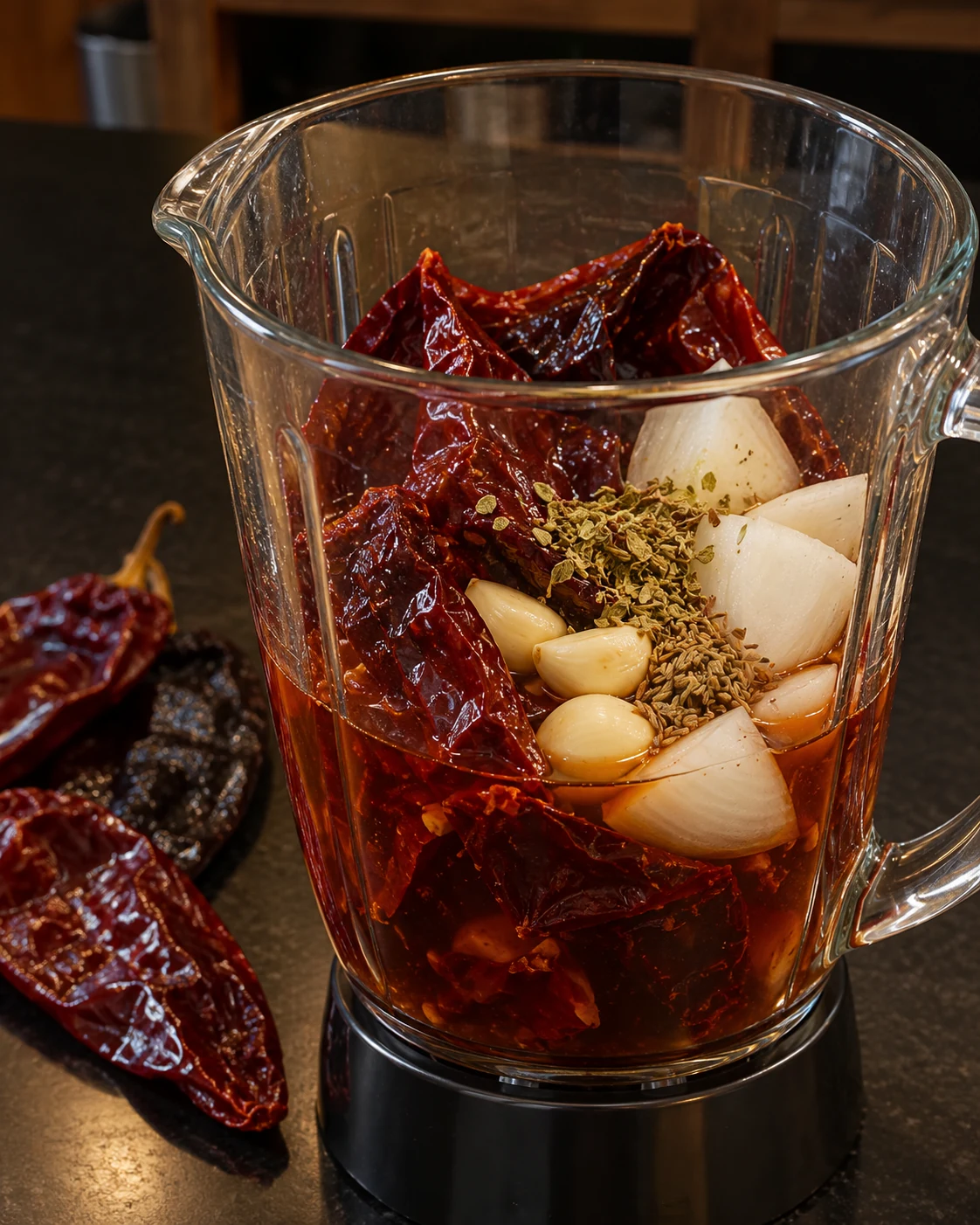
Heat vegetable oil in a skillet, carefully add the strained sauce, and cook for five to seven minutes while stirring. The color will deepen, splattering will subside, and the sauce will smell rounded rather than raw. This step is worth the extra pan.
How to Make Pork Pozole Rojo
Step 1: Simmer the Pork
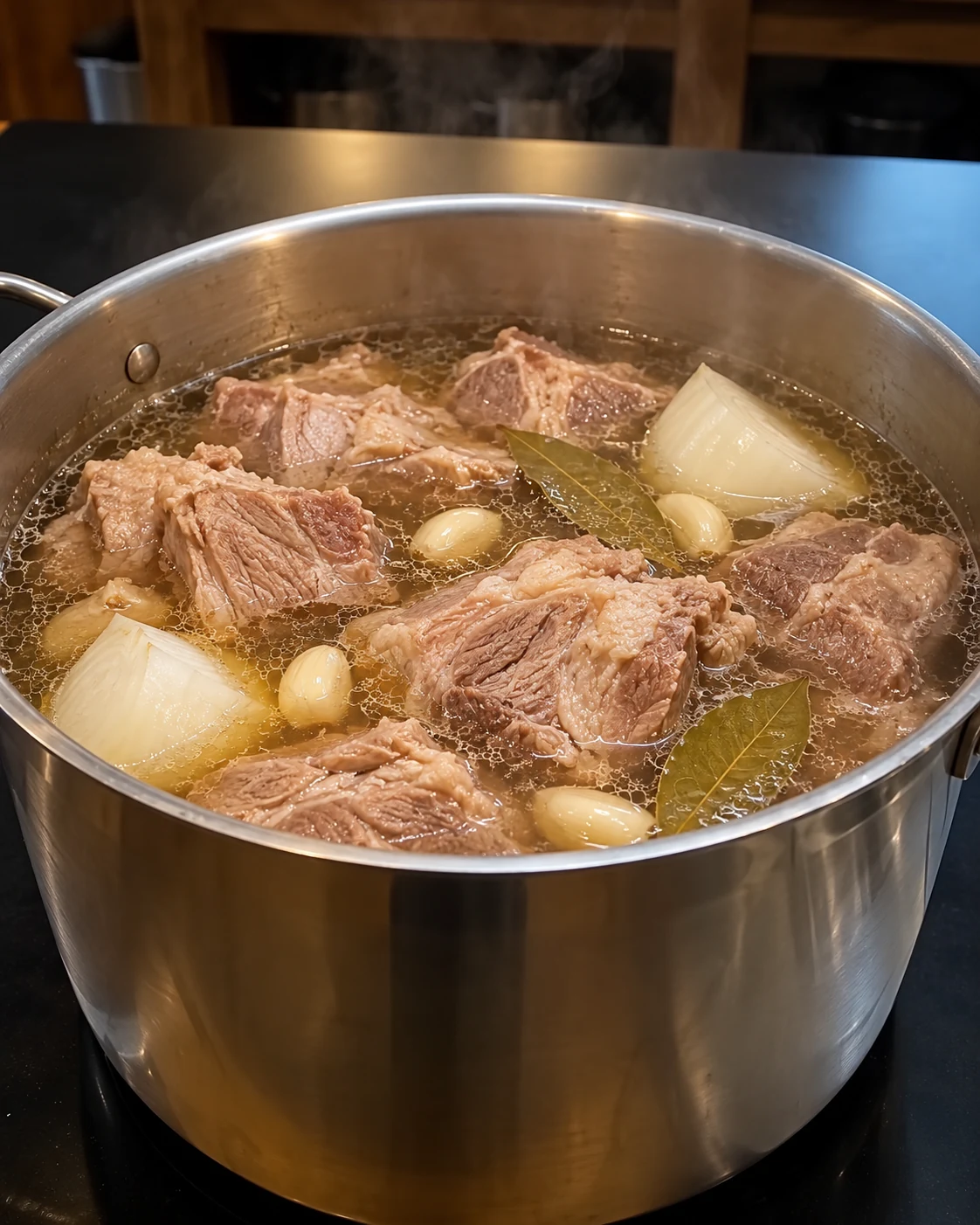
Place the pork shoulder chunks in a large stainless-steel stockpot. Add ten cups of water, quartered white onion, five peeled garlic cloves, two bay leaves, Mexican oregano, salt, and black pepper. Bring to a boil over medium-high heat, then reduce immediately to a gentle simmer. Skim foam from the surface, partially cover, and cook for about one and a half to two hours.
Step 2: Shred the Tender Meat
When a fork slides easily into the pork, transfer it to a tray and let it cool enough to handle. Discard bay leaves and cooked onion pieces. Pull the pork into irregular bite-size pieces, removing large deposits of fat. Return the meat to the broth.
Step 3: Assemble and Finish
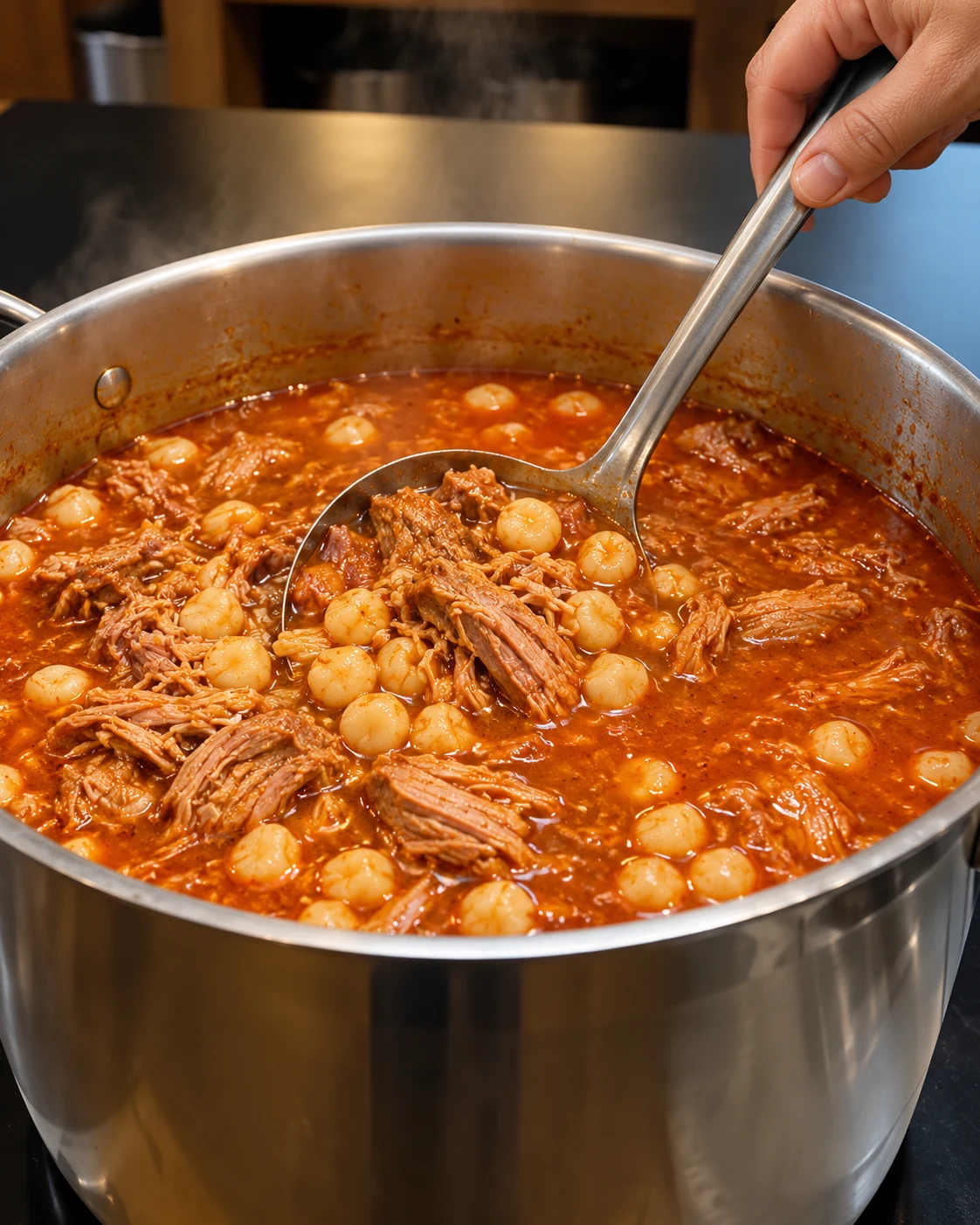
Pour the cooked red chile sauce into the stockpot and stir well. Add the drained and rinsed hominy. If the mixture is crowded or stronger than desired, add one to two cups chicken broth or water. Simmer uncovered over medium-low heat for 30 to 40 minutes so the chile, pork, broth, and hominy come together. Taste and adjust salt.
How to Get Tender, Flavorful Pork
- Use shoulder: Its collagen and marbling suit a long simmer.
- Keep chunks large: Small pieces can become dry or disappear into the broth.
- Simmer gently: Vigorous boiling tightens meat fibers and makes the broth cloudy.
- Skim early foam: Removing it produces a cleaner-tasting broth.
- Cook by texture: If the pork resists a fork, it needs more time.
- Remove excess fat after cooking: It is easier to identify once the meat is tender.
How to Adjust the Spice Level
Guajillo and ancho chiles provide most of the flavor without extreme heat. Árbol chiles are the main control. Omit them for a mild family-style pot, use one for moderate warmth, or use two for more noticeable heat. Because dried chiles vary, taste a tiny softened piece before blending.
If the finished broth is hotter than expected, add unsalted broth and extra hominy, then correct the salt. Cabbage, radishes, and lime provide contrast. Do not add dairy to the stockpot; it would change the character and appearance of the pozole.
Common Mistakes to Avoid
Do not burn the dried chiles while toasting. A few seconds too long can introduce bitterness that soaking will not fix. Do not skip straining if you want a smooth broth, and do not pour uncooked blended sauce directly into the stockpot; frying it briefly develops a rounder flavor.
A hard boil can toughen pork and reduce the broth too quickly. Keep only small bubbles breaking the surface. Rinse hominy well, avoid ordinary yellow corn, and wait until the final simmer to combine everything. Finally, season in stages. Canned hominy and any added broth may contain sodium, so make the final adjustment only after the 30- to 40-minute finishing simmer.
Best Pozole Toppings
Finely shredded green cabbage brings cooling crunch. Thin radish slices add peppery bite, cilantro adds freshness, and finely diced white onion gives sharp contrast. Lime wedges are essential for diners who want more acidity. Mexican oregano can be rubbed between the palms over each bowl to release its aroma, and crushed red pepper flakes may be offered for extra heat.
Keep toppings in separate bowls and place tostadas or warm corn tortillas nearby. Adding fresh garnishes only to individual servings also makes leftover storage safer and easier.
What to Serve With Pozole Rojo
Pozole is a complete main dish, so simple sides are best. Tostadas provide a crisp contrast, while warm tortillas are useful for dipping. A light cucumber salad, sliced avocado, or fresh fruit can accompany the meal without competing with the red chile broth. For another hominy-centered dinner with a different chile profile, see our New Mexico Pork and Hominy Stew. Our Mexican Chicken Posole Verde is a useful green, chicken-based comparison.
Recipe Variations and Substitutions
A bone-in pork shoulder can replace boneless shoulder when you allow for the bone’s weight. Chicken broth may replace part of the final water when the broth needs more body, but begin cooking the pork in the specified water. If ancho chiles are unavailable, do not simply double the árbol chiles; they differ greatly in heat and flavor. Use another mild, dark dried chile and expect a slightly different result.
For a thinner soup, add broth after the chile sauce and hominy. For a stronger red chile flavor, simmer uncovered a little longer instead of adding flour or starch. Keep beans, potatoes, rice, pasta, cream, and sweet corn out of the pot so the recipe remains focused on pork and hominy.
Make-Ahead Instructions
Pozole is especially convenient one day ahead. Cook the full soup, cool it promptly, and refrigerate in covered containers. Prepare cabbage, radishes, cilantro, onion, and lime separately and keep them dry and chilled. Reheat the soup slowly, adding water or broth if it has thickened.
The red chile sauce can also be prepared up to two days ahead and refrigerated in an airtight container. Cook it in oil before storing, then add it when the pork is ready. Do not leave soaked chiles or cooked pork at room temperature.
Storage, Freezing, and Reheating
Refrigerate cooled pozole in airtight containers for up to four days. Store fresh toppings separately. Reheat on the stovetop over medium-low heat until steaming throughout, stirring occasionally, or microwave individual portions in short intervals. Add a splash of water if the hominy has absorbed broth.
Freeze the soup without toppings for up to three months for best quality. Leave headspace in freezer-safe containers. Thaw overnight in the refrigerator and reheat gently. Pork and hominy freeze well, though the kernels may become slightly softer.
Frequently Asked Questions
Can I use dried hominy?
Yes, but it must be soaked and cooked separately until tender before the final pozole simmer. The timing in this recipe assumes canned hominy.
Why is my chile sauce bitter?
The chiles were likely scorched during toasting, or too much bitter soaking liquid was used. Toast very briefly and use fresh hot water for blending if the soaking liquid tastes harsh.
Do I have to strain the chile sauce?
Straining is strongly recommended for a smooth broth because dried chile skins can remain tough even after blending.
Why is my pork still tough?
It needs more gentle cooking. Continue simmering in 20-minute increments until a fork enters easily.
Can I make pozole less red?
You can use slightly less sauce, but the guajillo-ancho blend defines this rojo version. Add broth rather than omitting most of the chiles.
Is pozole supposed to be thick?
No. This recipe should remain brothy, with pork and hominy suspended in a loose red-orange soup.
Final Thoughts
Good Pork Pozole Rojo depends on three patient steps: gently simmering pork shoulder until tender, preparing a smooth cooked red chile sauce, and giving the assembled soup time to finish together. Keep the broth loose, the hominy white and plump, and the pork in natural irregular pieces. Set out crisp toppings, lime, oregano, and tortillas, then let everyone build a bowl to taste.
Print
Authentic Mexican Pork Pozole Rojo
- Prep Time: 25 minutes
- Cook Time: 2 1/2–3 hours
- Total Time: About 3 hours
- Yield: 6–8 servings 1x
- Category: Soup / Main Dish
- Method: Stovetop
- Cuisine: Mexican
Description
Tender pork shoulder and plump white hominy simmered in a brothy guajillo-ancho red chile sauce with fresh pozole toppings.
Ingredients
Pork Broth
- 2 lbs pork shoulder, cut into large chunks
- 10 cups water, or enough to cover the pork
- 1 large white onion, quartered
- 5 garlic cloves, peeled
- 2 bay leaves
- 1 teaspoon dried Mexican oregano
- 2 teaspoons salt, or to taste
- 1/2 teaspoon black pepper
Red Chile Sauce
- 5 dried guajillo chiles, stems and seeds removed
- 3 dried ancho chiles, stems and seeds removed
- 2 dried árbol chiles, optional for additional heat
- 3 garlic cloves
- 1/2 medium white onion
- 1 teaspoon ground cumin
- 1 teaspoon Mexican oregano
- 1/2 teaspoon smoked paprika, optional
- 1 1/2 cups hot water or reserved chile soaking liquid
- 1 tablespoon vegetable oil
Pozole
- 2 cans (25 oz each) white hominy, drained and rinsed
- 1–2 cups additional chicken broth or water, if needed
- Salt to taste
Serving
- 2 cups finely shredded green cabbage
- 4–5 radishes, thinly sliced
- 1/2 cup chopped fresh cilantro
- 1 small white onion, finely diced
- 2 limes, cut into wedges
- Dried Mexican oregano
- Crushed red pepper flakes, optional
- Tostadas or warm corn tortillas
Instructions
- Place pork shoulder in a large stockpot with 10 cups water, quartered onion, 5 garlic cloves, bay leaves, Mexican oregano, salt, and black pepper.
- Bring to a boil over medium-high heat, then reduce to a gentle simmer and skim foam from the surface.
- Partially cover and simmer for 1 1/2–2 hours, or until the pork is fork-tender.
- Remove stems and seeds from the guajillo, ancho, and optional árbol chiles.
- Toast the dried chiles in a dry skillet for 15–20 seconds per side without burning them.
- Cover the toasted chiles with hot water and soak for 15–20 minutes until softened.
- Blend softened chiles with 3 garlic cloves, 1/2 onion, cumin, Mexican oregano, optional smoked paprika, and 1 1/2 cups hot water until smooth.
- Strain the blended chile sauce through a fine-mesh sieve.
- Heat vegetable oil in a skillet, add the strained sauce carefully, and cook for 5–7 minutes, stirring frequently.
- Remove the tender pork from the broth and cool until safe to handle.
- Discard the bay leaves and cooked onion pieces.
- Shred or cut the pork into natural bite-sized pieces and remove excessive fat.
- Return the pork to the stockpot.
- Pour the cooked red chile sauce into the pork broth.
- Add the drained and rinsed white hominy and stir thoroughly.
- Add 1–2 cups additional broth or water if needed for a brothy consistency.
- Simmer uncovered over medium-low heat for 30–40 minutes.
- Taste and adjust salt.
- Ladle the hot pozole into deep bowls.
- Serve with cabbage, radishes, cilantro, diced onion, lime, oregano, optional red pepper, and tostadas or warm tortillas.
Notes
- Toast dried chiles very briefly; burned chiles make the sauce bitter.
- Omit árbol chiles for a milder pozole.
- Refrigerate the cooled soup in airtight containers for up to 4 days.
- Freeze without fresh toppings for up to 3 months for best quality.
- Reheat gently until steaming throughout, adding water or broth if needed.