
New Mexico Pork and Hominy Stew is the kind of one-pot dinner that rewards a little patience. Pork shoulder is browned until its edges develop deep flavor, then slowly simmered with roasted New Mexico green chiles, onion, garlic, spices, and broth. Plump white hominy goes in near the end, giving the stew its unmistakable texture and a mild corn flavor that balances the chiles. A squeeze of lime wakes up the finished pot, while crisp cabbage, radishes, avocado, cilantro, and warm tortillas make every bowl feel generous.
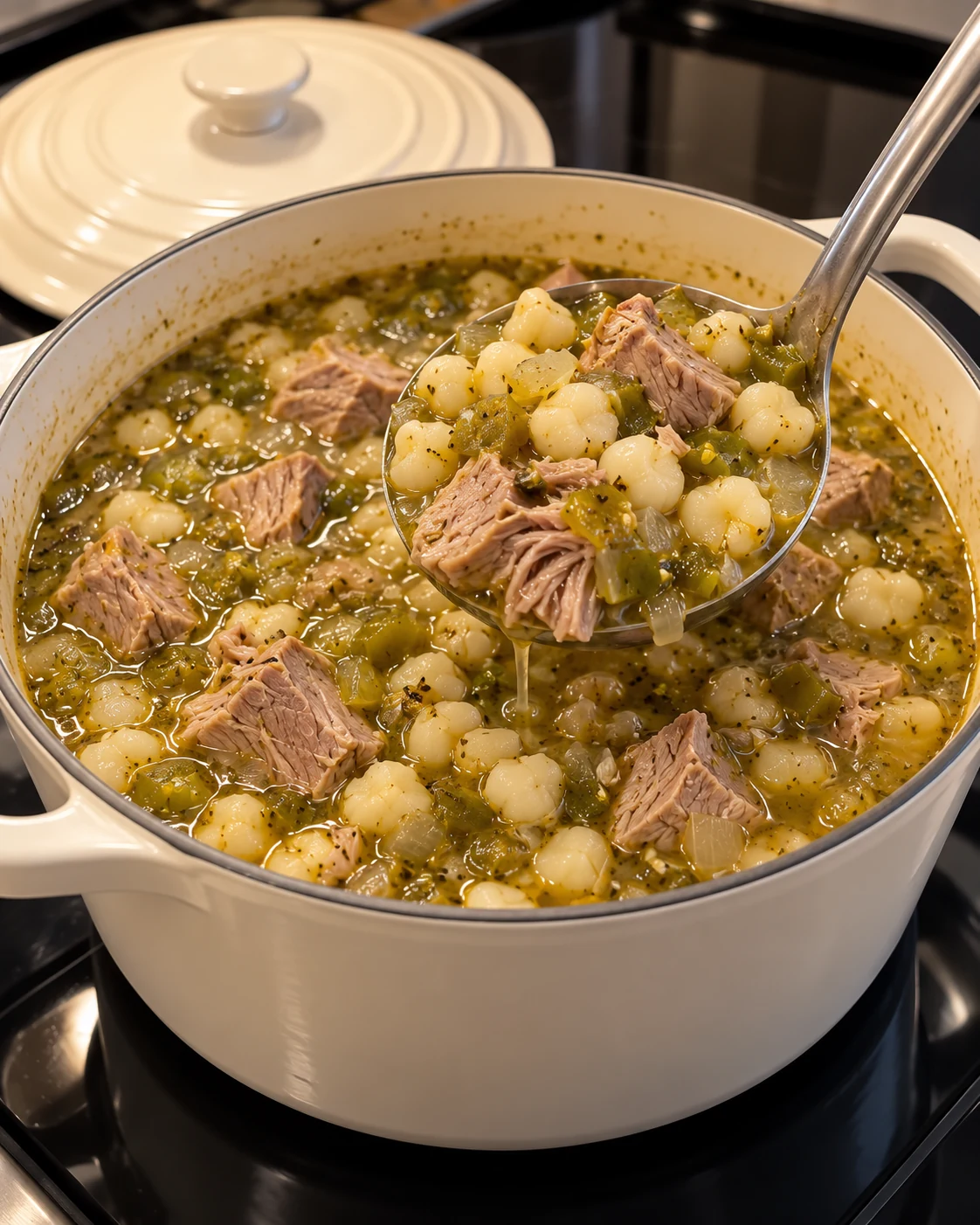
This recipe keeps the flavor focused. It is not a red pozole, a bean chili, or a creamy soup. The broth stays savory and olive-green, the pork becomes fork-tender without falling into shreds, and the white hominy remains easy to recognize. The result is a practical stovetop meal for a cool evening, a relaxed weekend dinner, or a gathering where everyone can choose their own toppings.
Why You’ll Love This New Mexico Pork & Hominy Stew
The stew uses affordable pork shoulder and pantry-friendly canned hominy, yet it tastes layered because the method builds flavor at every stage. Browning the pork creates savory bits on the bottom of the Dutch oven. Onion, garlic, green chiles, and spices soften in those drippings, and chicken broth loosens every browned bit into the pot. A slow, gentle simmer then turns a firm cut of meat tender.
It is also excellent for planning ahead. The flavor becomes even more cohesive after a night in the refrigerator, and the stew freezes well before fresh toppings are added. Since the toppings are served separately, one pot can satisfy diners who want a simple bowl and those who prefer plenty of crunch, lime, and heat.
What Is New Mexico Pork Posole?
In everyday American cooking, the spellings posole and pozole are both used for hominy-based stews. This green chile pork version draws its character from roasted New Mexico chiles rather than a red chile sauce. Recipes vary from kitchen to kitchen, so this one does not claim to reproduce every regional or family tradition. It is a New Mexican–inspired stovetop stew built around pork shoulder, roasted green chile, white hominy, and a clear savory broth.
The defining ingredient is hominy: field corn treated through nixtamalization, which removes the hull and changes the kernel’s texture and flavor. Canned white hominy is convenient, reliable, and ready to add after draining and rinsing.
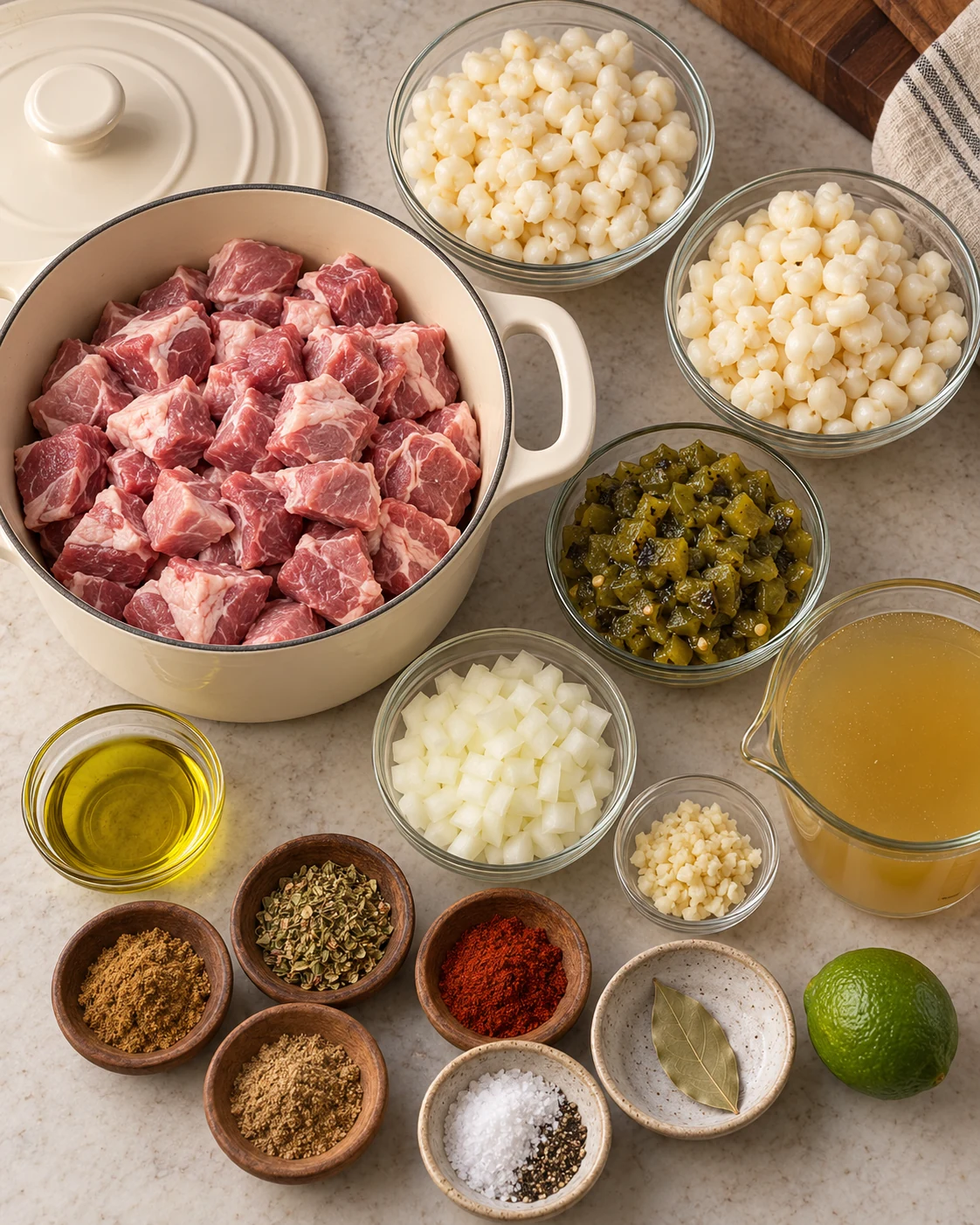
Ingredients and Ingredient Notes
Pork Shoulder
Boneless pork shoulder has enough marbling and connective tissue to stay juicy during a long simmer. Trim only thick exterior fat, then cut the meat into roughly one-inch cubes. Similar sizing helps every piece become tender at about the same time.
Roasted New Mexico Green Chiles
Use two cups of peeled, seeded, chopped roasted green chiles. Their heat can range from mild to quite hot, so taste before adding the full amount. Frozen roasted chiles work very well after thawing. Canned chiles may be used when necessary, but drain excessive liquid so the flavor remains concentrated.
White Hominy
Two 15-ounce cans provide plenty of large, pale kernels without overwhelming the pork. Drain and rinse them thoroughly to remove canning liquid. Hominy is not interchangeable with yellow sweet corn; its chewy-tender texture and savory corn flavor are essential here.
Broth, Aromatics, and Spices
Low-sodium chicken broth lets you control seasoning as the liquid reduces. Yellow onion and five garlic cloves provide the aromatic base. Cumin, Mexican oregano, smoked paprika, coriander, bay leaf, black pepper, and kosher salt support the green chile without covering it. Fresh lime juice is added only after cooking so its brightness is preserved.
Choosing the Best Pork for Green Chile Stew
Look for a boneless shoulder roast with visible fine marbling rather than a very lean piece. Pork loin and tenderloin cook quickly but can become dry during the two-hour simmer required to develop the broth. Shoulder gradually converts collagen into gelatin, giving the stew body while the cubes remain succulent.
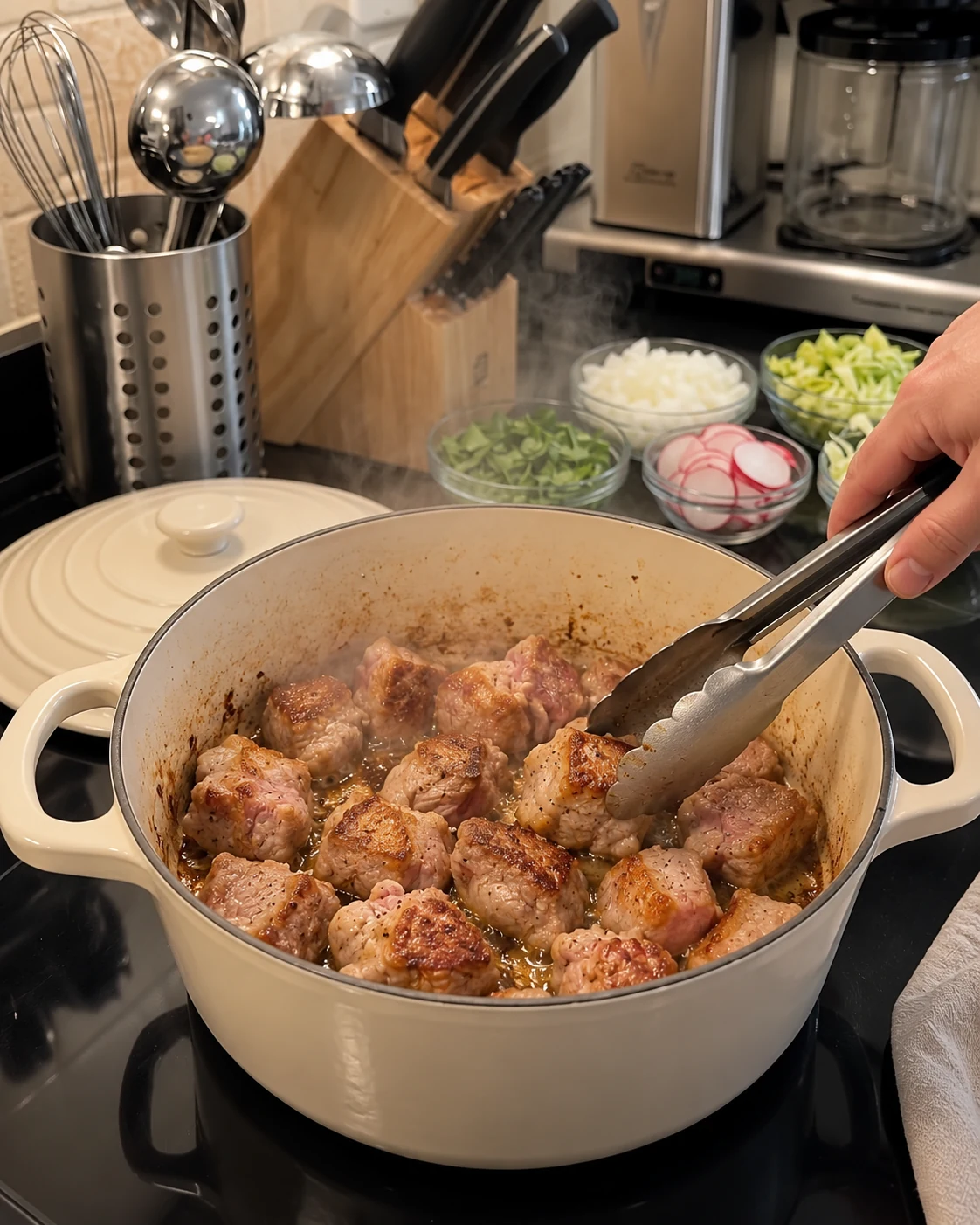
Dry the cubed meat before seasoning. Surface moisture creates steam and prevents browning. Work in batches with space between the pieces; crowding cools the pot and leaves the pork gray. Each batch needs about two to three minutes per side, but color matters more than the clock.
Roasted New Mexico Green Chiles Explained
Roasting blisters the chile skins and introduces a subtle smoky quality. After roasting, the chiles are covered briefly so the skins loosen, then peeled, seeded, and chopped. The flesh is soft and fragrant rather than crisp. New Mexico chile cultivars can differ widely in heat, so “green chile” does not automatically mean mild.
If your chiles are very hot, begin with one and a half cups and add more after the broth has simmered. If they are mild, use the full two cups and offer sliced jalapeños at the table for people who want extra heat. Avoid bright green bottled sauce as a substitute; the flavor and texture will be different.
What Is White Hominy?
Hominy begins as dried field corn rather than the sweet corn served as a summer vegetable. An alkaline treatment called nixtamalization loosens the outer hull and produces kernels with a pleasantly chewy texture, earthy aroma, and improved cooking qualities. Canned hominy is already cooked, which is why it enters this stew during the final 20 to 25 minutes.
Rinsing is important. Place the hominy in a colander and rinse under cool water until the liquid runs clear. This removes excess sodium and the starchy canning liquid while keeping the kernels intact.
How to Make New Mexico Pork & Hominy Stew
Step 1: Brown the Pork
Trim the pork shoulder, cut it into one-inch cubes, and season with some of the kosher salt and black pepper. Heat olive oil in a large cream enameled Dutch oven over medium-high heat. Add the pork in batches and leave each piece undisturbed long enough to form golden edges before turning. Transfer the browned meat to a plate.
Step 2: Build the Green Chile Broth
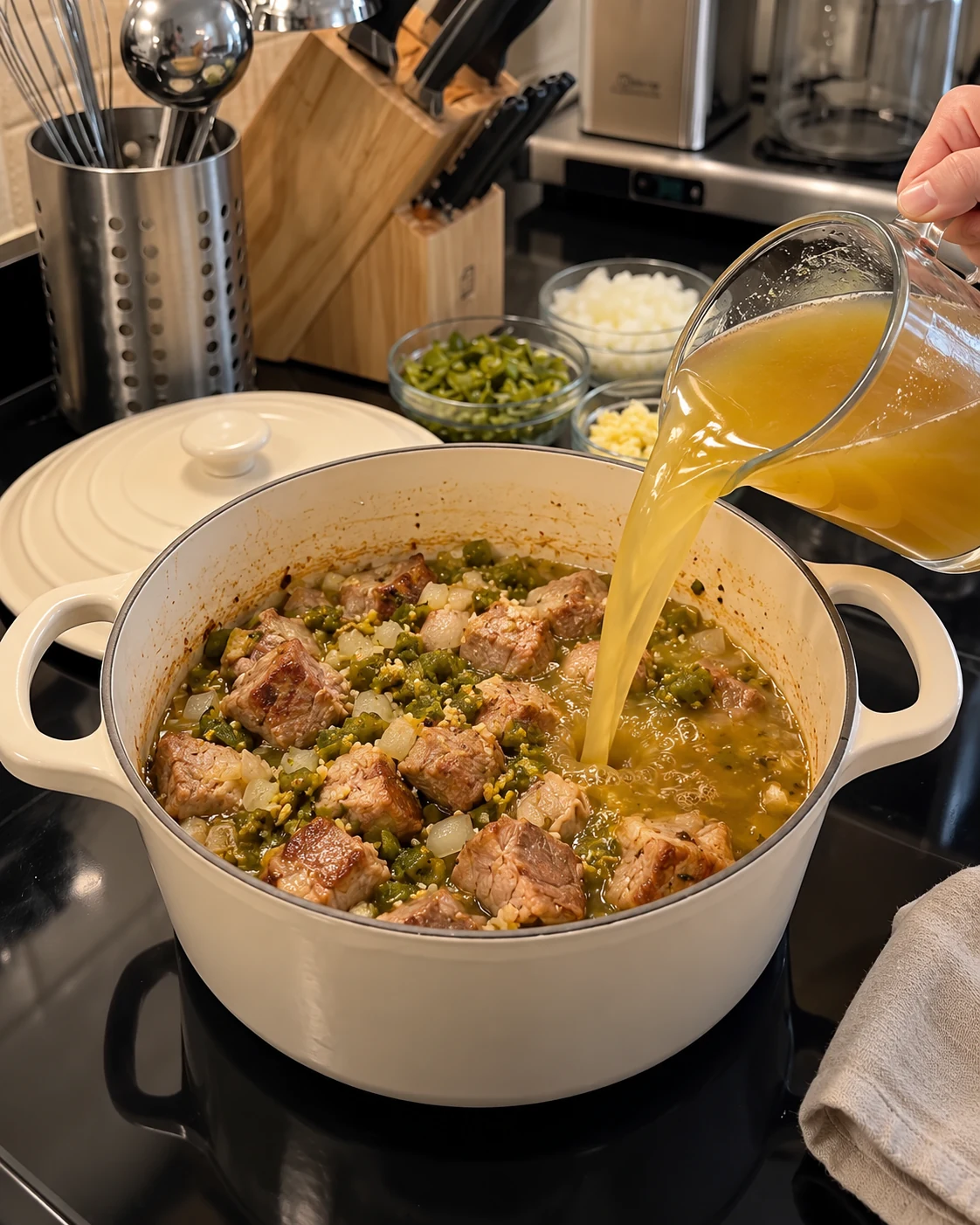
Reduce the heat to medium. Cook the diced onion for four to five minutes, then stir in garlic for 30 seconds. Add the roasted green chiles, cumin, Mexican oregano, smoked paprika, and coriander. Stir for one to two minutes until fragrant. Return the pork and collected juices to the pot. Pour in the chicken broth while scraping the browned bits from the bottom, then add the bay leaf.
Step 3: Simmer Until Tender and Add Hominy
Bring the pot to a gentle simmer, reduce the heat to low, and partially cover. Simmer for one and a half to two hours, checking occasionally. Add a little broth or water if the pork is no longer mostly submerged. When a fork slides easily into the meat, stir in the drained, rinsed white hominy.
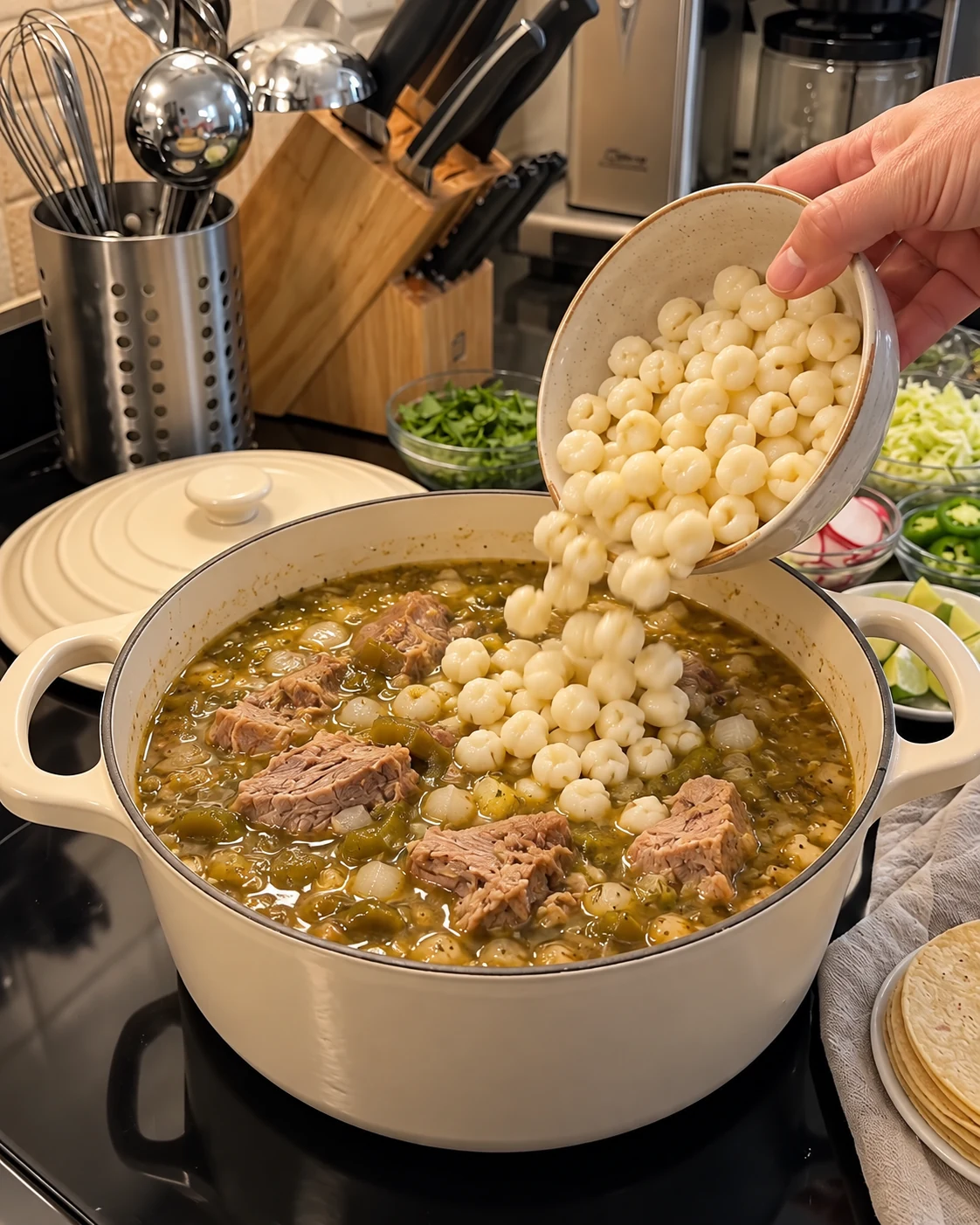
Simmer uncovered for another 20 to 25 minutes so the hominy absorbs the green chile flavor and the broth reduces slightly. Remove the bay leaf, stir in fresh lime juice, and adjust salt and pepper. Ladle the stew into bowls and serve toppings separately.
Expert Tips for Tender Pork
- Cut evenly: One-inch cubes cook at a similar rate while remaining substantial.
- Brown in batches: Space encourages searing rather than steaming.
- Keep the simmer gentle: A hard boil can tighten meat fibers and cloud the broth.
- Follow texture, not only time: Pork shoulder is done when a fork enters easily.
- Rest the pot briefly: Ten minutes off the heat lets the broth settle before serving.
How to Adjust the Green Chile Heat
Heat depends largely on the roasted chiles. Taste a small piece before cooking. For a milder stew, remove seeds and inner membranes carefully and start with less chile. Additional mild roasted chile can be added for flavor without relying on jalapeño heat. For a hotter bowl, keep the base balanced and serve fresh jalapeño slices separately. This allows each person to control the intensity without making the entire pot too spicy.
Dairy is not required in the recipe, but avocado can soften perceived heat. Lime does not remove capsaicin, although its acidity makes the broth taste brighter and more balanced.
Common Mistakes to Avoid
Do not crowd the pork during browning, skip scraping the fond, or boil the stew aggressively. These shortcuts reduce flavor or compromise the meat’s texture. Avoid adding hominy at the beginning; although it will not dissolve, an extra-long simmer can make it overly soft and cause the broth to lose clarity.
Do not confuse hominy with sweet corn, and do not pour in un-rinsed canning liquid. Wait until the end to make the final salt adjustment because broth, pork, and hominy vary in sodium. Finally, add lime after the heat is turned down so its fresh aroma remains noticeable.
Recipe Variations and Substitutions
Boneless pork shoulder is the best choice, but a bone-in roast can be trimmed and cubed after accounting for the bone’s weight. If fresh-roasted chiles are unavailable, use frozen roasted New Mexico chiles. Canned green chiles are a practical substitute, although their flavor may be milder.
Vegetable broth changes the background flavor but can replace chicken broth if needed; the dish still contains pork. For a thinner soup, add another cup of broth near the end. For a slightly fuller broth, simmer uncovered a little longer rather than adding flour or dairy. If you enjoy Southwestern soups, our Hatch Green Chile Chicken and Pinto Bean Tortilla Caldo offers a chicken-based alternative, while Hatch Green Chile Pork and Pinto Bean Tamale Stew has a heartier bean-focused profile.
Best Toppings for Pork Posole
Fresh toppings add temperature and texture contrast. Chopped cilantro and diced white onion provide sharp, herbal notes. Thin radish slices and shredded cabbage stay crisp against the hot broth. Avocado adds richness, sliced jalapeño contributes direct heat, and lime wedges let everyone brighten a bowl to taste.
Arrange toppings in small bowls rather than mixing them into the Dutch oven. This keeps leftovers easier to store and gives every diner control. Warm corn or flour tortillas belong alongside the bowls for scooping and dipping.
What to Serve With Pork & Hominy Stew
The stew is substantial enough to be the main course. Serve it with warmed tortillas, a simple cabbage salad, or roasted vegetables. Avoid very heavy side dishes because pork, hominy, and avocado already make the meal filling. A bright citrus salad or sliced oranges can be refreshing afterward.
Make-Ahead Instructions
Prepare the complete stew one day ahead, cool it promptly, and refrigerate it in a covered container. Keep cabbage, radishes, onion, cilantro, avocado, jalapeños, lime, and tortillas separate. Reheat the stew gently the next day, adding a splash of broth if it has thickened. Taste again after heating because chilled foods can seem less seasoned.
You may also brown the pork and chop the vegetables a day ahead. Refrigerate them separately, then begin with the onion step when ready to cook. Do not leave browned meat or prepared ingredients at room temperature.
Storage, Freezing, and Reheating
Cool leftovers and refrigerate them in airtight containers for up to four days. Divide a large amount into shallow containers so it cools efficiently. Reheat on the stovetop over medium-low heat, stirring occasionally, or microwave individual portions until steaming hot throughout. Add fresh toppings only after reheating.
For best quality, freeze the stew without toppings for up to three months. Leave expansion space in freezer-safe containers. Thaw overnight in the refrigerator and reheat gently. The hominy may soften slightly, but the stew generally freezes well. Add broth as needed to restore the original consistency.
Frequently Asked Questions
Is posole the same as hominy?
“Posole” can refer to the prepared stew or to hominy itself, depending on usage. In this recipe, white hominy is the large nixtamalized corn kernel added to the pork stew.
Can I use dried hominy?
Yes, but it must be soaked and cooked until tender before following this recipe’s final hominy step. Canned hominy keeps the timing predictable.
Why is my pork still tough?
It likely needs more time. Keep the stew at a gentle simmer and check again after 20 to 30 minutes. Shoulder becomes tender only after its connective tissue has had time to soften.
Can I make this in a slow cooker?
You can adapt it, but brown the pork and sauté the aromatics first. Transfer everything except hominy and lime to the slow cooker, cook until tender, then add hominy near the end. The supplied timing and recipe card are for a stovetop Dutch oven.
How can I make the broth less spicy?
Add more low-sodium broth and additional hominy, then adjust salt. Serve avocado and cabbage generously. The easiest prevention is tasting the roasted chiles before adding all two cups.
When should I add the lime?
Stir in one tablespoon after the final simmer and after removing the bay leaf. Offer extra wedges at the table.
Final Thoughts
New Mexico Pork and Hominy Stew succeeds through careful browning, a patient low simmer, and accurate timing for the hominy. Keep the broth olive-green and savory, allow the pork shoulder to become fork-tender, and finish with fresh lime. Served from a Dutch oven with a colorful topping bar and warm tortillas, it is a comforting one-pot meal that is equally useful for dinner tonight or making ahead for tomorrow.
Print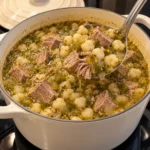
New Mexico Pork & Hominy Stew
- Prep Time: 20 minutes
- Cook Time: 2 hours 20 minutes
- Total Time: 2 hours 40 minutes
- Yield: 6 servings 1x
- Category: Main Course, Soup, Stew
- Method: Stovetop, Dutch Oven
- Cuisine: New Mexican / Southwestern American
Description
Tender pork shoulder, roasted New Mexico green chiles, and plump white hominy simmered in a savory stovetop stew.
Ingredients
Pork & Hominy Stew
- 2 lbs (900 g) boneless pork shoulder, trimmed and cut into 1-inch cubes
- 2 tablespoons olive oil
- 1 medium yellow onion, diced
- 5 garlic cloves, minced
- 2 cups roasted New Mexico green chiles, chopped
- 6 cups low-sodium chicken broth
- 2 cans (15 oz each) white hominy, drained and rinsed
- 1 1/2 teaspoons ground cumin
- 1 teaspoon dried Mexican oregano
- 1/2 teaspoon smoked paprika
- 1/2 teaspoon ground coriander
- 1 bay leaf
- 1 1/2 teaspoons kosher salt, or to taste
- 1/2 teaspoon black pepper
- 1 tablespoon fresh lime juice
Fresh Toppings
- Chopped fresh cilantro
- Diced white onion
- Thinly sliced radishes
- Diced avocado
- Shredded cabbage
- Sliced fresh jalapeños
- Fresh lime wedges
- Warm corn or flour tortillas
Instructions
- Trim excess fat from the pork shoulder and cut into 1-inch cubes.
- Season the pork with some of the salt and black pepper.
- Heat olive oil in a large Dutch oven over medium-high heat.
- Brown the pork in batches, approximately 2–3 minutes per side.
- Transfer the browned pork to a plate.
- Reduce the heat to medium.
- Add diced yellow onion and cook for 4–5 minutes until softened.
- Stir in minced garlic and cook for 30 seconds.
- Add chopped roasted New Mexico green chiles.
- Stir in cumin, Mexican oregano, smoked paprika, and coriander.
- Cook for 1–2 minutes until fragrant.
- Return browned pork and accumulated juices to the pot.
- Pour in chicken broth and scrape up the browned bits.
- Add the bay leaf.
- Bring to a gentle simmer.
- Reduce heat to low and partially cover.
- Simmer for 1 1/2–2 hours until the pork is fork-tender.
- Add extra broth or water if needed.
- Drain and rinse the canned white hominy.
- Stir the hominy into the tender pork stew.
- Simmer uncovered for another 20–25 minutes.
- Remove the bay leaf.
- Stir in fresh lime juice.
- Taste and adjust salt and pepper.
- Ladle into bowls and add desired fresh toppings.
- Serve with warm tortillas and lime wedges.
Notes
- Taste roasted green chiles before adding them because heat levels vary.
- Keep the stew at a gentle simmer so the pork becomes tender without toughening.
- Refrigerate in airtight containers for up to 4 days.
- Freeze without fresh toppings for up to 3 months for best quality.
- Make the stew one day ahead and add fresh toppings only when serving.