
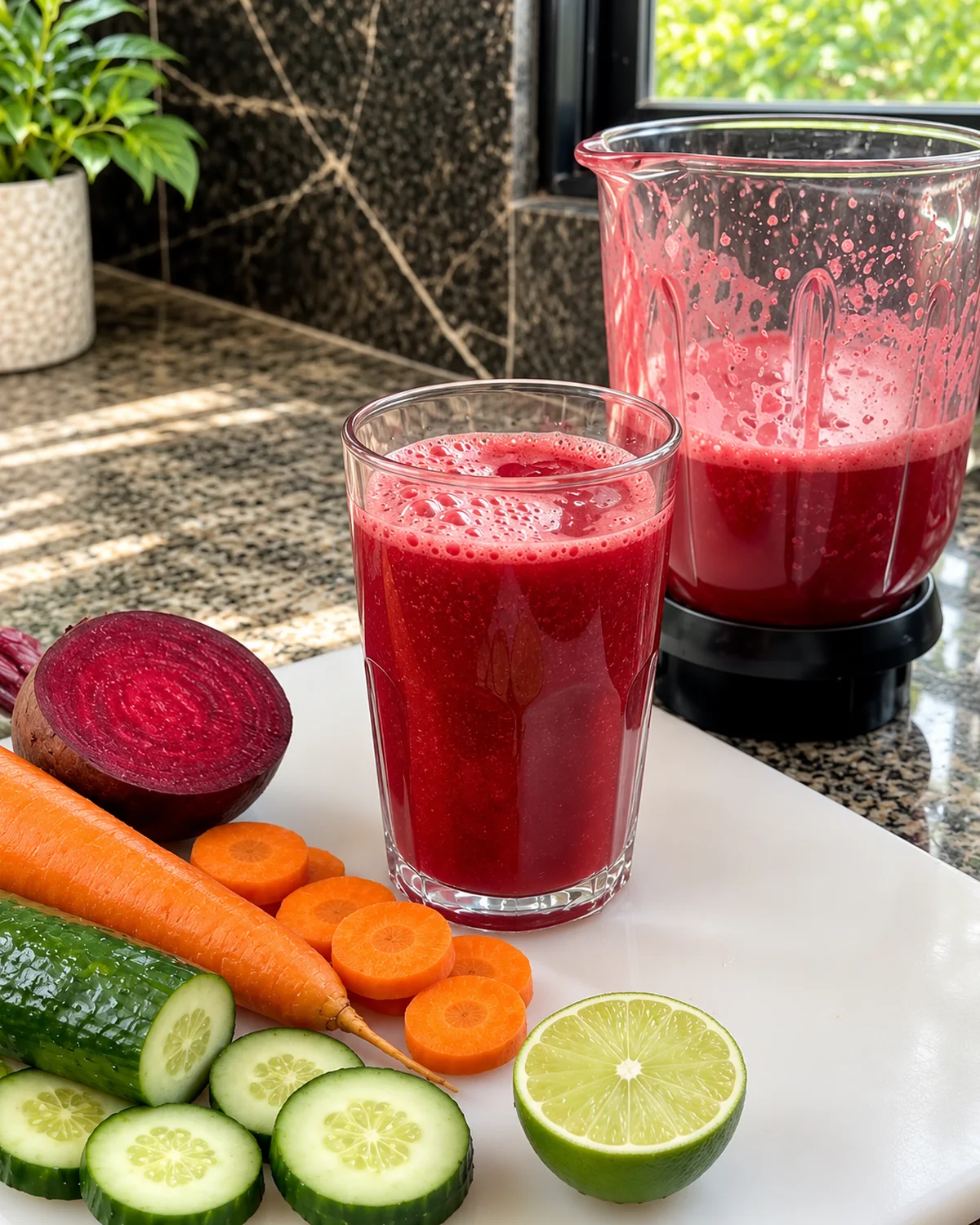
Beetroot, carrot, cucumber, and lime juice is a fresh homemade drink with a vivid ruby color, a gently earthy flavor, and a bright citrus finish. It takes about ten minutes to prepare in a blender and uses only four produce ingredients, cold water, and optional ice. The result is more substantial than a clear bottled juice because it retains fine vegetable pulp, yet it remains light enough to enjoy with breakfast or as an afternoon refreshment.
The vegetables each play a different role. Beetroot provides the deep color and distinctive earthy character. Carrot contributes mild sweetness, cucumber adds clean freshness and water, and lime sharpens the mixture so the beet does not dominate. Cold water helps the blender circulate the firm vegetables and allows you to adjust the drink to your preferred thickness.
This recipe does not depend on sweeteners, apples, or trendy supplement powders. It is simply a practical way to turn familiar raw vegetables into a vibrant drink. Serve it unstrained for more of the original fiber, or pass it through a fine-mesh strainer for a smoother, thinner consistency.
What Is Beetroot, Carrot, Cucumber & Lime Juice?
This is a blended vegetable juice made from chopped raw beetroot, sliced carrot, cucumber, fresh lime juice, and cold water. Unlike a traditional centrifugal or cold-press juicer, a blender does not automatically separate the liquid from the pulp. Everything is processed together, which produces a thicker drink with fine natural particles suspended throughout it.
The drink sits somewhere between a clear juice and a smoothie. It has no dairy, banana, yogurt, or frozen fruit to make it creamy. Instead, its body comes entirely from the blended vegetables. If you prefer the lighter mouthfeel of conventional juice, you can strain it after blending. Both approaches are valid; the best choice depends on whether you prioritize a smoother texture or retaining more of the vegetable fiber.
Why You’ll Love This Fresh Vegetable Juice
- Quick preparation: Chopping and blending take approximately ten minutes.
- Short ingredient list: The main recipe uses only beetroot, carrot, cucumber, lime, and water.
- Balanced flavor: Sweet carrot, cool cucumber, and tart lime soften the beet’s earthiness.
- Flexible texture: Drink it with fine pulp or strain it for a lighter result.
- Natural color: Raw beetroot creates an intense ruby-red drink without artificial coloring.
- No-cook method: A blender handles the entire recipe, so cleanup is manageable.
Ingredients You’ll Need
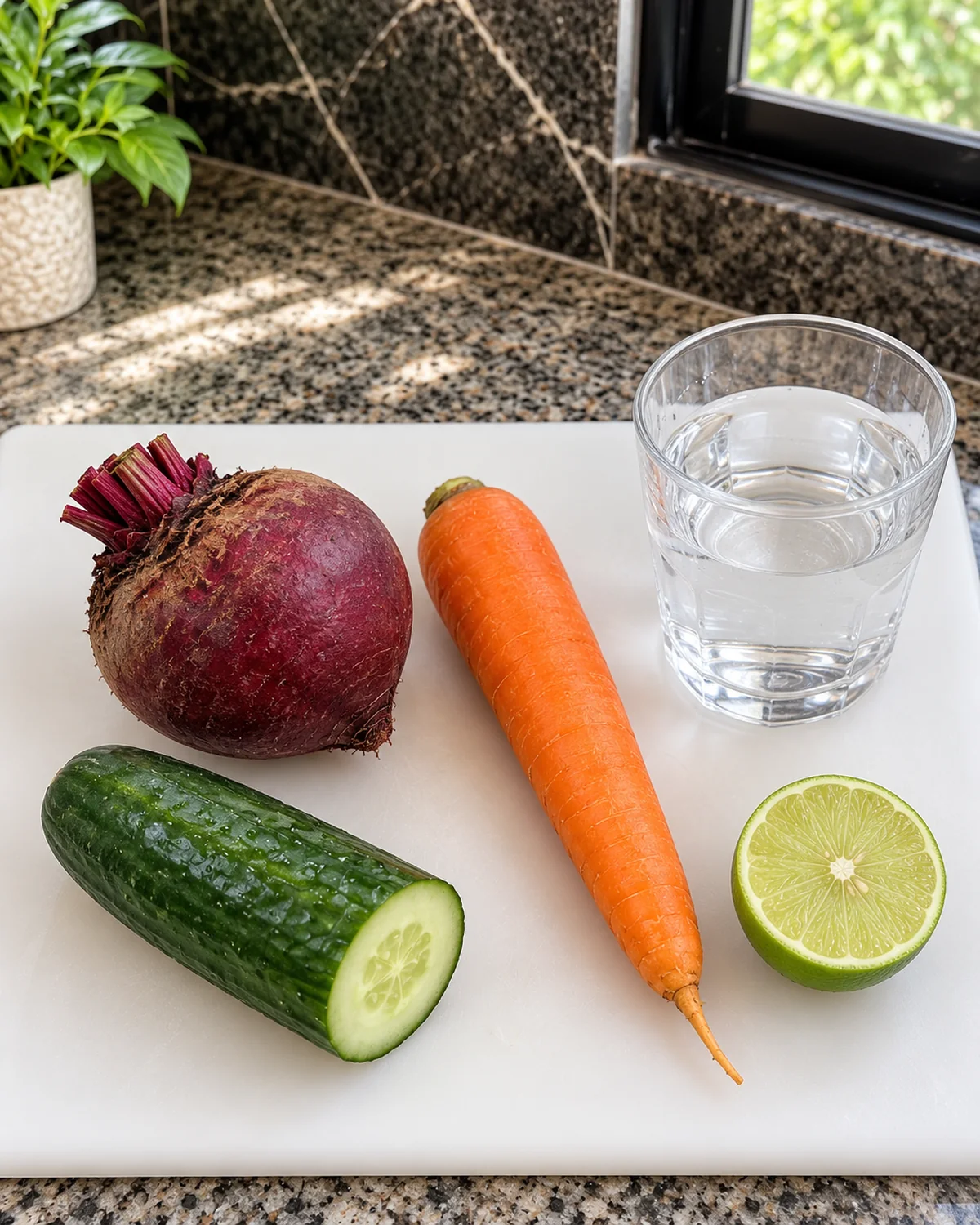
One medium raw beetroot: Peel it and cut it into small pieces. Smaller cubes are easier on the blender and help the mixture become smooth without prolonged processing.
One medium carrot: Peel and slice it into thin rounds. Carrot adds mild natural sweetness and helps balance the stronger beet flavor.
Half a medium cucumber: Wash it thoroughly and cut it into chunks. The peel can remain if it is fresh and clean. Cucumber provides moisture and a cooling flavor.
Juice of half a fresh lime: Freshly squeezed lime brings acidity and brightness. Bottled juice may taste flatter or more bitter, so fresh is worthwhile here.
Half a cup of cold water: Water allows the vegetables to move through the blades and determines the final concentration. Start with the specified amount, then add a splash more only if needed.
Ice cubes, optional: Ice is for serving rather than blending. Adding several cubes to the blender can dilute the flavor and may make the texture uneven.
How Each Ingredient Affects the Flavor
Beetroot: Earthy and Robust
Raw beetroot has an unmistakable earthy sweetness. Its flavor is strongest immediately after blending, so using one medium beet keeps the drink bold without overwhelming the other ingredients. The pigment also stains easily; use a washable cutting board and rinse tools promptly.
Carrot: Mild Natural Sweetness
Carrot rounds off the beet’s mineral notes. It does not make the drink taste sugary, but it gives the mixture a softer finish and a little more body. Thin slices blend more efficiently than large chunks.
Cucumber: Fresh and Cooling
Cucumber lightens the drink. Its high water content keeps the mixture from feeling heavy, while its clean flavor makes each sip more refreshing. A firm cucumber with smooth, dark-green skin gives the best result.
Lime: Bright and Tart
Lime is the balancing ingredient. Its acidity lifts the carrot’s sweetness and reduces the perception of beetroot earthiness. Squeeze it directly into the blender and avoid dropping in seeds or pieces of bitter white pith.
How to Make Beetroot Carrot Cucumber Lime Juice
1. Prepare the Vegetables
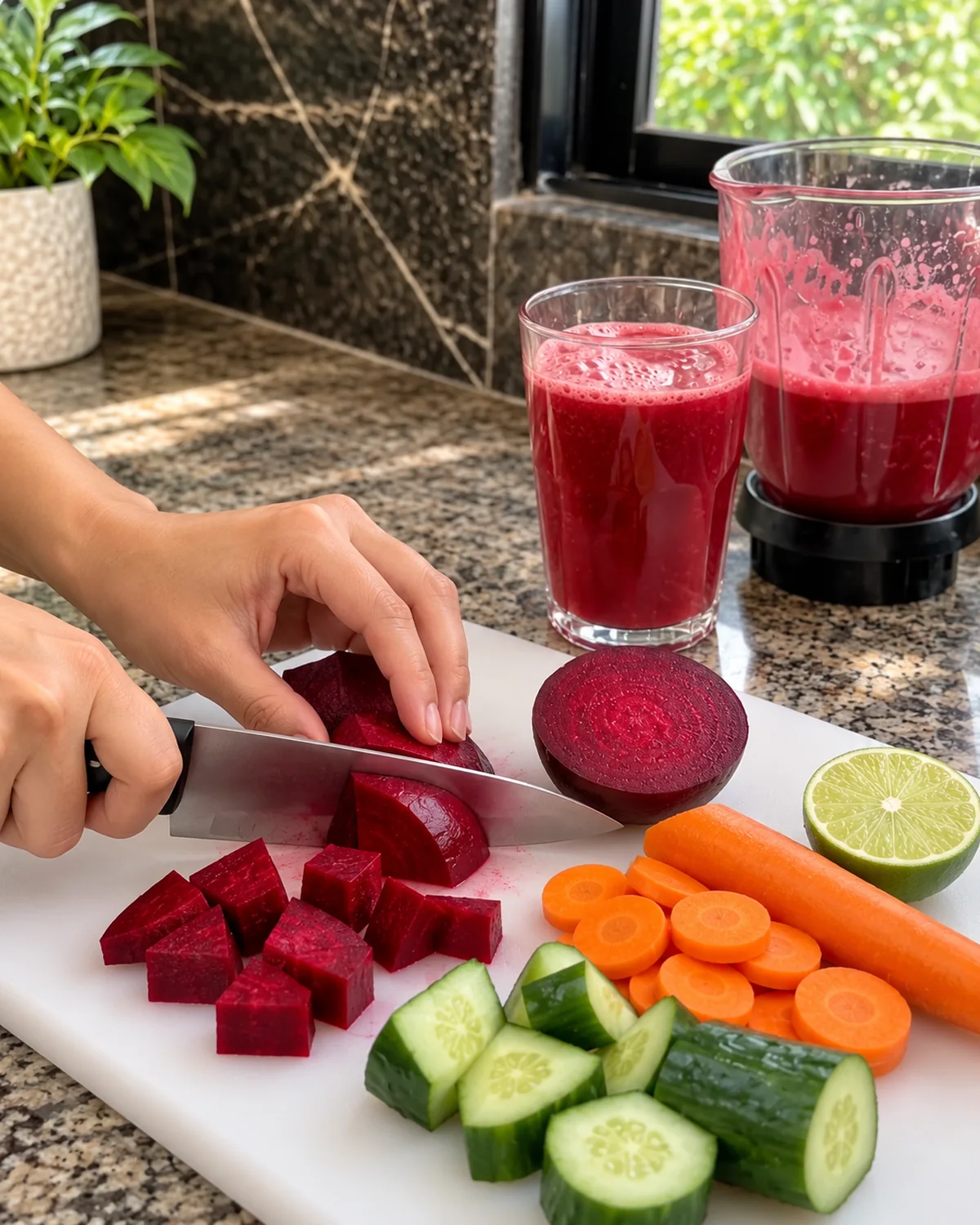
Wash all produce carefully. Peel the beetroot and chop it into small, roughly even pieces. Peel the carrot and slice it thinly. Wash the cucumber and cut it into small chunks. Keeping the pieces modest in size reduces strain on the blender and shortens the time needed to reach an even texture.
Beet juice can stain hands, boards, and light-colored towels. Gloves are optional, but wipe spills promptly and rinse the knife and board as soon as you finish chopping. The color usually washes from skin after normal handwashing.
2. Load the Blender Correctly
Place the beetroot in the blender, followed by the carrot and cucumber. Add the juice of half a fresh lime and pour in half a cup of cold water. Liquid near the blades helps establish circulation, while the smaller vegetable pieces move downward more readily than large chunks.
3. Blend Until Smooth
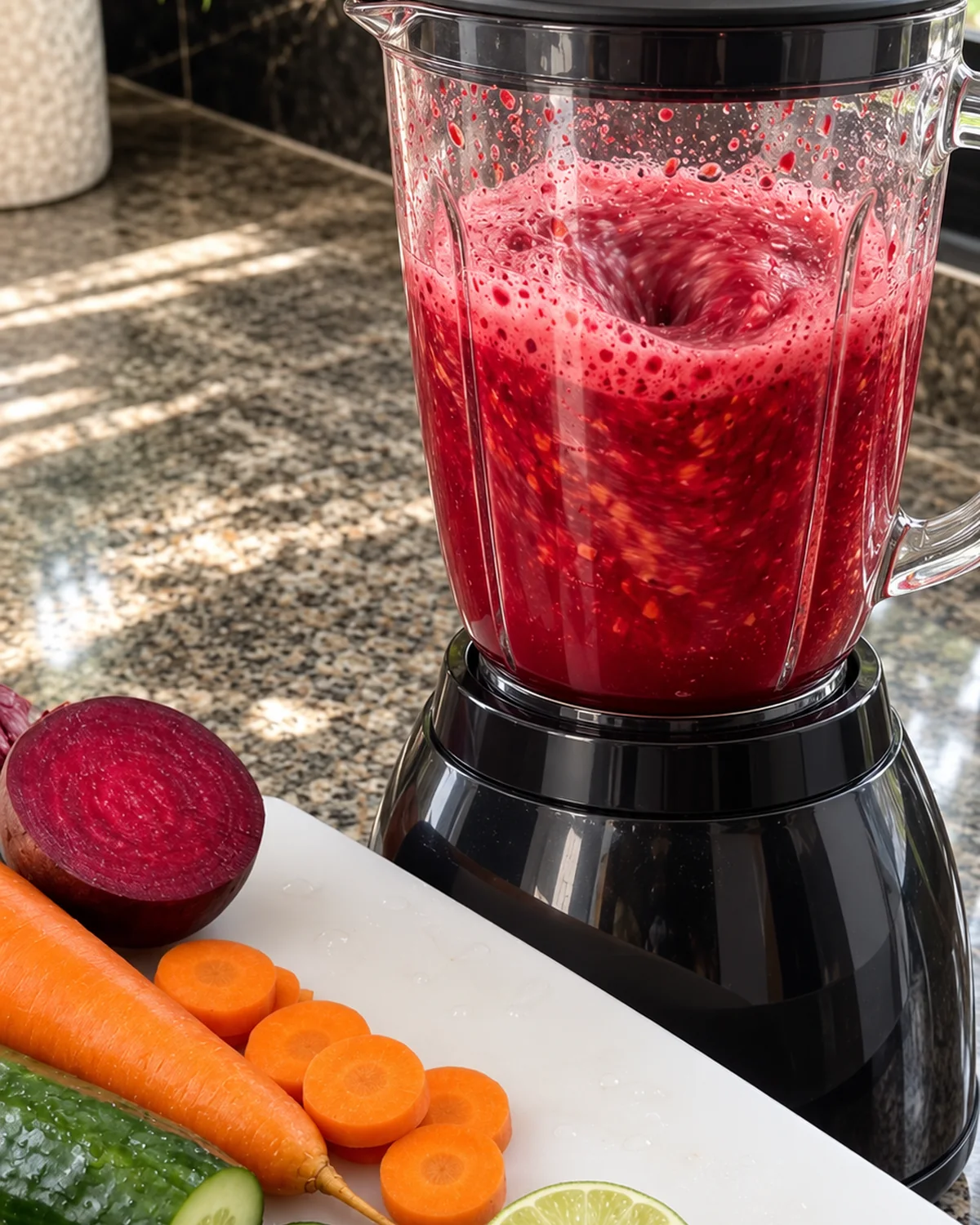
Secure the lid and blend on high for 45 to 60 seconds. The exact time depends on blender power and how finely the vegetables were cut. Stop when the mixture looks uniformly deep ruby red and you no longer see distinct vegetable pieces. If the blades spin without circulating the mixture, turn off the machine, add one or two tablespoons of cold water, secure the lid, and continue.
4. Adjust and Serve
Check the consistency. For a thinner drink, add a small amount of cold water and blend briefly. For a smooth, juice-like result, strain the mixture through a fine-mesh strainer into a bowl or pitcher, pressing gently with a spoon. For more of the original fiber, skip straining and pour directly into a tall glass.
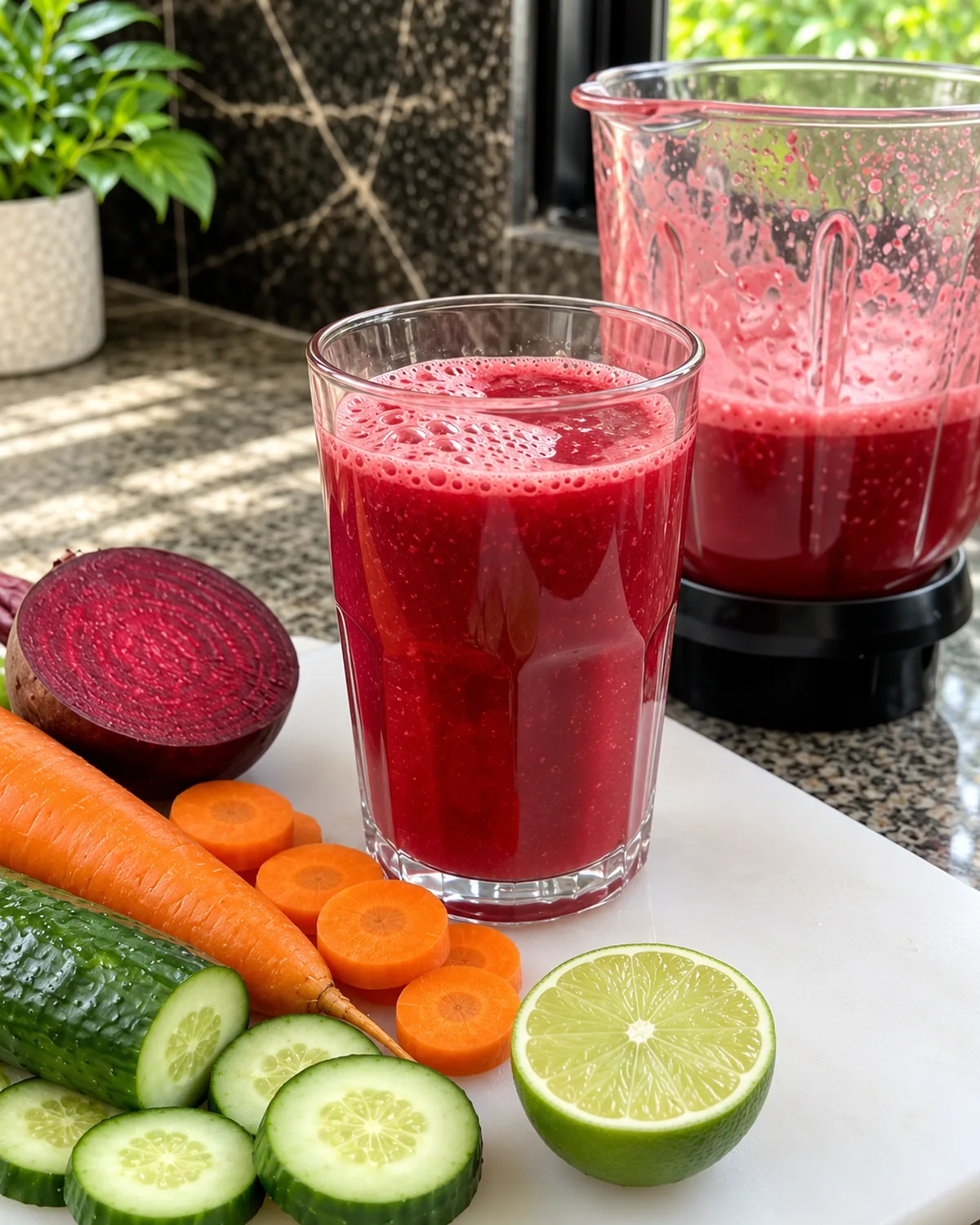
Serve immediately, either chilled as blended or over optional ice cubes. Stir before drinking if the fine pulp begins to settle. The natural foam and tiny bubbles on top are normal and are part of the freshly blended appearance.
Blender vs. Juicer: What’s the Difference?
A blender processes the whole edible portion of the vegetables with water. The resulting drink includes fine pulp and generally retains more of the original fiber when served unstrained. It is thicker, more filling, and may separate as it stands. A standard blender is also common in home kitchens and usually easier to clean than a multi-part juicer.
A juicer extracts liquid and separates most insoluble pulp automatically. That creates a thinner, smoother beverage with a more concentrated flavor and less fiber. If using a juicer, you may not need the half cup of water; however, that becomes a different preparation method from the blender recipe provided here. For this recipe, blending and then optionally straining gives you control over the final texture.
How to Adjust the Consistency
Begin with the specified half cup of water. Too much water at the start can make the flavor weak, and it is easier to thin the juice than to concentrate it again. After blending, add water one tablespoon at a time until it pours easily and feels pleasant to drink.
A high-powered blender may produce a finer texture with the original amount of water. A smaller or less powerful model may need a little more liquid and a longer blending time. Pause between extra blending cycles if the motor or liquid becomes warm, since this drink tastes best cool.
How to Balance the Earthy Beetroot Flavor
Use a medium beet rather than an oversized one, and keep the carrot, cucumber, and lime quantities unchanged. The cucumber dilutes the intensity naturally, while lime provides contrast. Chilling the ingredients before blending also makes the earthy quality less prominent and the drink more refreshing.
If the flavor still feels strong, add a small splash of water rather than sweetener. Optional variations such as ginger or apple can change the flavor, but they should not be added to the main recipe. Taste the exact version first so you understand its intended balance.
Strained vs. Unstrained Juice
Unstrained juice has more texture, more visible fine pulp, and retains more of the vegetables’ original fiber. Stir it just before drinking because natural settling occurs. Strained juice is lighter and smoother, which some people find easier to sip, but much of the insoluble fiber remains in the strainer.
To strain, place a fine-mesh strainer over a bowl and pour in the blended mixture in batches. Press gently rather than forcing every bit of pulp through. Do not discard the pulp automatically; it can be stirred into a vegetable soup, savory muffin batter, or composted.
Practical Nutrition Information
Beetroot, carrot, cucumber, and lime naturally provide water, carbohydrates, vitamins, minerals, and plant compounds. Carrots are known for carotenoid pigments, beetroot contains betalain pigments, cucumber contributes water, and lime supplies vitamin C. The exact nutrient content varies with vegetable size, variety, freshness, preparation, and whether the drink is strained.
This recipe is a beverage, not a medical treatment. It should not be presented as a detox, cure, or replacement for a balanced meal or professional care. Anyone managing a medical condition, medication interaction, blood sugar, kidney concerns, or a prescribed diet should follow guidance from a qualified health professional.
Common Mistakes to Avoid
Leaving pieces too large: Small cuts blend faster and more evenly. Adding too much water: Begin with half a cup and adjust after blending. Using bottled lime juice: Fresh lime gives a cleaner flavor. Overfilling the blender: Leave space for circulation and blend batches when scaling up. Forgetting the lid: Secure it firmly before switching to high speed. Waiting too long to serve: Fresh juice tastes brightest immediately.
Easy Ingredient Variations
Keep the core recipe unchanged for the classic version. For a separate variation, add a small piece of peeled ginger for warmth, a few mint leaves for a cooling herbal note, or part of a sweet apple for more sweetness. These additions alter both flavor and nutrition, so treat them as optional variations rather than required ingredients.
You can also replace lime with lemon if that is what you have, though lime’s floral tartness pairs especially well with beetroot. For a colder drink, chill the vegetables and water in advance or serve over ice rather than blending ice into the mixture.
Best Time to Enjoy This Juice
There is no single required time. It works with breakfast, alongside a light lunch, or as an afternoon beverage. Because it is made from raw vegetables and has a noticeable earthy flavor, many people prefer it well chilled and served with food rather than as the only item in a meal.
If you are new to beet juice, begin with a smaller serving and see how you enjoy it. Beet pigments can temporarily color urine or stool pink or red in some people; this can be harmless, but unexpected or persistent symptoms should be discussed with a healthcare professional.
How to Store Fresh Vegetable Juice
Freshly blended juice is best served immediately. If necessary, transfer it to a clean airtight container, fill it close to the top to limit air exposure, and refrigerate for up to 24 hours. Keep it at 40°F or below. Shake or stir well before serving because separation is normal.
Do not leave the juice at room temperature for extended periods. Discard it if it develops an unusual odor, visible fermentation, or other signs of spoilage. Freezing is possible in a freezer-safe container with expansion space, but thawed juice may have a more separated texture.
Frequently Asked Questions
Do I need to cook the beetroot first?
No. This recipe uses raw beetroot. Peel it and cut it into small pieces so the blender can process it efficiently. Cooked beetroot would create a softer, sweeter, and distinctly different drink.
Can I leave the beetroot peel on?
Peeling gives the juice a cleaner flavor and smoother texture. If using a very fresh beet and choosing not to peel it, scrub it exceptionally well, but the recipe is written for peeled beetroot.
Can I make it without straining?
Yes. Unstrained is the default blender approach and retains more fiber. Blend thoroughly, add a splash of water if needed, and stir before drinking.
Why did my juice separate?
Separation is natural because the drink contains water and suspended vegetable particles. Stir or shake it before serving. It does not require emulsifiers or stabilizers.
Can I double the recipe?
Yes, provided your blender has enough capacity. Do not fill beyond the manufacturer’s maximum line. Blend in two batches if necessary, then combine them in a pitcher.
Is this a smoothie?
It is better described as blended vegetable juice. It contains fine pulp but no creamy fruit, yogurt, milk, or other typical smoothie ingredients.
Will the beetroot stain my blender?
Most glass and high-quality plastic jars clean well when rinsed promptly. Wash with warm soapy water after pouring. Persistent tinting may fade with repeated washing; always follow the blender manufacturer’s care instructions.
Final Thoughts
Beetroot carrot cucumber lime juice is a simple way to make a colorful vegetable drink at home without specialized juicing equipment. Careful chopping, the correct amount of cold water, and fresh lime create a balanced drink with natural pulp and a bright finish. Serve it right away for the best flavor, and choose strained or unstrained texture according to your preference.
Print
Beetroot, Carrot, Cucumber & Lime Juice
- Prep Time: 10 minutes
- Cook Time: 0 minutes
- Total Time: 10 minutes
- Yield: 1–2 servings 1x
- Category: Beverage / Breakfast
- Method: Blender / No-Cook
- Cuisine: American-Inspired
Description
A refreshing homemade ruby-red vegetable juice made with raw beetroot, carrot, cucumber, fresh lime, and cold water.
Ingredients
- 1 medium raw beetroot, peeled and chopped
- 1 medium carrot, peeled and sliced
- 1/2 medium cucumber, chopped
- Juice of 1/2 fresh lime
- 1/2 cup cold water
- Ice cubes, optional for serving
Instructions
- Wash, peel, and chop the raw beetroot into small pieces.
- Peel the carrot and cut it into thin slices.
- Wash the cucumber thoroughly and chop it into small chunks.
- Place the chopped beetroot into a blender.
- Add the carrot slices and cucumber chunks.
- Squeeze the juice of half a fresh lime into the blender.
- Pour in 1/2 cup cold water to help the ingredients blend.
- Secure the lid and blend on high for approximately 45–60 seconds, or until smooth. Actual time varies with blender power and vegetable size.
- Check the texture. Add a little more cold water if necessary. For a thinner drink, strain through a fine-mesh strainer; for more fiber, serve without straining.
- Pour into a tall glass and serve immediately, chilled or over optional ice.
Notes
- Cut the firm beetroot and carrot into small pieces to reduce strain on the blender.
- Start with the specified water and add more only after checking the texture.
- Serving without straining retains more of the vegetables’ original fiber.
- Refrigerate in a clean sealed container for up to 24 hours and stir before serving.
- For make-ahead preparation, wash and chop the vegetables in advance and refrigerate them separately until ready to blend.
- This beverage is not a medical treatment or a replacement for a balanced diet.