
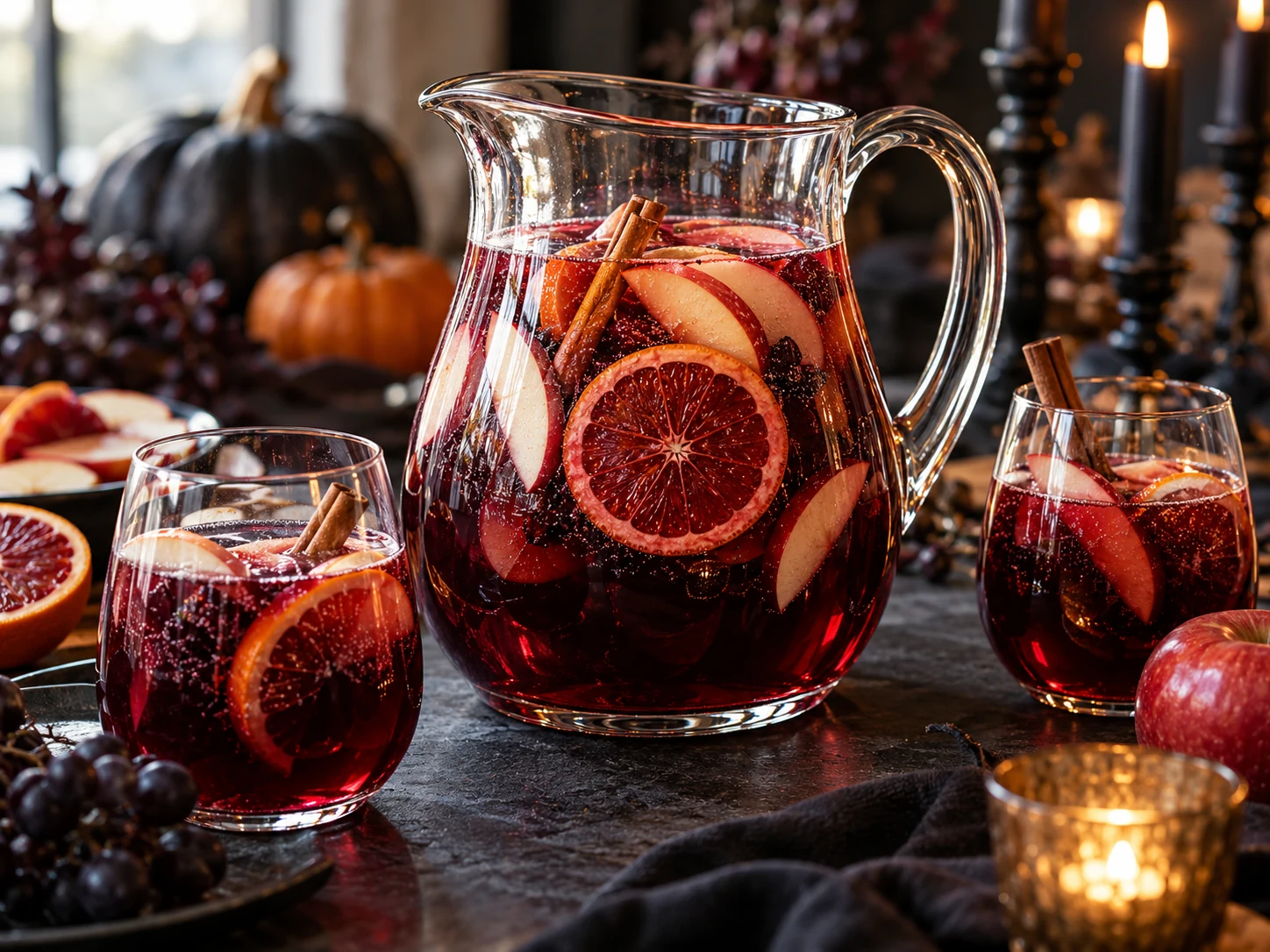
Halloween Sangria is a deep ruby party drink made with dry red wine, crisp apple, blood orange, sugar, cinnamon, and a sparkling finish. The fruit-filled pitcher looks dramatic on a Halloween table without artificial smoke or complicated effects. Sparkling apple cider makes a sweeter version, while ginger ale gives the drink a drier, gently spiced finish.
This recipe serves six to eight and benefits from at least one to two hours of chilling. Resting gives the apple and blood orange time to perfume the wine and allows the sugar and cinnamon to blend. Add the sparkling ingredient only before serving so the sangria stays lively.
Why You’ll Love This Halloween Sangria
The drink is festive but still tastes like a balanced sangria. Dry red wine provides structure, seasonal fruit adds freshness, and a restrained amount of cinnamon gives autumn warmth. There are no heavy syrups or excessive candy flavors to obscure the wine.
Most preparation can happen before guests arrive. Slice the fruit, mix the still ingredients, cover the pitcher, and refrigerate. At serving time, add sparkling cider or ginger ale, prepare glasses with ice, and distribute fruit among the servings.
The optional colored sugar rim makes the glasses playful, while cinnamon sticks create a more elegant presentation. You can use both, one, or neither. The ruby wine and blood orange already give the pitcher a strong Halloween look.
Ingredients and Ingredient Notes
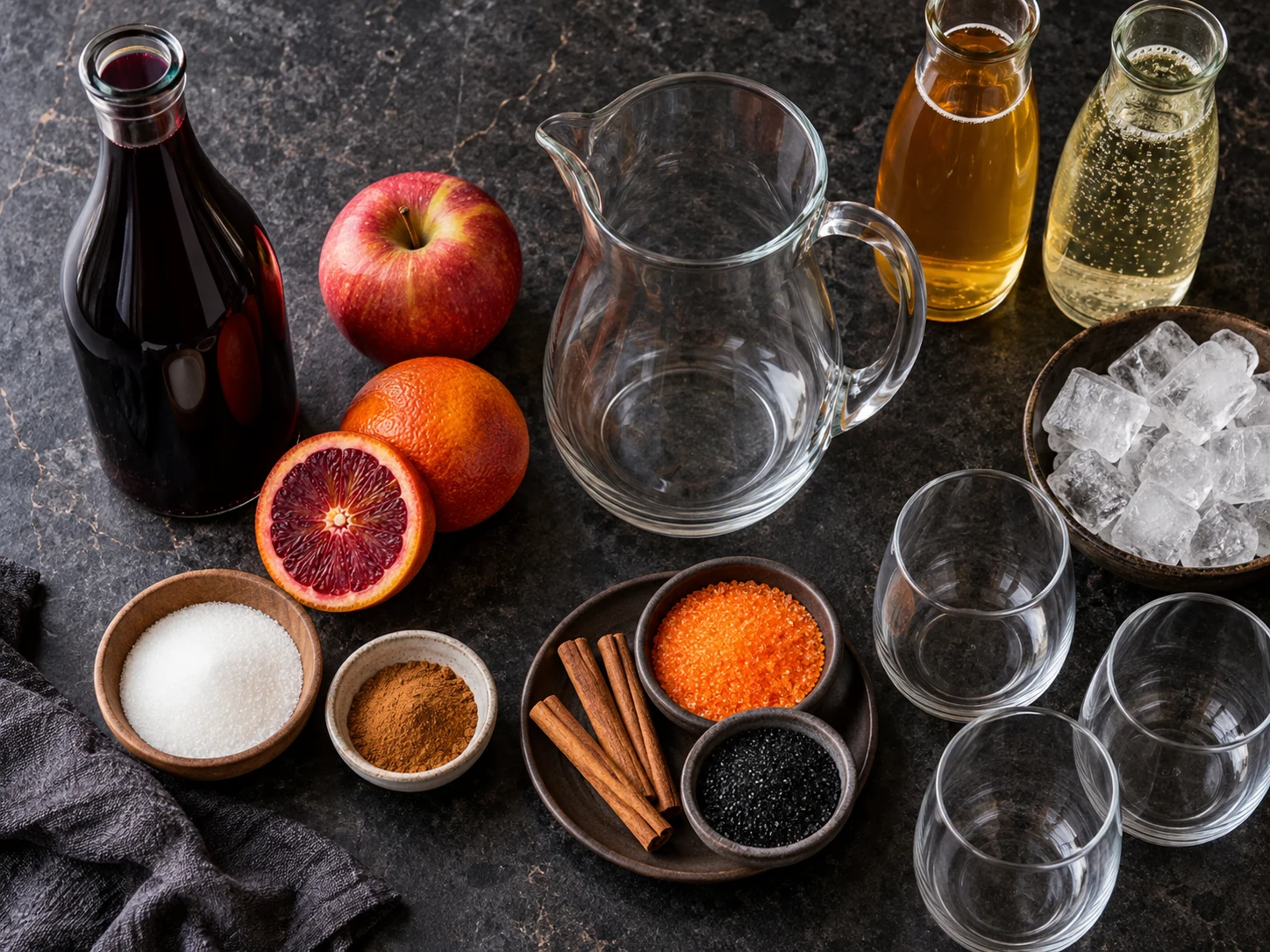
- 1 bottle (750 milliliters) dry red wine
- 1 apple, thinly sliced
- 1 blood orange, sliced into rounds
- 2 tablespoons sugar, adjusted to taste
- ½ teaspoon ground cinnamon
- 1½ cups sparkling apple cider for a sweeter version, or ginger ale for a drier spiced version
- Ice, for serving
- Cinnamon sticks, optional
- Food-safe black or orange sugar, optional, for rims
- Halloween cocktail picks or edible gummy eyeballs, optional
Dry Red Wine
Choose a dry, fruit-forward red wine that you would enjoy by the glass. Spanish tempranillo, garnacha, merlot, or a medium-bodied red blend all work. Avoid an expensive bottle because fruit and sparkling cider modify its subtleties, but do not use wine with an unpleasant flavor. One standard 750-milliliter bottle gives the correct balance.
Apple and Blood Orange
A crisp apple such as Honeycrisp, Pink Lady, or Gala holds its shape during chilling. Thin slices absorb wine while remaining easy to serve. Blood orange contributes tart-sweet citrus and a dark red center that suits the Halloween theme. A regular orange can substitute when blood oranges are unavailable.
Sugar and Cinnamon
Two tablespoons of sugar soften the dry wine and citrus. Start with the measured amount, then adjust only after the mixture rests. Ground cinnamon spreads through the pitcher more thoroughly than a stick, but use only ½ teaspoon to avoid a powdery texture or dominant flavor.
Sparkling Apple Cider or Ginger Ale
Sparkling apple cider emphasizes autumn fruit and creates a sweeter sangria. Ginger ale is lighter and adds gentle ginger spice. Chill either option thoroughly and add it at the last moment. Do not add both; 1½ cups of one sparkling ingredient is sufficient.
How to Make Halloween Sangria
1. Prepare the Fruit and Optional Sugar Rims
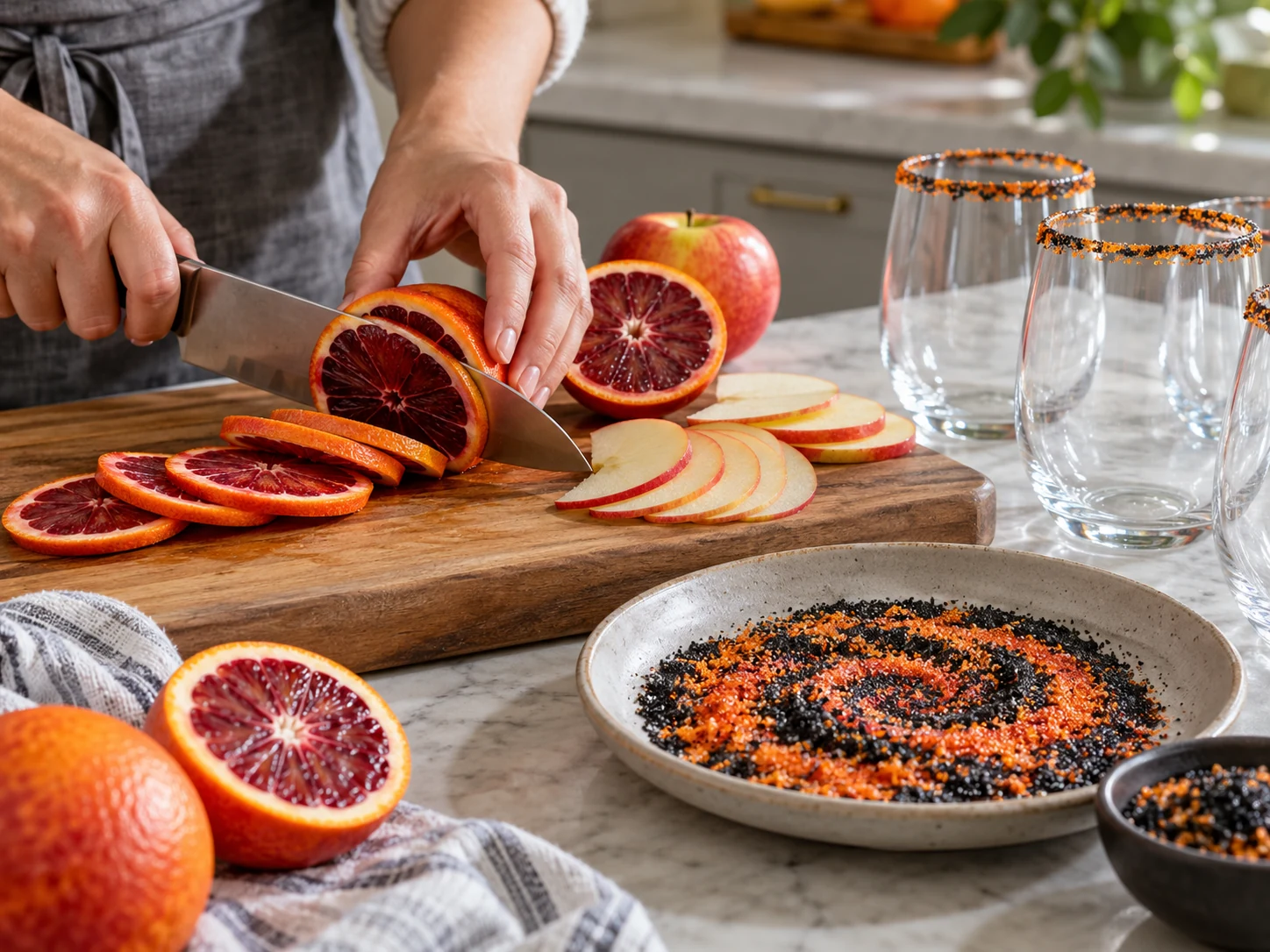
Wash and dry the apple and blood orange. Core the apple and cut it into thin slices. Slice the blood orange into narrow rounds, removing visible seeds. Thin, even pieces release flavor efficiently and fit neatly into glasses.
For colored rims, spread food-safe black or orange sugar on a shallow plate. Rub an orange wedge around the outside edge of each glass, then dip it lightly into the sugar. Set the glasses aside to dry. A half rim gives guests the choice of drinking with or without extra sweetness.
2. Mix and Chill the Sangria Base
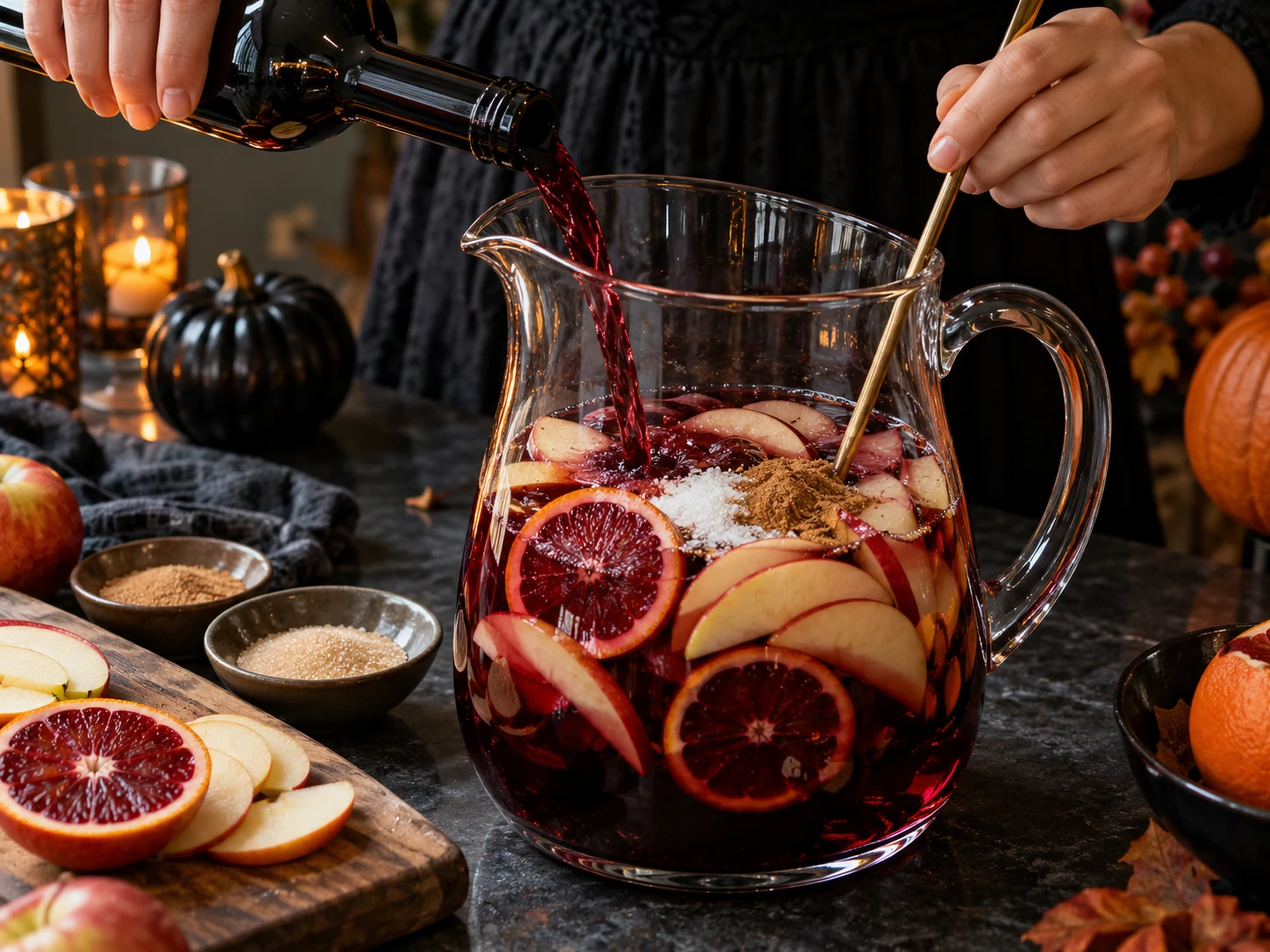
Place the apple and blood orange in a large glass pitcher. Add sugar and cinnamon, then pour in the red wine. Stir slowly until most of the sugar dissolves and the cinnamon is distributed. Cover the pitcher and refrigerate for at least one to two hours.
For deeper fruit flavor, refrigerate overnight. The apple may darken slightly but remains safe and flavorful. Keep the pitcher covered so it does not absorb refrigerator odors.
3. Add Sparkle and Serve
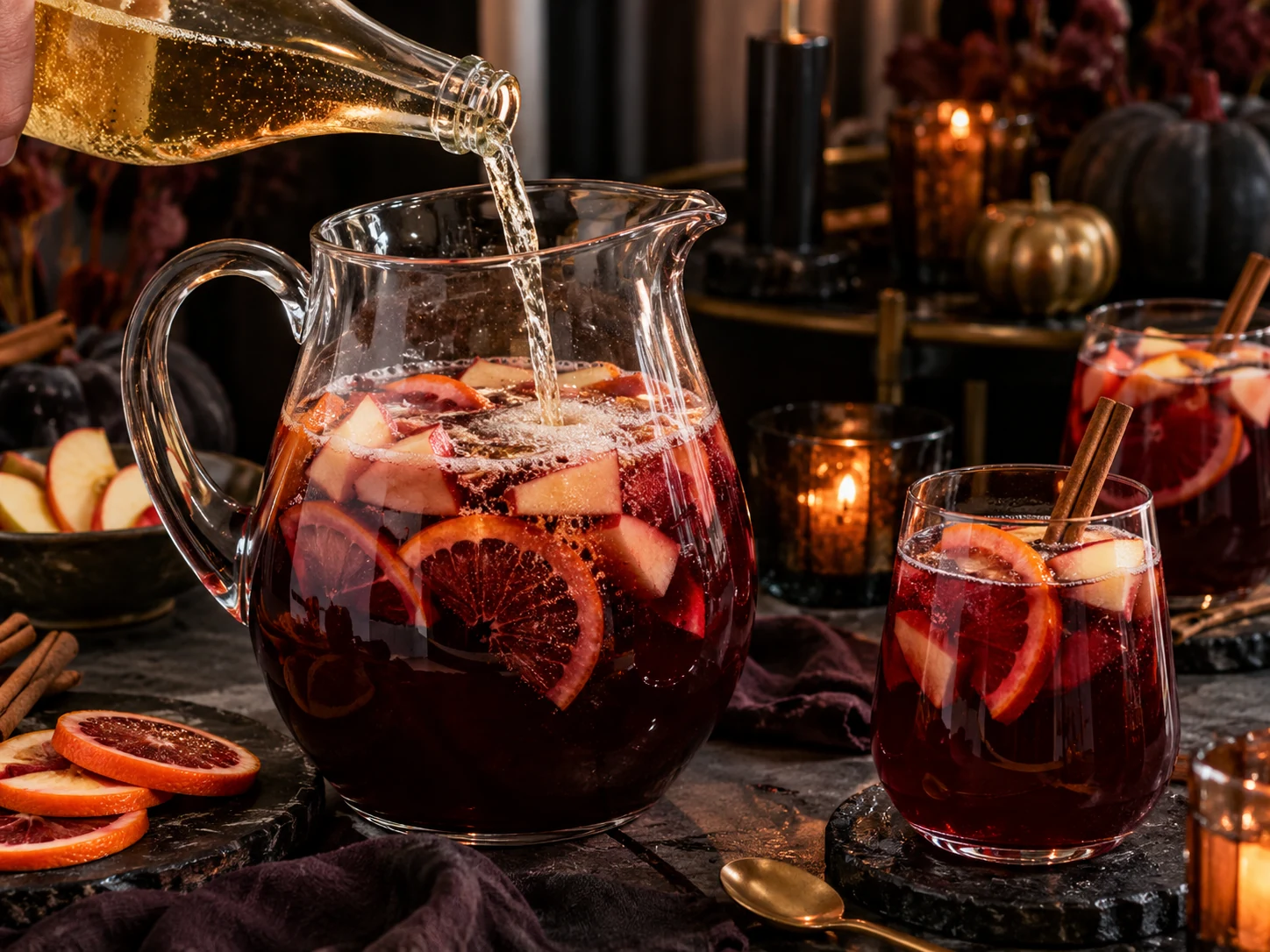
Immediately before serving, pour in the chilled sparkling apple cider or ginger ale. Stir once or twice, gently, to combine without releasing too many bubbles. Taste and add a small amount of sugar only if truly necessary.
Fill prepared glasses with fresh ice. Pour in sangria and add several fruit slices to each serving. Garnish with a cinnamon stick or food-safe cocktail pick, then serve promptly.
Why Sangria Needs Time to Rest
Fresh fruit does more than decorate the pitcher. During chilling, aromatic oils from the orange peel and juices from the cut surfaces move into the wine. The apple absorbs some wine and releases subtle sweetness. Cinnamon and sugar also disperse more evenly.
One hour produces a light infusion, while two hours gives a fuller result. Overnight resting creates the most integrated flavor. Do not add carbonated cider or ginger ale during this period, because it will be flat by serving time.
If time is short, slice the fruit more thinly and refrigerate the wine before mixing. Even 30 minutes is better than no rest, though the flavor will be less developed.
Choosing Between Sparkling Cider and Ginger Ale
Sparkling apple cider reinforces the fresh apple and produces a sweet, fruit-forward pitcher. It is an approachable choice for guests who do not usually drink dry wine. Because brands vary, taste the cider before deciding whether the full two tablespoons of sugar are needed.
Ginger ale keeps the sangria lighter and brings a mild warming spice that complements cinnamon. It is usually the better choice when the wine and fruit are already sweet. A strongly flavored ginger beer is not an exact substitute; it can overpower the blood orange and may add significant heat.
Whichever option you choose, chill it completely and measure 1½ cups. Additional soda weakens the wine and fruit balance. Offer extra sparkling beverage separately for guests who prefer a lighter glass.
How to Balance Sweetness
Wine, fruit, and sparkling mixers vary in sweetness, so the recipe includes a modest starting amount of sugar. Stir in two tablespoons before chilling, then taste after the sangria rests and again after the sparkling ingredient is added. Cold temperatures reduce the perception of sweetness, while carbonation makes acidity feel brighter.
If the finished sangria is too dry, dissolve one teaspoon of sugar in a spoonful of sangria before returning it to the pitcher. Granulated sugar added directly to a cold pitcher may sink. If the drink is too sweet, add a little fresh lemon juice or use ginger ale rather than cider; do not add more wine without recalculating serving strength.
Expert Tips for Better Sangria
- Start with cold wine. A cold base preserves the sparkling finish.
- Slice fruit thinly. Even pieces infuse quickly and fit into glasses.
- Cover during chilling. This protects the flavor from refrigerator odors.
- Add bubbles last. Sparkling cider or ginger ale belongs in the pitcher just before service.
- Use fresh serving ice. Do not let ice melt in the pitcher while it rests.
- Distribute fruit. Use a spoon or small ladle so every glass receives apple and orange.
Common Mistakes to Avoid
Adding soda before chilling results in flat sangria. Using thick fruit wedges slows infusion and makes pouring awkward. Adding too much ground cinnamon can create a gritty surface, while sweetening before tasting the mixer may produce a syrupy drink.
Do not fill the storage pitcher with ice. Melting ice dilutes the wine for every serving. Avoid plastic spiders, synthetic cobwebs, glitter, or other non-food decorations inside the pitcher. Use decorations only around the serving area.
Variations and Substitutions
Pears can replace the apple, while fresh blackberries or seedless grapes may be added for a darker Halloween appearance. Keep the total fruit quantity moderate so the pitcher still pours easily. Pomegranate arils add ruby color but can settle at the bottom.
A dry rosé creates a lighter sangria, though it loses the deep red Halloween look. White wine with apple and orange makes an autumn white sangria. These variations should still rest before the sparkling ingredient is added.
For a zero-proof version, replace red wine with nonalcoholic red wine or a blend of unsweetened red grape juice and strong chilled hibiscus tea. Reduce or omit the sugar, then finish with sparkling apple cider. Some nonalcoholic wines contain trace alcohol, so check the label for guests who require complete avoidance.
Serving Suggestions
Serve this sangria with cheese, cured meats, olives, roasted nuts, flatbreads, tacos, or autumn appetizers. Its fruit and cinnamon pair particularly well with salty and savory foods. Provide water and substantial food throughout the event.
For a Halloween menu, offer it alongside Halloween Margaritas for adults and Witches Brew Lemonade as the family-friendly option. Label each pitcher clearly and keep alcoholic drinks at an adult-controlled station.
Selecting a Pitcher and Planning Portions
Use a pitcher that holds at least 2 quarts so there is room for the wine, fruit, sparkling mixer, and gentle stirring. A narrow-necked carafe looks attractive but traps fruit and makes serving difficult. A wide opening allows a long spoon to distribute apple and orange slices among the glasses.
The recipe yields six to eight servings depending on glass size and the amount of ice. Plan on about 5 ounces of sangria per guest when other beverages are available. Use a measured ladle or deliberate pour to keep portions consistent. A large wineglass filled to the rim encourages spills and makes the drink appear stronger than intended.
Do not fill the pitcher completely before adding sparkling cider or ginger ale. Leave several inches of space so the bubbles do not overflow and the fruit can move when stirred. If the pitcher is too small, divide the rested base between two containers before adding the sparkling component.
Fruit Preparation for the Best Flavor
Choose firm, unbruised fruit and wash the skins under cool running water because the peel remains in the drink. Remove the apple core and orange seeds, but keep the colorful peels attached. Slices about one-eighth inch thick provide enough surface area for infusion without falling apart overnight.
If preparing the fruit well before mixing, toss apple slices with a small amount of orange juice and refrigerate them in a covered container. This slows browning without adding an unrelated flavor. Once the apple is submerged in wine, slight darkening is natural and does not affect quality.
Reserve several pristine slices for garnishing glasses. Fruit that has soaked overnight becomes deeply colored and flavorful, while fresh slices provide a cleaner visual contrast. Use clean tongs or a slotted spoon rather than fingers to transfer fruit.
Make-Ahead Instructions
Prepare the still sangria base up to 24 hours ahead. Combine wine, fruit, sugar, and cinnamon, cover tightly, and refrigerate. Prepare colored sugar and rim the glasses closer to service so humidity does not dissolve the crystals.
Keep sparkling cider or ginger ale sealed and cold. Add it only before pouring. Slice a few extra pieces of fresh fruit for garnish if the fruit in the pitcher becomes deeply stained overnight.
Storage and Food Safety
Refrigerate leftover sangria promptly in a covered container and use within two days. It will lose carbonation, and the fruit will continue softening. Remove fruit that becomes mushy or develops an unusual odor. Do not leave the pitcher at room temperature for extended periods.
Wash fruit before slicing, use a clean cutting board, and keep garnishes refrigerated. This recipe contains alcohol and is intended only for adults of legal drinking age. Encourage responsible portions, provide nonalcoholic alternatives, and arrange safe transportation.
Do not serve alcohol to anyone who is pregnant, driving, taking interacting medication, or otherwise avoiding it. Keep the pitcher out of children’s reach, especially when a zero-proof drink with a similar color is also present.
Frequently Asked Questions
What red wine is best for sangria?
Choose a dry, fruit-forward, medium-bodied wine such as tempranillo, garnacha, merlot, or a red blend. Avoid heavily oaked or very tannic bottles.
Can I make Halloween Sangria overnight?
Yes. Refrigerate the wine, fruit, sugar, and cinnamon overnight. Add sparkling cider or ginger ale only before serving.
Can I use a regular orange?
Yes. A regular orange provides the same citrus function, though the interior will be brighter and less dramatic than a blood orange.
Should I put ice in the pitcher?
Add ice to individual glasses. Ice in the pitcher melts and dilutes the entire batch while it waits.
Can I double the recipe?
Yes. Double every ingredient and divide between two pitchers so fruit distribution and chilling remain manageable.
Final Thoughts
Halloween Sangria delivers dramatic color through red wine and blood orange rather than gimmicks. Slice the fruit thinly, give the base time to chill, adjust sweetness after tasting, and add sparkling cider or ginger ale at the final moment. The result is an elegant autumn pitcher suited to responsible adult entertaining.
Print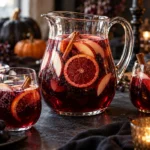
Halloween Sangria: A Spooky Treat to Impress Guests!
- Prep Time: 15 minutes
- Cook Time: 0 minutes
- Total Time: 2 hours 15 minutes
- Yield: 6 to 8 servings 1x
- Category: Beverage
- Method: Mixing
- Cuisine: American
- Diet: Vegetarian
Description
A deep ruby Halloween sangria with dry red wine, apple, blood orange, cinnamon, and a sparkling cider or ginger ale finish.
Ingredients
- 1 bottle (750 mL) dry red wine
- 1 apple, sliced thin
- 1 blood orange, sliced into rounds
- 2 tablespoons sugar (adjust to taste)
- ½ teaspoon ground cinnamon
- 1½ cups sparkling apple cider (for sweet version)
- — OR —
- 1½ cups ginger ale (for drier version with a spiced kick)
- Ice cubes (for serving)
- Cinnamon sticks (optional garnish)
- DIY black or orange sugar (for rimming glasses, optional)
- Halloween-themed cocktail picks or gummy eyeballs (optional garnish)
Instructions
- Prepare the Glass Rims (Optional): Mix a bit of sugar with food coloring (black or orange) and let it dry. Rub a lemon or orange wedge around the rim of each glass, then dip into the colored sugar for a festive finish.
- Make the Sangria: In a large pitcher or punch bowl, combine the red wine, sliced apple, sliced blood orange, sugar, and ground cinnamon. Stir until the sugar is mostly dissolved.
- Chill: Cover and refrigerate for at least 1–2 hours (or up to overnight) to let the flavors meld.
- Just Before Serving: Add the sparkling apple cider (or ginger ale) and give it a gentle stir. Add ice cubes if serving immediately.
- Serve & Garnish: Pour into prepared glasses and garnish with a cinnamon stick or Halloween-themed cocktail picks. Add extra fruit slices to each glass for a festive touch.
Notes
Chill the wine, fruit, sugar, and cinnamon for at least one to two hours or overnight. Add only one sparkling option—apple cider for sweeter sangria or ginger ale for a drier spiced finish—immediately before serving. Serve responsibly to adults of legal drinking age.
Nutrition
- Serving Size: 1 glass
- Calories: 150
- Sugar: 15g
- Sodium: 10mg
- Fat: 0g
- Saturated Fat: 0g
- Unsaturated Fat: 0g
- Trans Fat: 0g
- Carbohydrates: 16g
- Fiber: 1g
- Protein: 0g
- Cholesterol: 0mg