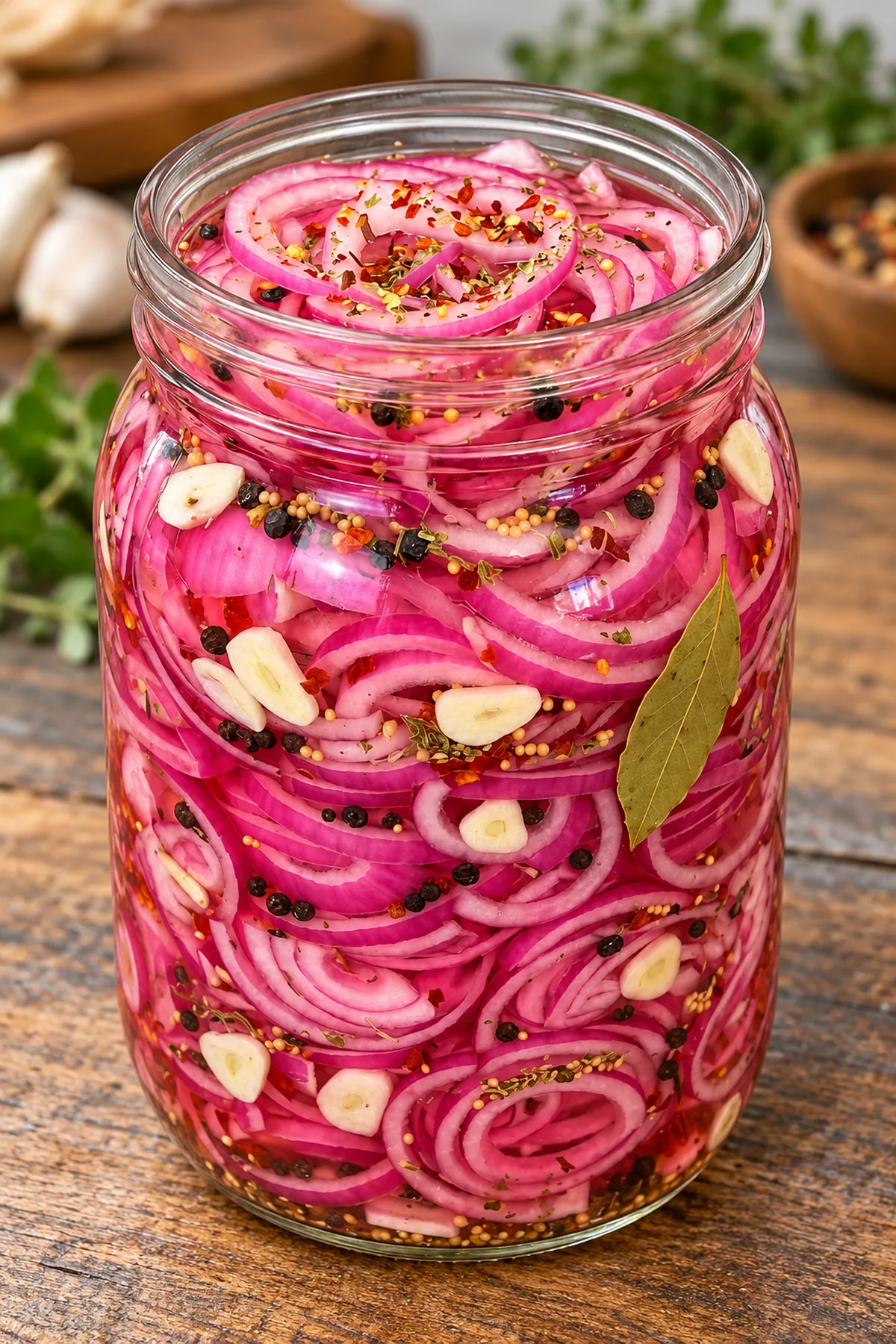

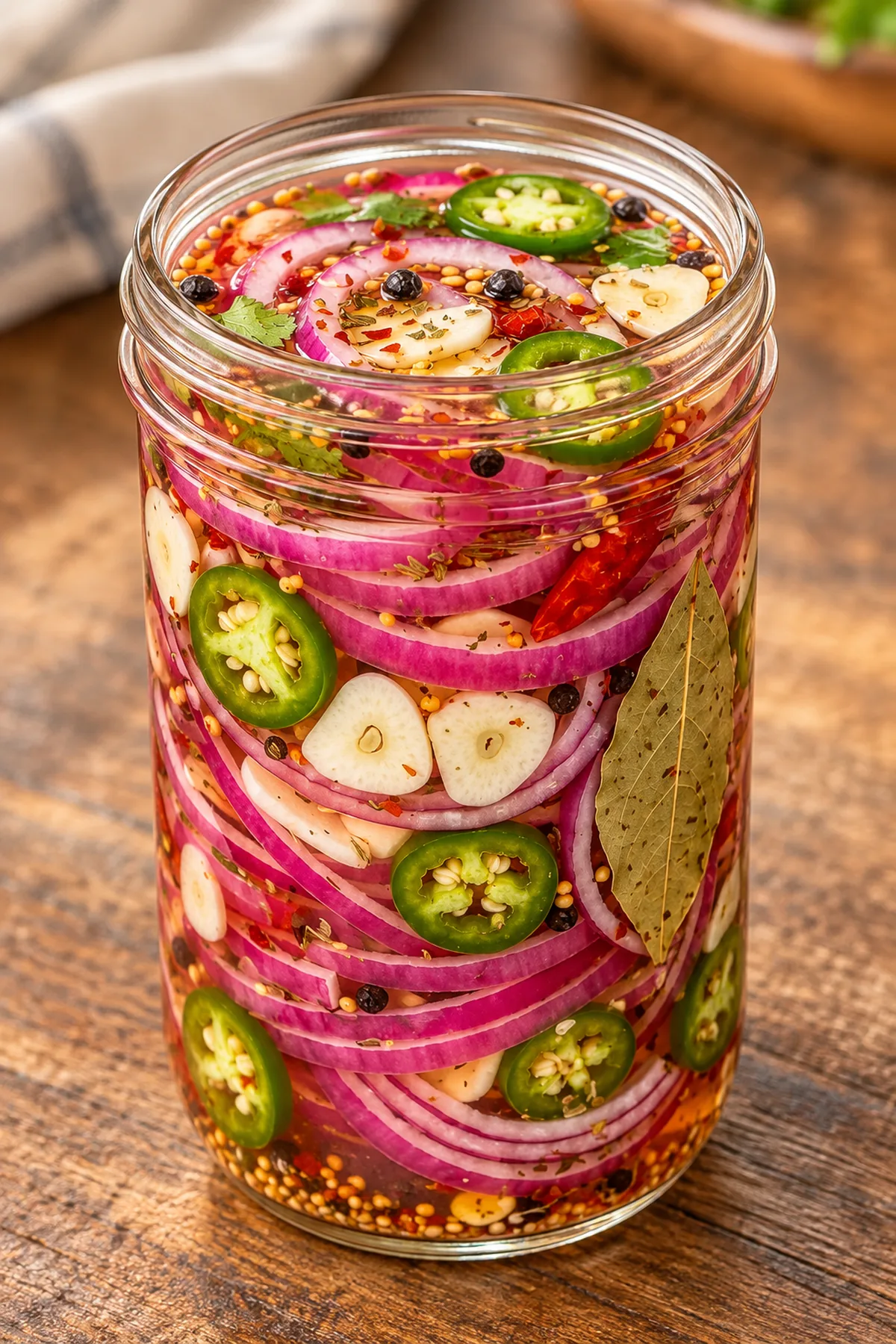
Spicy garlic pickled red onions and jalapeños are the kind of refrigerator staple that makes everyday food taste finished. Crisp magenta onion rings bring tang and color, fresh jalapeño slices add a grassy chile bite, and thin garlic slices make the brine deeply savory. Black peppercorns, mustard seeds, oregano, bay leaf, and red pepper flakes build a warm, aromatic background without covering up the fresh vegetables.
The pickles are ready after about one hour, when the onions and peppers are especially crisp and lively. An overnight rest is even better. During those 12 to 24 hours, the raw onion edge softens, the jalapeño heat spreads through the jar, and the brine turns rosy. The recipe makes one quart jar, enough for tacos, burgers, sandwiches, bowls, and snacks throughout the week.
Why You’ll Love This Spicy Refrigerator Pickle
This recipe is intentionally jalapeño-forward. Unlike a standard pickled red onion recipe with only dried chile flakes, it includes two fresh peppers so every serving has both onion and jalapeño. The combination creates more flavor than heat alone: jalapeños taste green and slightly fruity, sliced garlic contributes sweetness and savoriness, and whole spices release their aroma gradually as the jar chills.
A measured mixture of distilled white vinegar and water keeps the brine tangy but not harsh. Kosher salt seasons the vegetables, while a modest amount of sugar rounds the vinegar without making the pickles sweet. Heating the brine dissolves the seasonings and starts softening the vegetables immediately. Refrigeration then slows the process, preserving plenty of crunch.
No canning equipment is required. You need a clean heat-safe quart jar, a small saucepan, a knife, and about 20 minutes of active time. These are quick refrigerator pickles, however, and must remain chilled. The formula is not intended for water-bath canning or pantry storage.
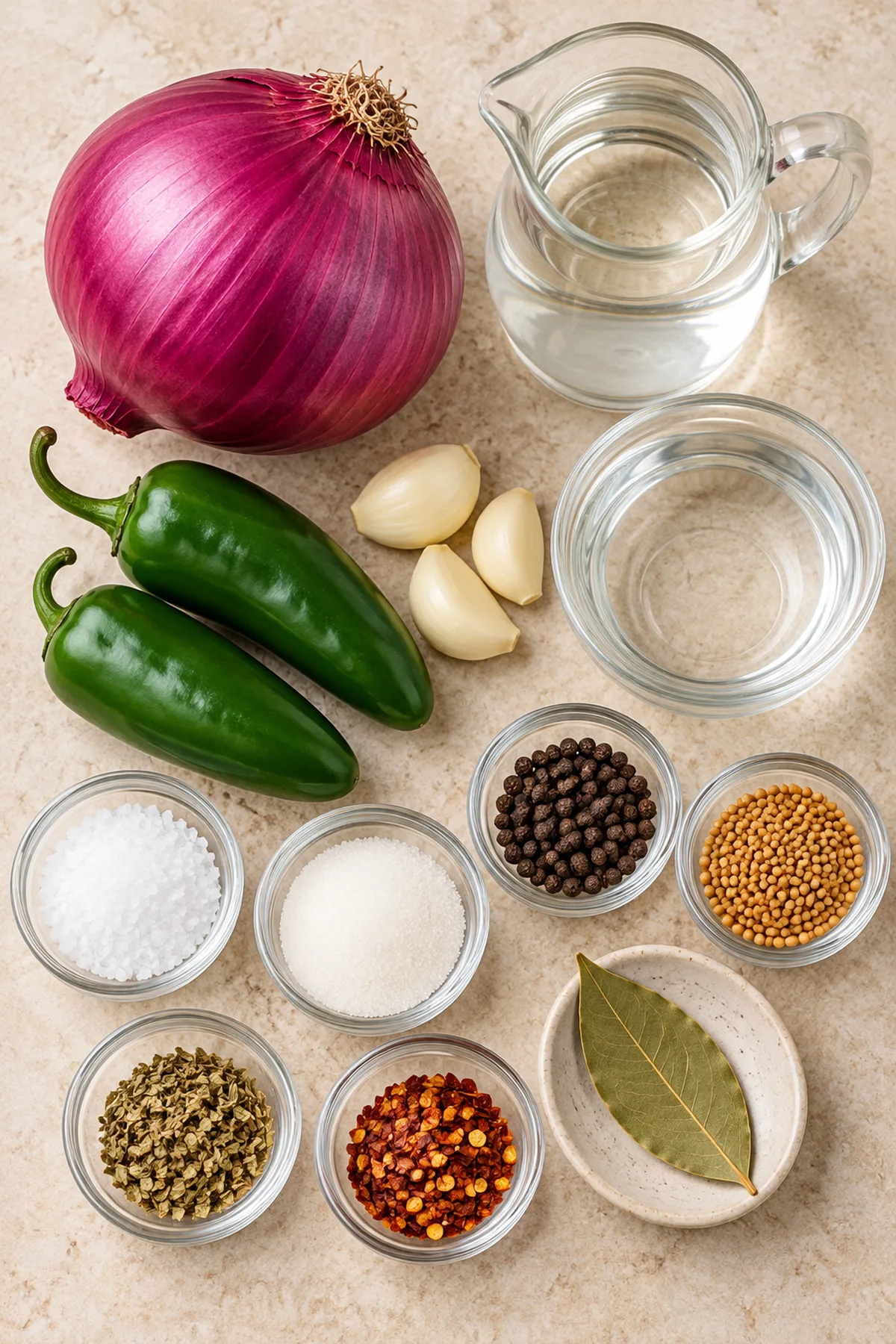
Ingredient Details
- 1 large red onion, thinly sliced
- 2 medium jalapeños, thinly sliced
- 4 garlic cloves, thinly sliced
- 1 1/2 cups distilled white vinegar (5% acidity)
- 3/4 cup water
- 1 1/2 tablespoons kosher salt
- 1 1/2 tablespoons granulated sugar
- 1 teaspoon whole black peppercorns
- 1 teaspoon mustard seeds
- 1/2 teaspoon red pepper flakes
- 1/2 teaspoon dried oregano
- 1 large bay leaf
Red onion: Select one that feels heavy and firm, with dry outer skin and no soft spots. Red onion’s natural pigments turn brighter in acidic brine, producing the signature pink color. Thin rings look beautiful in the jar, while half-moons are a little easier to pile onto tacos and sandwiches.
Fresh jalapeños: Two medium peppers give the jar a confident, medium-hot character. Jalapeño heat varies from pepper to pepper, so taste a tiny piece if you need to judge it. Most capsaicin surrounds the pale inner ribs. Remove the ribs and seeds and use only one pepper for a milder batch, or retain them for more heat.
Garlic: Four thinly sliced cloves provide bold garlic flavor throughout the quart jar. Slices infuse evenly and remain easy to identify. Garlic sometimes turns blue or green in acidic liquid because of a natural chemical reaction. That color alone is harmless and is not a sign that the jar has spoiled.
Vinegar and water: Use distilled white vinegar labeled 5 percent acidity. Its clean flavor lets the onion and jalapeño shine. The water softens the vinegar’s sharpness, but avoid adding more than the specified amount. Keeping the ratio consistent preserves the intended acidity and flavor.
Spices: Peppercorns bring woody warmth, mustard seeds add a subtle earthy pop, and red pepper flakes reinforce the jalapeño heat. Oregano adds a savory herbal note, while one bay leaf supplies depth. Whole and dried seasonings work better than ground spices, which can make the brine cloudy or gritty.
How to Make Spicy Garlic Pickled Red Onions and Jalapeños
1. Clean the Jar and Prepare the Vegetables
Wash a heat-safe quart jar and its lid in hot, soapy water. Rinse them thoroughly and let them drain. The jar must be very clean, though it does not need the full sterilization process used for shelf-stable canning. Place it on a folded kitchen towel before adding hot liquid.
Peel the onion and slice it into rings or half-moons about one-eighth inch thick. Cut the jalapeños into thin rounds and slice the garlic cloves. Wear food-safe gloves when handling hot peppers, particularly if your skin is sensitive. Avoid touching your face or eyes, and wash the knife, cutting board, and your hands well afterward.
2. Layer the Jar
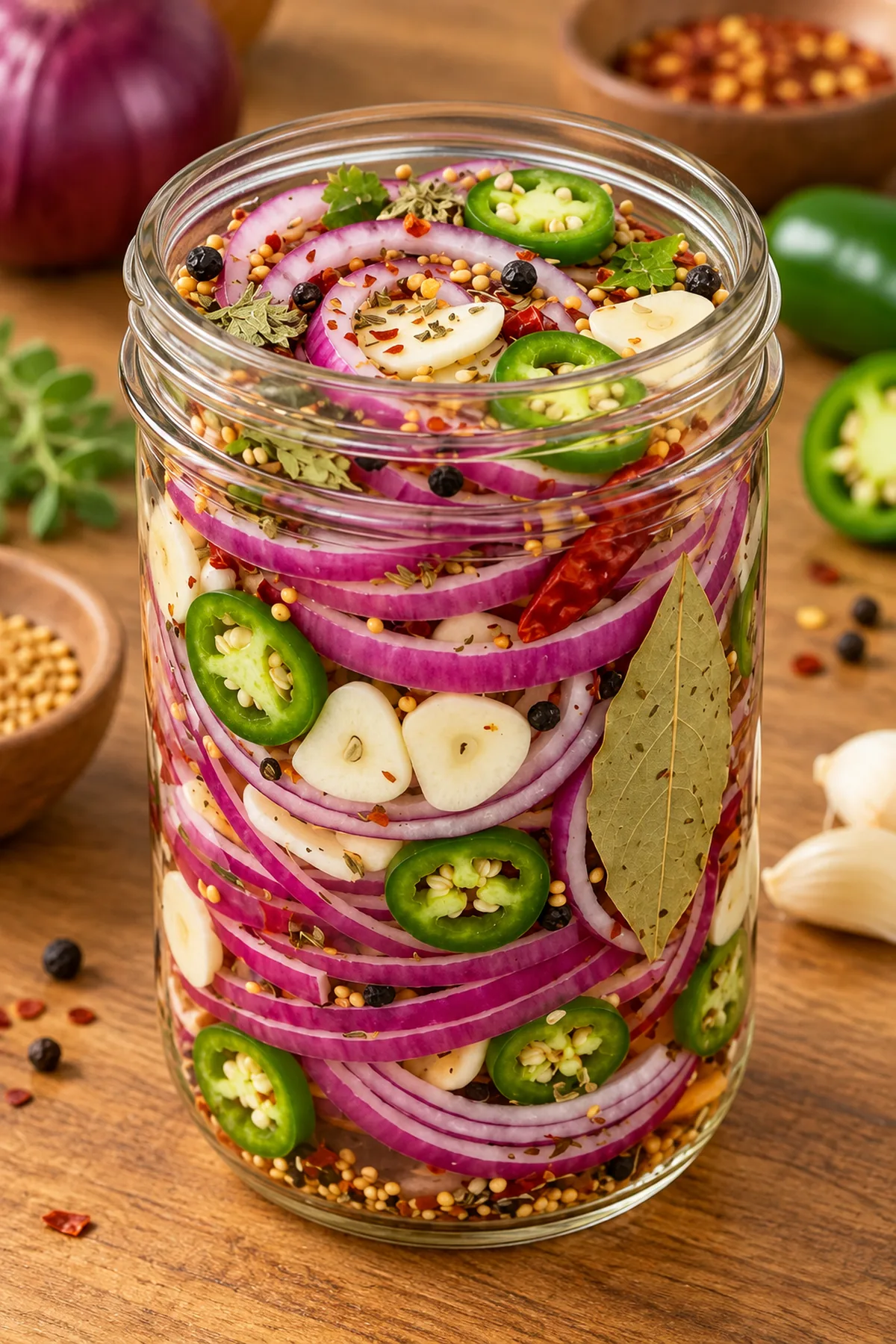
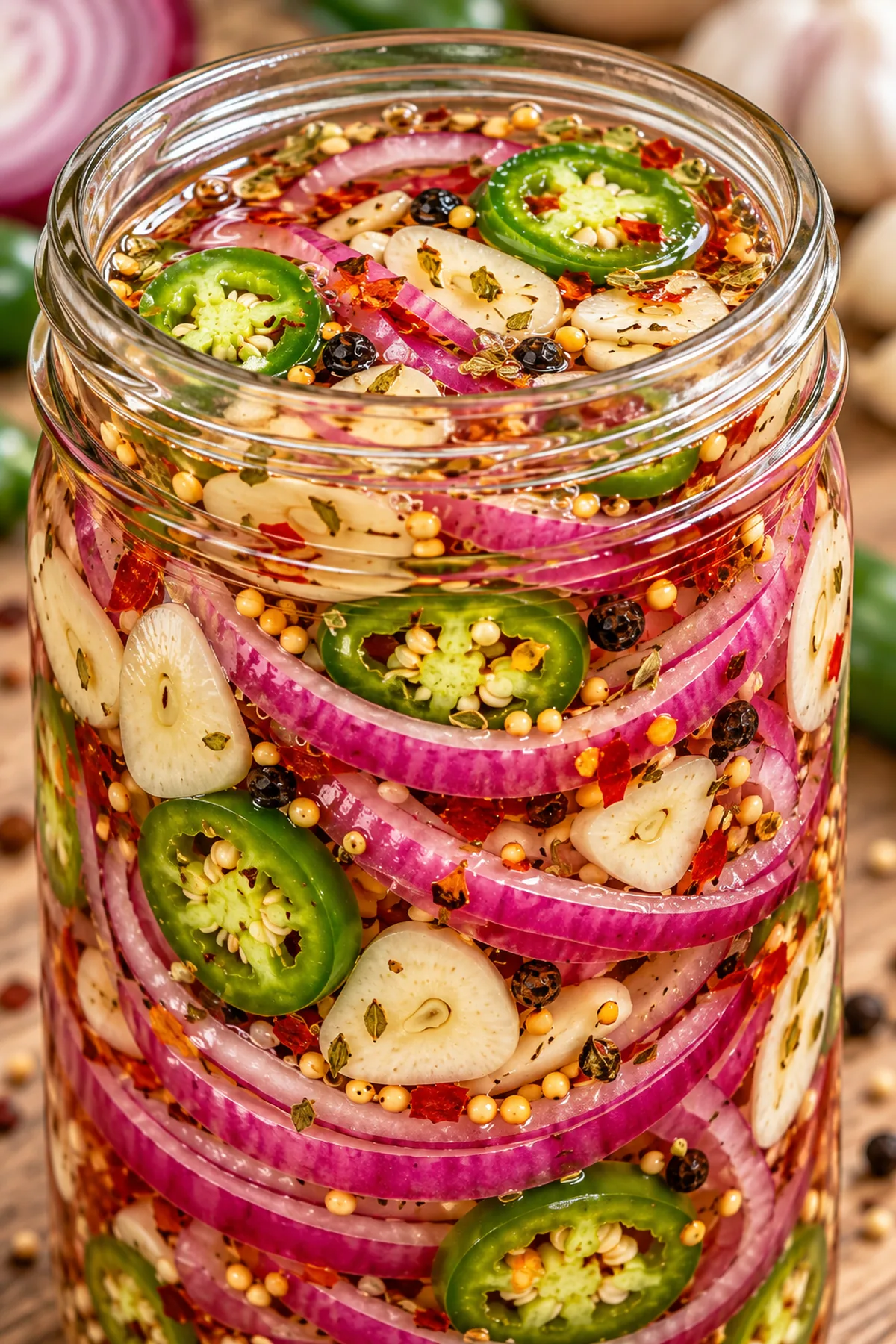
Loosely alternate onion, jalapeño, and garlic in the jar, sprinkling the peppercorns, mustard seeds, red pepper flakes, and oregano between the layers. Slide the bay leaf along the side. Do not compress everything into a solid block. Small spaces allow the hot brine to surround the vegetables and produce even flavor.
3. Heat the Brine
Combine the white vinegar, water, kosher salt, and sugar in a small nonreactive saucepan. Stainless steel is a reliable choice. Warm the mixture over medium heat, stirring until the salt and sugar dissolve completely. Bring it just to a gentle simmer. A vigorous boil is unnecessary and may reduce the liquid or fill the kitchen with strong vinegar fumes.
4. Pour and Submerge
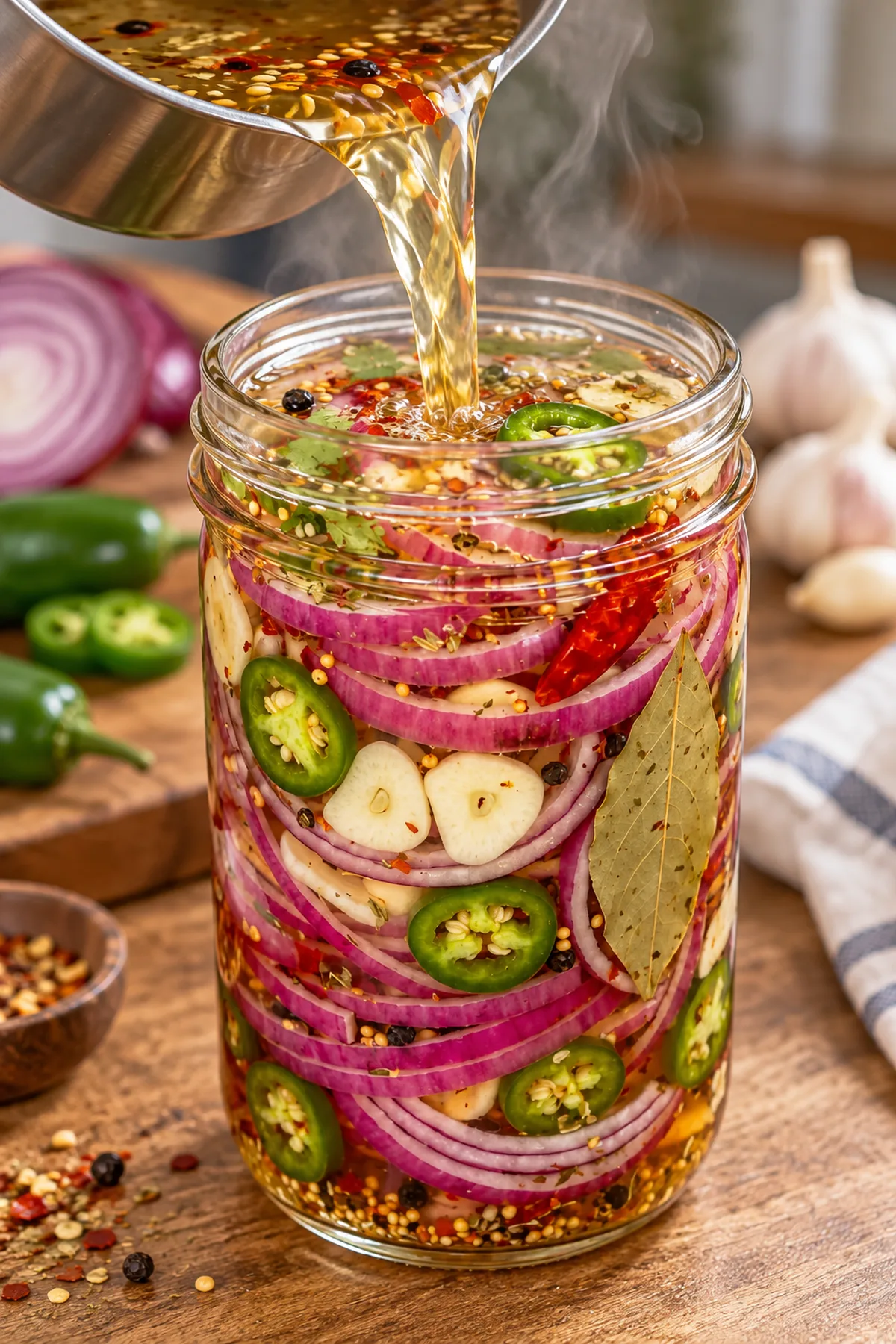
Slowly pour the hot brine into the jar. Pause once or twice so trapped air can rise and the liquid can move between the layers. Use a clean spoon to press the vegetables gently below the brine. A few pieces may float at first, but they settle as the onion softens. Leave a little space at the top rather than filling the jar to its rim.
5. Cool and Refrigerate
Leave the jar uncovered at room temperature for 20 to 30 minutes so steam can escape. When it is no longer steaming, fasten the lid and refrigerate it. Do not leave the jar out for an extended period. The pickles are ready after one hour, but 12 to 24 hours gives the most balanced garlic, chile, and spice flavor.
How to Control the Heat
Jalapeños can range from fairly gentle to surprisingly hot. For a mild jar, use one pepper and remove its seeds and pale membranes. You can also omit the red pepper flakes. The black peppercorns will still give the brine aromatic warmth, and the garlic will keep the flavor bold.
For medium heat, follow the recipe as written with two jalapeños and one-half teaspoon red pepper flakes. For a hotter version, keep all the jalapeño membranes or replace one jalapeño with a serrano. Serranos are generally hotter and sharper, so start with one. Letting the jar rest longer also distributes the heat more evenly.
Remember that tasting the brine immediately does not predict the final spice level. Capsaicin moves into the liquid over time. Check the pickles after the overnight rest before deciding whether a future batch needs more chile.
Expert Tips for the Best Texture
Slice all three fresh ingredients evenly. Thick onion pieces stay aggressively raw, while paper-thin slices can soften too quickly. Jalapeño rounds of similar thickness pickle at the same rate and make the jar easier to serve. A sharp knife works well; if you use a mandoline for the onion, always use the hand guard.
Choose a jar that fits the batch. A quart jar provides enough room for the large onion, two jalapeños, garlic, and brine. If your onion is unusually large, do not force every slice inside. Overpacking prevents circulation and may leave vegetables above the brine.
Make sure the salt and sugar disappear completely before pouring. Undissolved crystals settle and create uneven seasoning. Pour the hot brine over raw vegetables rather than boiling them in the saucepan. This method removes some raw harshness without sacrificing the crisp texture that makes quick pickles appealing.
Use a clean fork or spoon every time you take a serving. Food crumbs and used utensils can introduce contaminants. Promptly return the jar to the refrigerator, and gently press the remaining vegetables back beneath the brine.
Serving Ideas
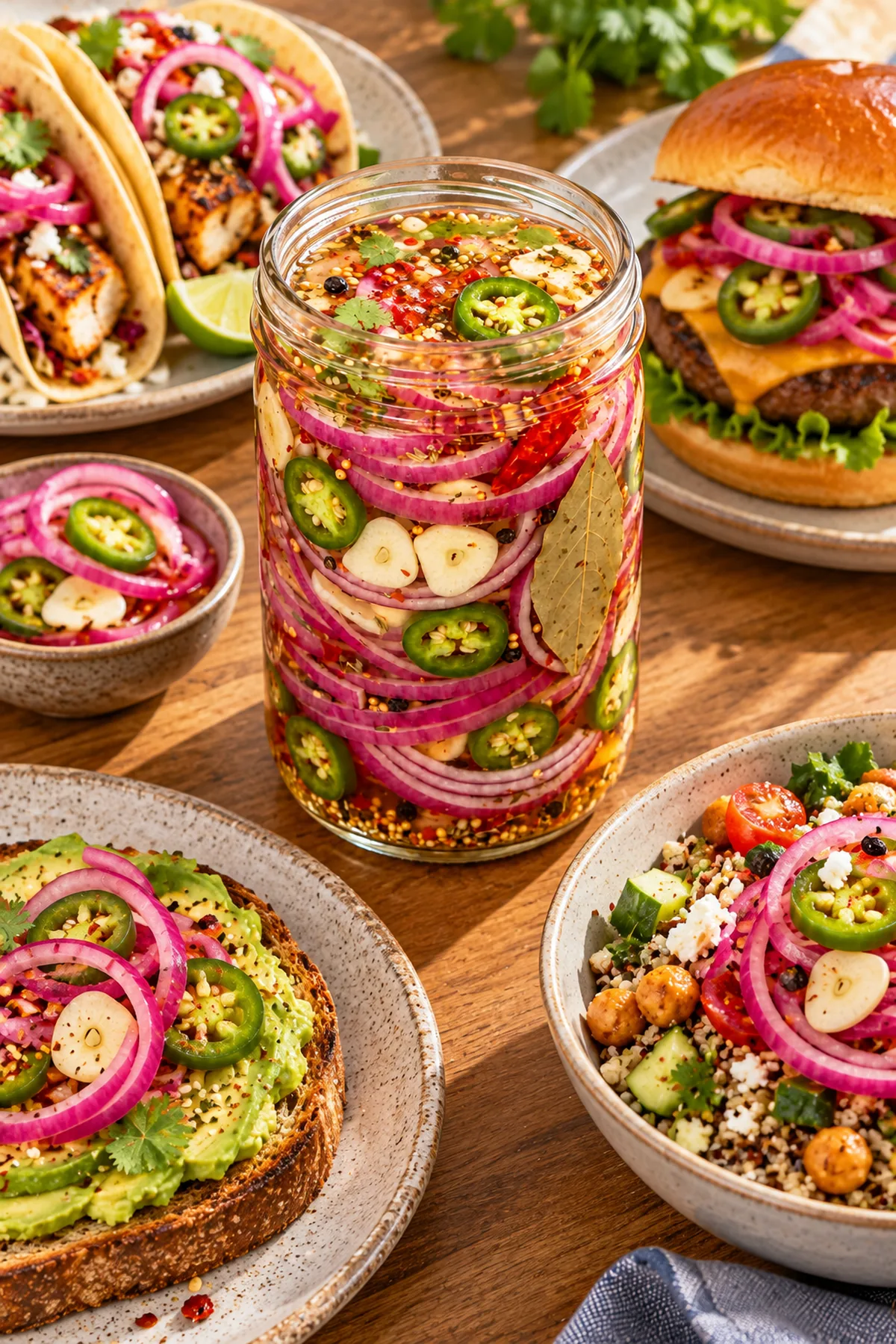
These spicy pickles are a natural taco topping. Add them to carne asada, chicken, fish, shrimp, carnitas, or black bean tacos after cooking so they retain their snap. The acidic onion cuts through rich meat and cheese, while the jalapeño brings fresh chile flavor. A spoonful also brightens nachos, quesadillas, tostadas, and burrito bowls.
For burgers and sandwiches, drain a small portion before piling it on the bread. The combination is especially good with cheeseburgers, pulled pork, grilled chicken, turkey, tuna, or a vegetable sandwich with avocado. Chop a few rings and stir them into egg salad or potato salad for tang and controlled heat.
At breakfast, serve them over avocado toast, scrambled eggs, breakfast tacos, or a bagel with cream cheese. For lunch, add them to grain bowls, chopped salads, hummus plates, and roasted vegetables. Their bright pink and green colors make simple food look immediately more inviting.
Make-Ahead Instructions
Prepare the jar the evening before you plan to serve it. By the next day, the onion will be deeply pink and the heat will be distributed through the brine. For parties, you can make the pickles several days ahead, freeing you from last-minute slicing while improving their flavor.
If you want two jars, double every ingredient and divide the vegetables and spices evenly between two quart jars. Prepare a double quantity of brine and make sure both jars receive enough liquid to cover their contents. Do not simply top up a short jar with plain water, because that changes the intended vinegar ratio.
Storage and Safety
Keep the jar tightly covered and refrigerated for up to two weeks. Store it toward the back of the refrigerator where the temperature is more stable than in the door. The vegetables gradually soften, so their texture is best during the first week even though a clean, properly refrigerated batch can be used for the full stated period.
This is strictly a refrigerator pickle. It has not been laboratory tested for shelf-stable canning, so do not process it in a water bath or keep it in the pantry. A lid that seems sealed does not make an untested recipe safe at room temperature.
Normal changes include pinker brine, slightly softer vegetables, and occasionally blue-green garlic. Discard the whole jar if you see mold, smell anything rotten or unpleasant, notice unexpected fizzing or pressure, or find a slimy texture. When uncertain, do not taste it.
Common Mistakes to Avoid
Using irregular slices: Thick and thin pieces pickle at different rates. Packing too tightly: Brine needs space to circulate. Adding extra water: It weakens both acidity and flavor. Boiling the vegetables: This makes them soft instead of crisp. Pour the simmering brine over them in the jar.
Ignoring pepper safety: Jalapeño oils can remain on skin, knives, and boards. Wear gloves and clean the work area. Leaving vegetables exposed: Press them beneath the liquid after they soften. Using a dirty utensil: Always remove portions with a clean fork or spoon.
Frequently Asked Questions
When are the pickles ready?
They are ready to eat after one hour in the refrigerator. For fuller garlic flavor, more even heat, and deeper color, wait 12 to 24 hours.
Are they extremely spicy?
The written recipe is medium-hot, but jalapeño heat naturally varies. Remove seeds and membranes, use one pepper, and omit chile flakes for a milder result. Use a serrano for more heat.
Can I reuse the brine?
Make fresh brine for each new batch to preserve predictable acidity and seasoning. While the original batch is still within its storage period, a little clean leftover brine can flavor vinaigrette or creamy sauce.
Can I use apple cider vinegar?
Yes, if it is labeled 5 percent acidity. It creates a fruitier flavor and darker brine. Keep the vinegar and water quantities unchanged.
How long do they last?
They keep for up to two weeks in a tightly covered jar in the refrigerator. Use a clean utensil, keep the vegetables submerged, and discard the batch if it develops any sign of spoilage.
With bold garlic, fresh jalapeño, and a balanced tangy brine, this colorful jar adds instant energy to an enormous range of meals. Make it tonight, let it rest overnight when possible, and keep it cold for fast, spicy crunch whenever dinner needs a lift.
Print
Spicy Garlic Pickled Red Onions & Jalapeños
- Prep Time: 15 minutes
- Pickling Time: 1 hour
- Cook Time: 5 minutes
- Total Time: 1 hour 20 minutes
- Yield: 1 quart jar 1x
- Category: Condiment
- Method: Quick Pickling
- Cuisine: Mexican-inspired American
- Diet: Vegan
Description
Crisp red onion rings and fresh jalapeño slices quick-pickled with garlic, peppercorns, mustard seed, oregano, bay leaf, and red pepper flakes.
Ingredients
- 1 large red onion, thinly sliced
- 2 medium jalapeños, thinly sliced
- 4 garlic cloves, thinly sliced
- 1 1/2 cups distilled white vinegar (5% acidity)
- 3/4 cup water
- 1 1/2 tablespoons kosher salt
- 1 1/2 tablespoons granulated sugar
- 1 teaspoon whole black peppercorns
- 1 teaspoon mustard seeds
- 1/2 teaspoon red pepper flakes
- 1/2 teaspoon dried oregano
- 1 large bay leaf
Instructions
- Wash a heat-safe quart jar and lid in hot, soapy water, rinse well, and let drain.
- Peel the red onion and slice it into very thin rings or half-moons. Slice the jalapeños into thin rounds and the garlic into thin slices.
- Loosely layer the onion, jalapeños, and garlic in the jar with the peppercorns, mustard seeds, red pepper flakes, oregano, and bay leaf.
- Combine the white vinegar, water, kosher salt, and sugar in a small nonreactive saucepan.
- Heat over medium, stirring until the salt and sugar dissolve, then bring the brine to a gentle simmer.
- Place the jar on a folded towel and carefully pour in the hot brine. Press the vegetables down with a clean spoon so they are submerged.
- Let the jar cool uncovered at room temperature for 20 to 30 minutes.
- Seal the cooled jar and refrigerate for at least 1 hour before serving.
- For the fullest garlic and jalapeño flavor and brightest color, refrigerate for 12 to 24 hours before serving.
Notes
- This is a refrigerator pickle and is not suitable for shelf-stable canning or pantry storage.
- Keep refrigerated in a tightly covered jar for up to 2 weeks. Always use a clean utensil and keep the vegetables under the brine.
- Jalapeño heat varies. Remove the seeds and pale membranes for less heat, or include them for a hotter batch.
- Wear food-safe gloves when handling hot peppers and avoid touching your eyes or face.
- Refrigerate tightly covered for up to 2 weeks.
- Keep the vegetables submerged and remove portions only with a clean utensil.
- Discard the batch if you see mold, detect an unpleasant odor, experience unexpected pressure, or notice a slimy texture.
Nutrition
- Serving Size: 1/4 cup
- Calories: 24
- Sugar: 3 g
- Sodium: 510 mg
- Fat: 0 g
- Carbohydrates: 5 g
- Fiber: 1 g
- Protein: 1 g