
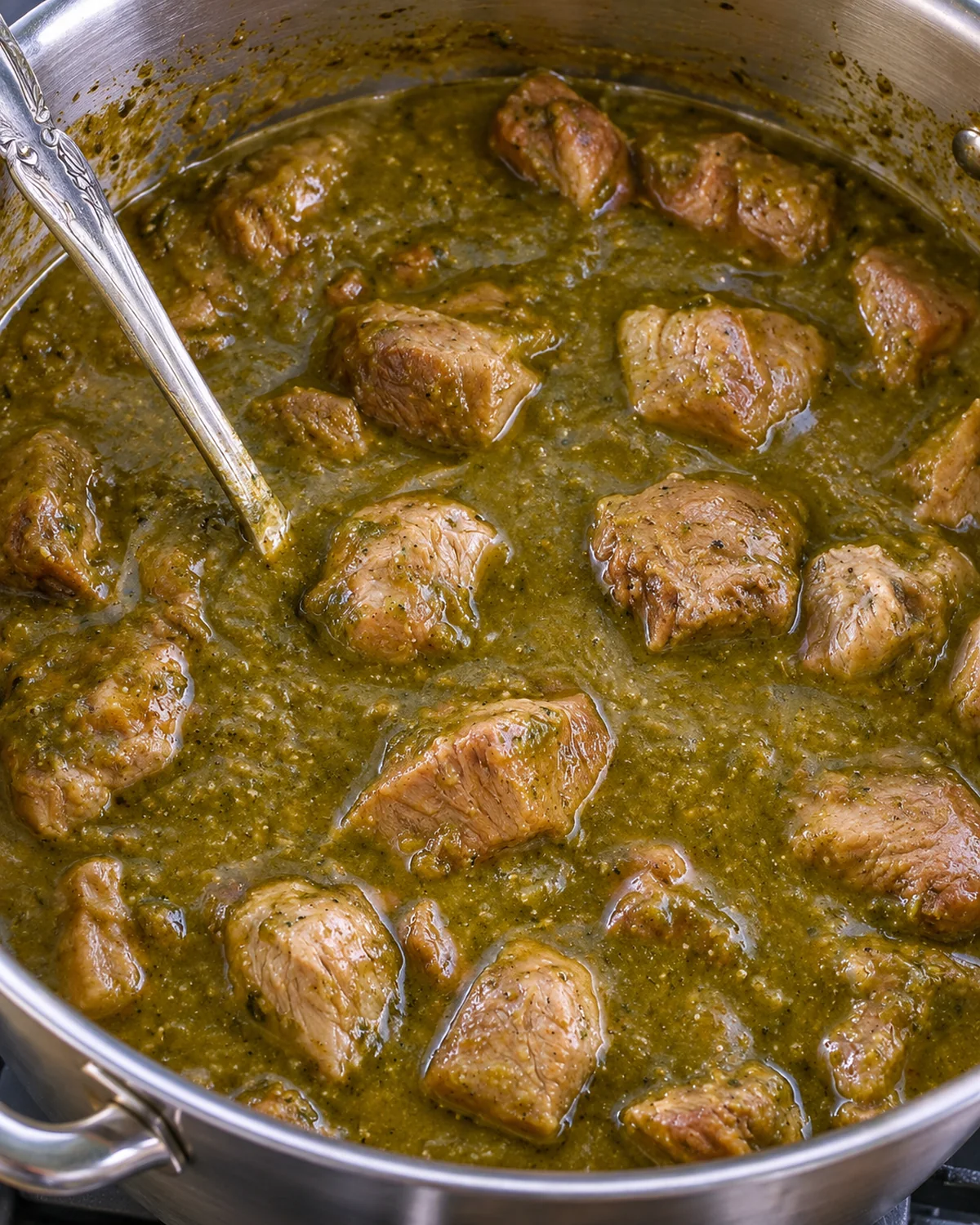
Authentic Chile Verde is the kind of slow-simmered pork dinner that rewards a little patience with remarkable flavor. Cubes of pork shoulder are seasoned, browned, and cooked gently in a vivid green sauce made from tomatillos, Anaheim chiles or poblanos, jalapeños, serranos, onion, garlic, and cilantro. The finished sauce is thick enough to cling to each piece of meat, while the pork becomes tender enough to separate with a fork.
This recipe is designed for a U.S. home kitchen and stays faithful to the provided ingredient list. It does not depend on bottled salsa, canned soup, flour, dairy, or extra broth. Instead, its body comes from softened tomatillos and peppers blended with only a small amount of their cooking liquid. Browning the pork before the long simmer adds savory depth, and stirring in a reserved cup of fresh green sauce at the end restores a brighter chile flavor and color.
Serve this Mexican-inspired pork chile with warm corn or flour tortillas for scooping, or spoon it over rice when you want a fuller plate. If you enjoy long-simmered pork dinners, Cooking Layer’s Authentic Mexican Pork Pozole Rojo offers a red-chile, hominy-filled contrast, while the New Mexico Pork and Hominy Stew pairs pork with roasted green chile in a brothy preparation.
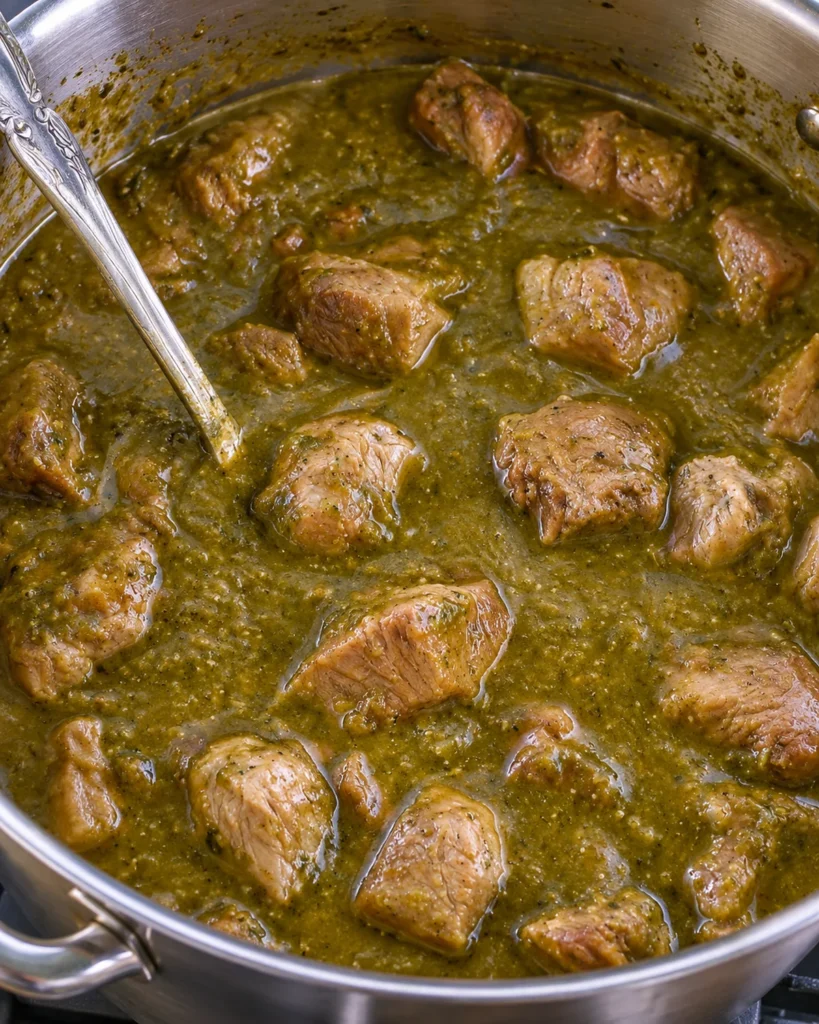
Why This Chile Verde Recipe Works
Chile verde succeeds when the sauce, meat, heat, and cooking time stay in balance. Tomatillos supply tang and natural pectin, so the sauce thickens without starch. Anaheim chiles or poblanos contribute a broad roasted-pepper flavor rather than only heat. Jalapeños bring fresh green sharpness, and serranos add a cleaner, more direct chile bite. Because the peppers are simmered briefly before blending, they soften enough to form a cohesive sauce without losing every trace of freshness.
Pork shoulder is equally important. This well-marbled cut contains connective tissue that becomes tender during a low, covered simmer. Lean pork loin would cook faster but could become dry during three hours in the pot. Browning the shoulder in batches creates flavorful caramelized surfaces and prevents the meat from steaming. The cumin, salt, and black pepper applied before browning season the pork itself instead of leaving all the flavor in the sauce.
The final cup of reserved sauce is a small step with a noticeable effect. A long simmer mellows the green sauce and deepens its color. Adding the reserved portion during the last five to ten minutes brings back a brighter tomatillo aroma and fresh cilantro character while still heating it thoroughly. The result tastes layered rather than flat.
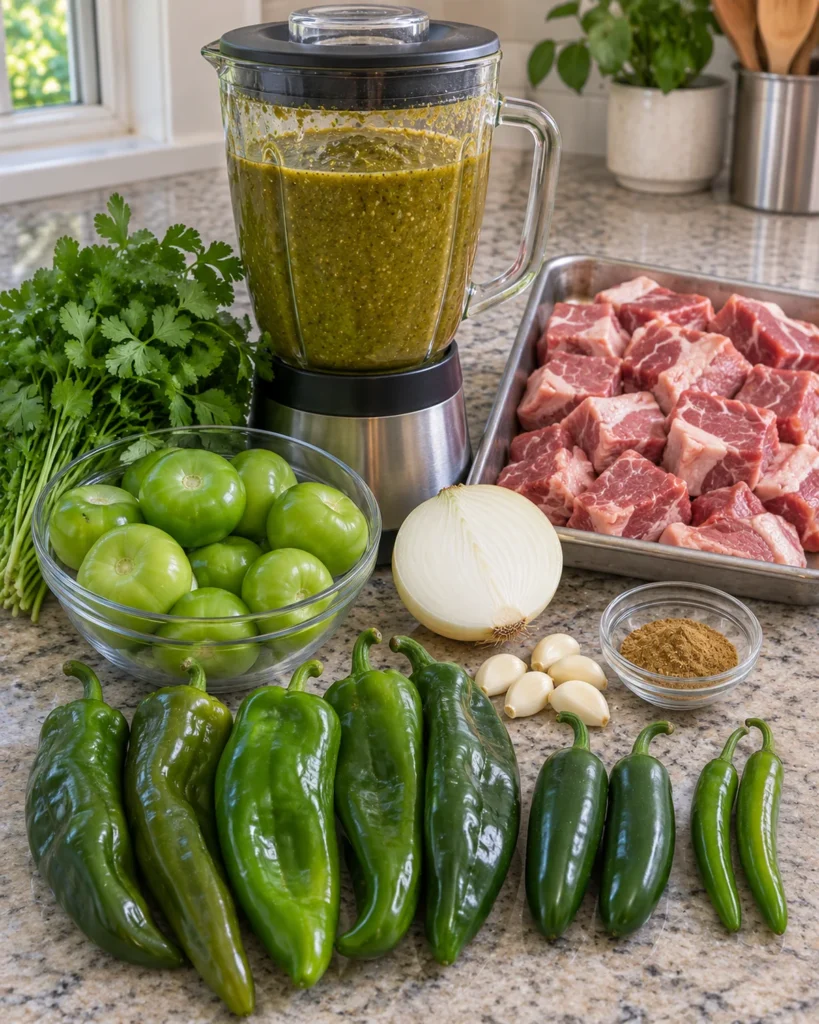
Ingredients for Authentic Chile Verde
Pork shoulder
Use 1½ pounds of boneless pork shoulder cut into irregular one- to two-inch cubes. The size does not need to be mathematically perfect, but pieces should be similar enough to finish cooking together. Leave some internal marbling because it keeps the meat succulent; trim only very thick exterior pieces of fat. Pat the cubes dry before seasoning so they brown instead of releasing water.
Tomatillos
Tomatillos look like small green tomatoes wrapped in papery husks, but their flavor is distinctly tart, herbal, and citrusy. Remove every husk and rinse the fruit well because its surface can feel sticky. One and a half pounds provides enough pulp to surround the pork and create a naturally thick sauce. Choose firm tomatillos with an even green color and no soft spots.
Anaheim chiles or poblano peppers
Six Anaheim chiles make a relatively mild, green-pepper-forward sauce. Poblanos are darker, earthier, and sometimes a little warmer, and they are a good alternative when Anaheims are unavailable. Either choice gives the sauce substance and an unmistakable roasted green chile identity. Pepper heat varies naturally, so taste a tiny piece after cooking if you are sensitive to spice.
Jalapeños and serranos
Two jalapeños and two serranos build a noticeable but balanced heat. Jalapeños taste grassy and rounded; serranos are usually hotter and more direct. Removing stems is essential. If your household prefers less heat, removing some seeds and pale interior ribs will soften the intensity, although the exact result still depends on the peppers. Wear gloves if your skin is sensitive, and avoid touching your eyes.
Onion, garlic, cilantro, and cumin
A large white onion adds sweetness and savory depth as it simmers with the tomatillos and peppers. Five garlic cloves go into the blender raw, giving the sauce a more pronounced garlic aroma that mellows during cooking. Two cups of cilantro provide fresh herbal flavor and help reinforce the green color. Ground cumin seasons the pork with warmth and earthiness; measure it carefully so it supports rather than overwhelms the vegetables.
How to Make Chile Verde
Prepare the pork and vegetables
Cut the pork shoulder into one- to two-inch cubes and blot them with paper towels. Season evenly with one tablespoon ground cumin, one teaspoon salt, and one teaspoon black pepper. Set the meat aside while preparing the sauce vegetables. Husk and rinse the tomatillos, remove the pepper stems, halve the white onion, and peel the garlic.
Bring six cups of water to a boil in a large pot. Add the tomatillos, Anaheim chiles or poblanos, jalapeños, serranos, and onion. Lower the heat enough to maintain a steady simmer and cook for about eight minutes. The vegetables should soften slightly and the tomatillos may change from bright green to a muted olive color, but they should not disintegrate.
Blend the green chile sauce safely
Transfer the cooked vegetables to a blender with the peeled garlic and cilantro. Add only a small amount of the hot cooking liquid at first. A thinner sauce is easy to make later, but excess liquid cannot be removed quickly. If the blender is small, work in batches so the container is never more than half full with hot ingredients.
Vent the center cap, cover the opening with a folded kitchen towel, and begin on low speed before increasing gradually. Hot food expands and can force a sealed lid upward, so never fill or seal a blender carelessly. Blend until smooth but still naturally speckled. Measure one cup of sauce into a covered container and refrigerate it promptly; this reserved portion will be added near the end.
Brown the pork in batches
Heat two tablespoons of vegetable oil in a large Dutch oven over medium-high heat. Add only enough pork to create a single uncrowded layer. Let the first side make firm contact with the pot before turning, then brown the remaining sides. Transfer the browned pieces to a plate and repeat. The goal is a golden surface, not fully cooked centers.
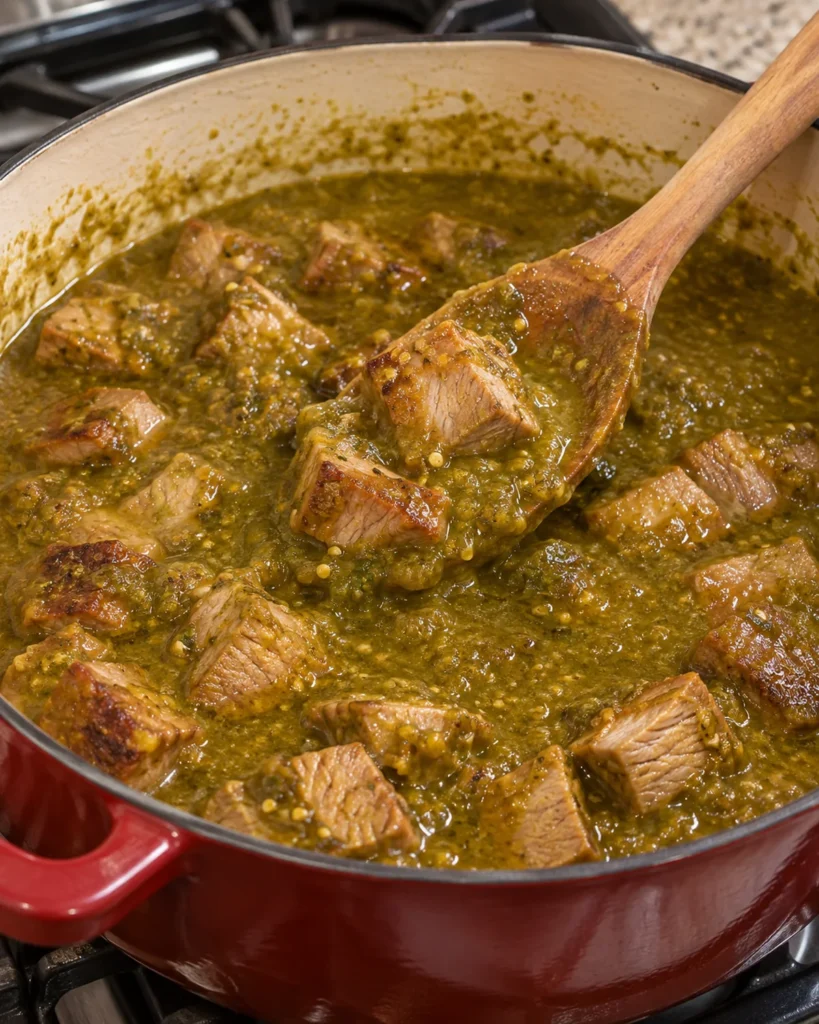
If dark seasoning begins to collect on the pot, reduce the heat slightly. Brown fond is desirable, but blackened spices can make the finished chile bitter. When all the meat is browned, return it and any accumulated juices to the Dutch oven.{{IMAGE:cooking}}
Slow-simmer until fork-tender
Pour the remaining green sauce over the pork and stir, scraping the bottom of the pot to loosen the flavorful browned bits. Bring the mixture to a gentle simmer, then reduce the heat to low and cover. Cook for approximately three hours, stirring from the bottom every 30 to 40 minutes. Keep the simmer quiet; rapid boiling can tighten the meat and cause the thick sauce to scorch.
The sauce will reduce and become glossier as the pork releases juices and fat. If it grows so thick that it catches on the bottom, add a small splash of water and lower the heat. Begin checking tenderness before the full three hours because pot shape, burner strength, and cube size affect timing. The pork is ready when a fork enters easily and a chunk begins to separate with gentle pressure.
Stir in the reserved cup of green sauce and simmer for another five to ten minutes, until it is thoroughly heated and blended with the cooked sauce. Taste carefully and adjust salt if needed. Let the pot stand off the heat for five minutes before serving so the bubbling settles and the sauce clings neatly to the meat.
Expert Tips for the Best Pork Chile Verde
- Dry the pork well. Surface moisture creates steam, which prevents a deep brown crust.
- Do not crowd the Dutch oven. Batch browning takes longer, but the flavor improvement is worth those extra minutes.
- Control the sauce thickness in the blender. Start with very little cooking liquid because the vegetables already hold water.
- Use low heat after adding the sauce. Tomatillo puree can sputter and scorch when boiled aggressively.
- Stir all the way across the bottom. A flat-edged wooden spoon helps release any sauce beginning to stick.
- Judge tenderness, not only the clock. Pork shoulder may need a little more or less than three hours.
- Add the reserved sauce only at the end. Its fresher flavor is part of the recipe’s balance.
Serving Suggestions
Warm corn tortillas are the simplest accompaniment and excellent for gathering thick sauce from the plate. Flour tortillas work as well, especially when serving larger portions. Rice provides a neutral base that absorbs the tomatillo sauce, while a side of simply seasoned beans turns the chile into a very substantial dinner. Keep side dishes mild so the layered green chile flavor remains central.
For contrast, offer crisp shredded cabbage, diced white onion, or radishes at the table only as optional serving additions rather than cooking them into the pot. A fresh side salad also balances the richness of pork shoulder. For another green-chile meal with a lighter broth, try the Hatch Green Chile Chicken Tortilla Caldo.
Variations and Heat Adjustments
The ingredient quantities should remain intact for the core recipe, but you can choose Anaheims for a gentler pepper flavor or poblanos for a deeper, earthier sauce. Removing seeds and ribs from some jalapeños and serranos may lower the heat without removing those peppers’ flavor. If you like a hotter chile verde, retain all of the ribs and seeds. Because individual peppers vary, the finished heat can never be predicted perfectly.
Texture is another place for personal preference. Blend longer for a smoother sauce or stop when very fine vegetable particles remain for a rustic finish. Do not turn the recipe into a thin soup by adding a large amount of cooking water. Proper chile verde should coat the pork and spread slowly across the plate.
Make-Ahead, Storage, Freezing, and Reheating
Chile verde is an excellent make-ahead meal because the sauce and pork continue to mingle as they rest. Cook it completely, cool it promptly, and transfer it to shallow airtight containers. Refrigerate for three to four days. Do not leave the Dutch oven at room temperature for an extended period; dividing a large batch helps it cool more quickly and safely.
For longer storage, freeze cooled portions in freezer-safe containers for up to three months for best quality. Leave a little headspace for expansion. Thaw overnight in the refrigerator before reheating. The sauce may look separated at first, but gentle stirring usually restores its consistency.
Reheat on the stovetop over low to medium-low heat, stirring often until the pork and sauce are steaming hot throughout. Add a small amount of water only if the chilled sauce is too thick. Avoid vigorous boiling, which can make the pork fibers feel dry. Individual portions can also be reheated in the microwave in short intervals, stirring between each one.
Common Mistakes to Avoid
Adding wet pork to a crowded pot is the most common cause of pale, underdeveloped flavor. Another mistake is thinning the vegetable puree too much before it reaches the Dutch oven. The pork will release moisture during cooking, so begin with a concentrated sauce. Finally, a hard boil does not make pork shoulder tender faster in a useful way; it increases evaporation and can toughen the outside before connective tissue has time to soften.
Do not skip safe hot-blending precautions. Steam expands quickly inside a blender jar. Work in manageable batches, vent the lid, protect your hand with a towel, and start at low speed. Also remember to refrigerate the reserved cup of sauce while the pork cooks rather than leaving it on the counter for three hours.
Frequently Asked Questions
Is chile verde supposed to be thick or soupy?
This version should be thick and spoonable, with sauce that coats the pork. It is not a clear soup, although it can be loosened with a small splash of water if it becomes too concentrated during the long simmer.
Can I use pork loin instead of pork shoulder?
Pork shoulder is strongly recommended because its marbling and connective tissue suit the three-hour cooking time. Pork loin is much leaner and may become dry before the sauce develops fully.
Why did my chile verde turn brown?
Green sauces naturally become more olive-colored with prolonged heat. Over-browning the vegetables, scorching the bottom, or cooking uncovered at a high boil can darken them further. The reserved green sauce refreshes the final color and flavor.
Can I make the green sauce in advance?
Yes. Blend the sauce, cool it promptly, and refrigerate it in a covered container for up to one day before cooking. Stir it before using and keep one cup reserved as directed.
How can I tell when the pork is done?
A fork should enter a cube with little resistance, and the meat should begin to pull apart when pressed. If it remains chewy, keep the pot at a gentle simmer and check again after 20 to 30 minutes.
A Slow-Simmered Dinner Worth Repeating
Authentic Chile Verde turns a focused list of fresh ingredients into a deeply flavored pork dinner. Tomatillos provide tang and body, several green chiles build complexity, cilantro brightens the sauce, and pork shoulder becomes tender during the covered simmer. Careful browning and the final reserved sauce make the difference between a merely green stew and a balanced chile verde. Serve it hot with tortillas or rice, and save any leftovers for an easy dinner the next day.
Print
Authentic Chile Verde (Mexican Pork Chili)
Description
Tender pork shoulder simmered low and slow in a rich, tangy green chile sauce made with tomatillos, Anaheim peppers, jalapeños, serranos, garlic, and fresh cilantro. A flavorful Mexican-inspired comfort food favorite!
Ingredients
1½ lbs boneless pork shoulder, cut into 1–2-inch cubes
1 tablespoon ground cumin
1 teaspoon salt
1 teaspoon black pepper
2 tablespoons vegetable oil
1½ lbs tomatillos, husked and rinsed
6 Anaheim green chiles or poblano peppers
2 jalapeños
2 serrano chiles
1 large white onion, halved
5 garlic cloves, peeled
2 cups fresh cilantro
6 cups water, for simmering the vegetables
Instructions
1. Season the pork: Cut pork shoulder into 1–2-inch cubes. Season with cumin, salt, and black pepper, tossing until evenly coated.
2. Prepare the vegetables: Remove the tomatillo husks and rinse well. Remove the stems from the Anaheim chiles, jalapeños, and serranos. Peel the onion and garlic.
3. Simmer the vegetables: Bring 6 cups water to a boil in a large pot. Add tomatillos, green chiles, jalapeños, serranos, and onion. Cook for about 8 minutes until slightly softened.
4. Blend the green sauce: Transfer the cooked vegetables to a blender. Add garlic, fresh cilantro, and a little cooking liquid. Blend until smooth, working in batches if needed.
5. Reserve some sauce: Set aside 1 cup of the blended green chile sauce for finishing. Refrigerate it while the pork cooks.
6. Brown the pork: Heat vegetable oil in a large Dutch oven over medium-high heat. Add seasoned pork in batches and sear until golden brown on all sides.
7. Add the chile verde sauce: Return all the browned pork to the pot. Pour in the remaining green chile sauce and stir well.
8. Simmer low and slow: Bring to a gentle boil, then reduce heat to low. Cover and simmer for about 3 hours, stirring occasionally, until the pork is fork-tender. Add a little water if the sauce becomes too thick.
9. Finish the chile verde: Stir in the reserved green sauce and simmer for another 5–10 minutes until heated through. Taste and adjust the salt.
10. Serve: Spoon the tender pork and rich green chile sauce into bowls or onto plates. Serve hot with warm tortillas and your favorite sides.
Notes
For milder chile verde, remove the seeds and membranes from the jalapeños and serranos before cooking. Pork shoulder works best because it becomes tender during slow simmering. If the sauce thickens too much, add a little water. Refrigerate leftovers in airtight containers for up to 3–4 days or freeze for up to 3 months. Reheat thoroughly before serving.