
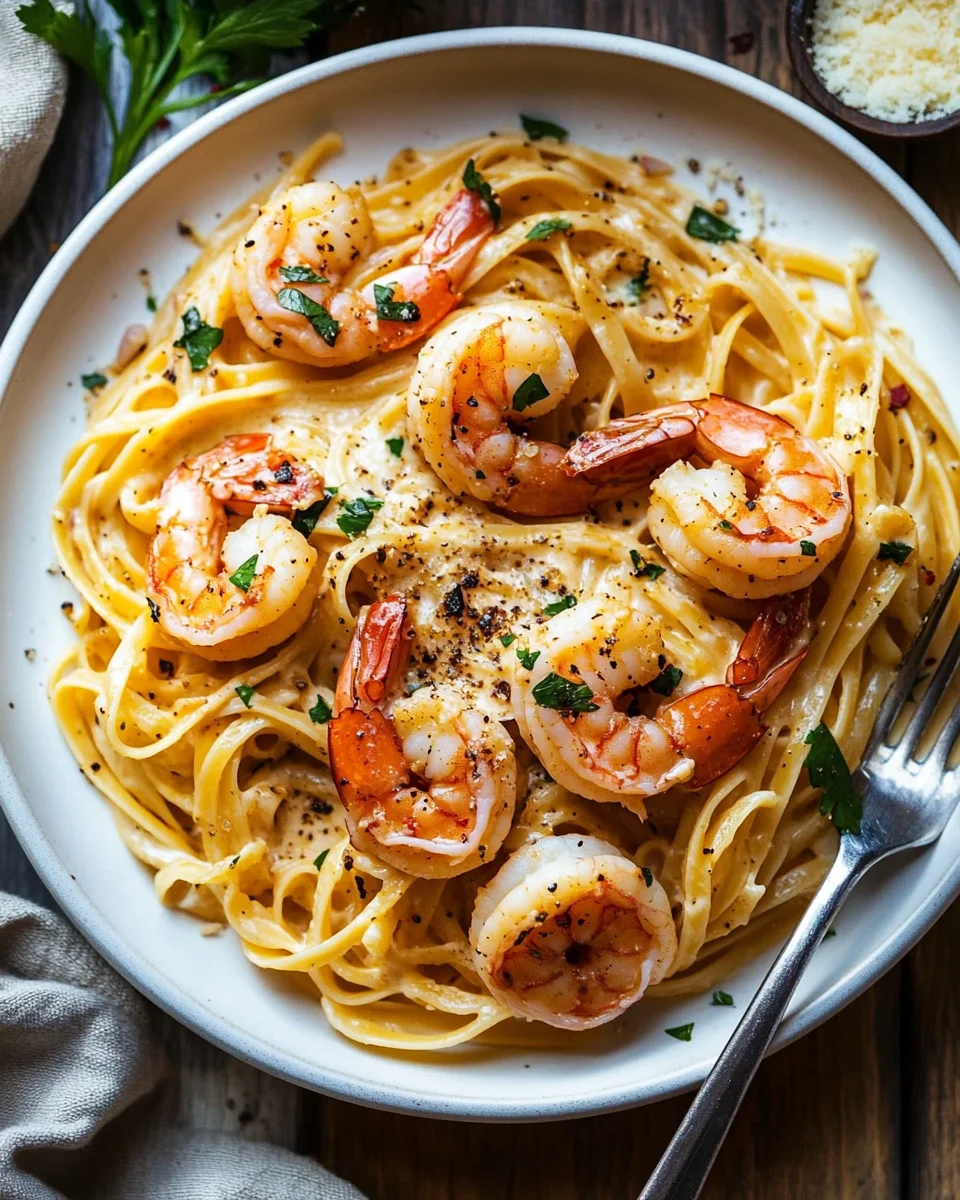
Creamy Garlic Shrimp Pasta combines tender shrimp, linguine, garlic, Parmesan, and a silky cream sauce in a dinner that comes together in about 25 minutes. The shrimp are seasoned and cooked separately so they stay juicy, while the sauce is built in the same skillet to capture the browned flavor left behind.
This recipe feels restaurant-worthy but relies on a short list of familiar ingredients. Reserved pasta water helps the cream and cheese cling to the linguine, fresh parsley adds brightness, and Old Bay seasoning gives the shrimp a savory, lightly spiced finish. Careful timing is the key: pasta, shrimp, and sauce each cook quickly and should meet only at the end.
Why This Creamy Shrimp Pasta Works
Searing shrimp in butter and olive oil creates flavor while reducing the chance that the butter burns. Removing the shrimp as soon as they turn opaque prevents them from becoming rubbery while the sauce is prepared. Garlic then cooks briefly in the same pan, where it picks up the seasoned fond without scorching.
Heavy cream supplies richness, Parmesan thickens and seasons, and starchy pasta water adjusts the consistency. The water is more effective than plain water because starch helps the sauce stay emulsified. Returning the pasta and shrimp at the end coats every strand while exposing the seafood to only enough heat to warm through.
The recipe makes four moderate servings. It is ideal for a weeknight but polished enough for guests when served immediately. Because cream sauce thickens as it sits, preparing the table and side dishes before finishing the pasta makes a noticeable difference.
Ingredients for Creamy Garlic Shrimp Pasta
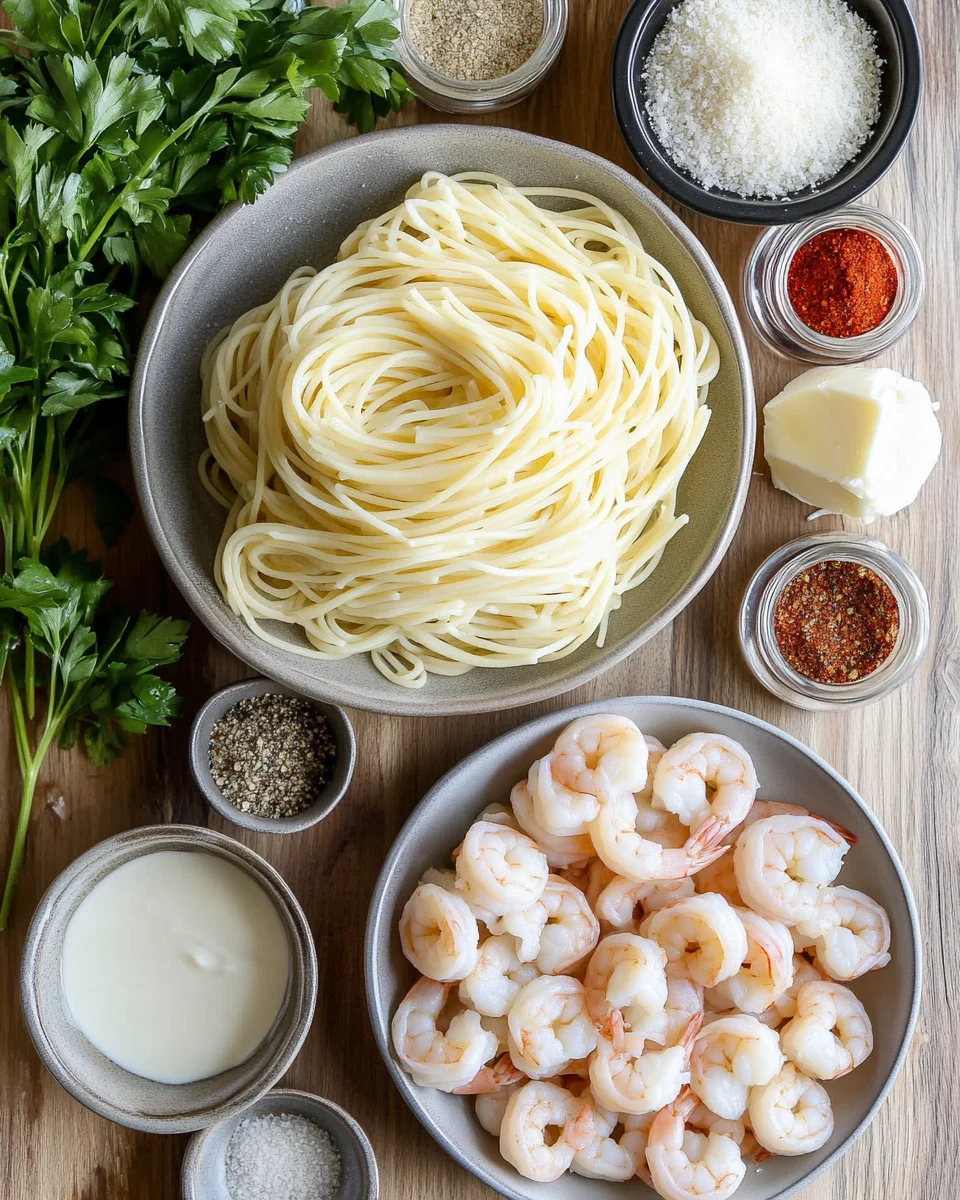
- 8 ounces (225 g) linguine pasta
- 1 tablespoon olive oil
- 1½ tablespoons butter, divided
- 1 pound raw shrimp, peeled and deveined
- ½ teaspoon salt
- ¼ teaspoon black pepper
- 1 tablespoon Old Bay seasoning, or smoked paprika or Cajun seasoning
- 1 garlic clove, minced
- ½ cup heavy cream
- ½ cup (40 g) grated Parmesan cheese
- ¼ cup chopped fresh parsley
Shrimp
Medium or large shrimp are easiest to cook evenly. Buy them peeled and deveined or prepare them yourself, removing the tails if you want the pasta easier to eat. Frozen shrimp are a good option when thawed completely and patted very dry. Surface moisture prevents browning and can dilute the seasoning.
Linguine and Pasta Water
Linguine has enough surface area to carry the sauce without feeling heavy. Cook it only until al dente because it softens slightly when tossed in the skillet. Before draining, reserve a full cup of cloudy cooking water. You may not use all of it, but having enough prevents scrambling for liquid while the sauce thickens.
Cream and Parmesan
Heavy cream withstands gentle simmering and makes a stable sauce. Freshly grated Parmesan melts more smoothly than shelf-stable powder or pre-shredded cheese. Add it over moderate or low heat and stir continuously. High heat can make aged cheese clump and separate from the cream.
Garlic, Parsley, and Seasoning
One fresh garlic clove perfumes the sauce without dominating the shrimp. Old Bay provides salt, paprika, celery seed, and warm spice, so taste before adding more salt. Smoked paprika offers a milder alternative, while Cajun seasoning adds more heat. Parsley belongs at the end to preserve its fresh color.
How to Make Creamy Garlic Shrimp Pasta
1. Cook the Linguine
Bring a medium pot of well-salted water to a boil. Add the linguine and cook according to the package directions until al dente. Stir during the first minute so the strands do not stick. Scoop out one cup of pasta water, then drain without rinsing.
Time the pasta so it finishes close to the sauce. If it must wait briefly, toss it with a spoonful of reserved water rather than oil. Oil creates a slick surface that can prevent the cream sauce from clinging.
2. Sear the Shrimp
Heat the olive oil and one tablespoon butter in a large skillet over medium heat. Arrange the dry shrimp in one layer. Cook for about one minute, then season with salt, pepper, and Old Bay. Turn and continue until pink, opaque, and curled into loose C shapes.
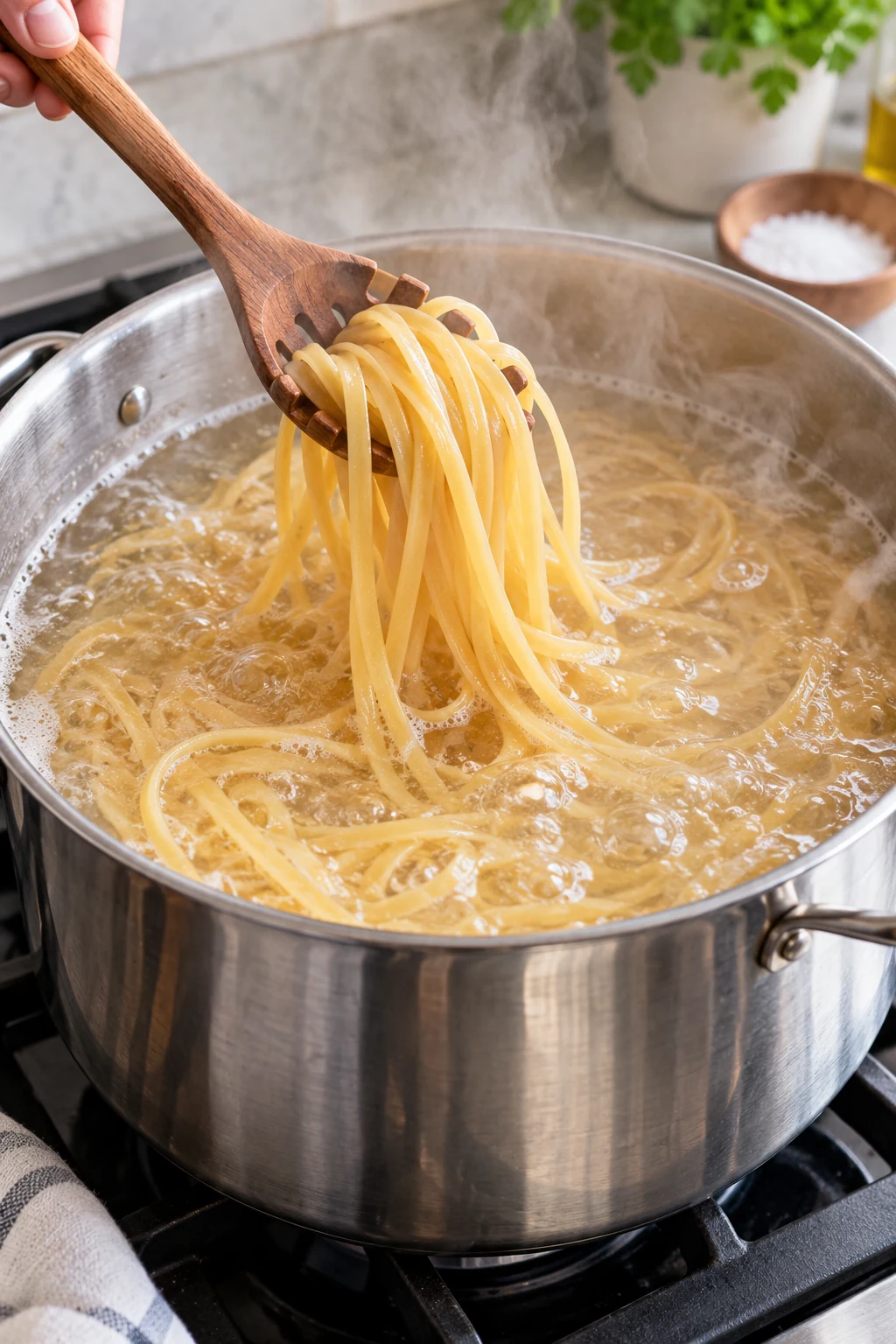
Work in two batches if the pan is crowded. Overlapping shrimp steam and release liquid instead of searing. Transfer them to a clean plate immediately; they will warm again when returned to the pasta.
3. Build the Garlic Parmesan Sauce
Reduce the heat and melt the remaining half tablespoon butter in the same skillet. Add the minced garlic and stir for about 30 seconds, only until fragrant. Pour in the heavy cream and scrape the bottom with a spatula to release the seasoned browned bits.
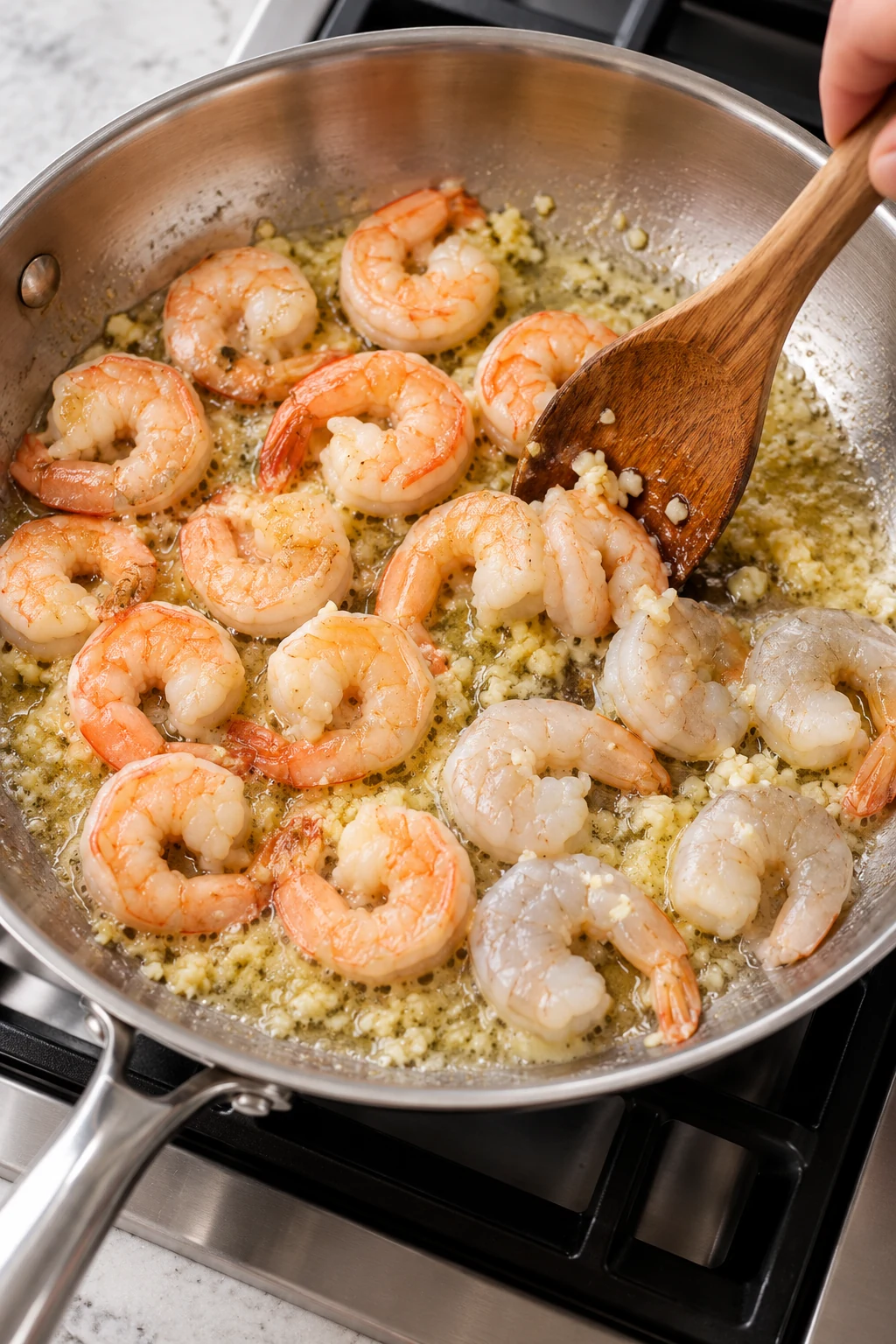
Bring the cream to a gentle simmer, not a rolling boil. Stir in the Parmesan a little at a time until melted. Add several tablespoons of reserved pasta water and simmer for about one minute. The sauce should coat the spatula but remain fluid enough to move through the noodles.
4. Toss and Finish
Add the drained linguine to the skillet and toss with tongs until evenly coated. Splash in more pasta water as needed; the noodles continue absorbing sauce. Return the shrimp and any juices from the plate, then fold gently just until hot.
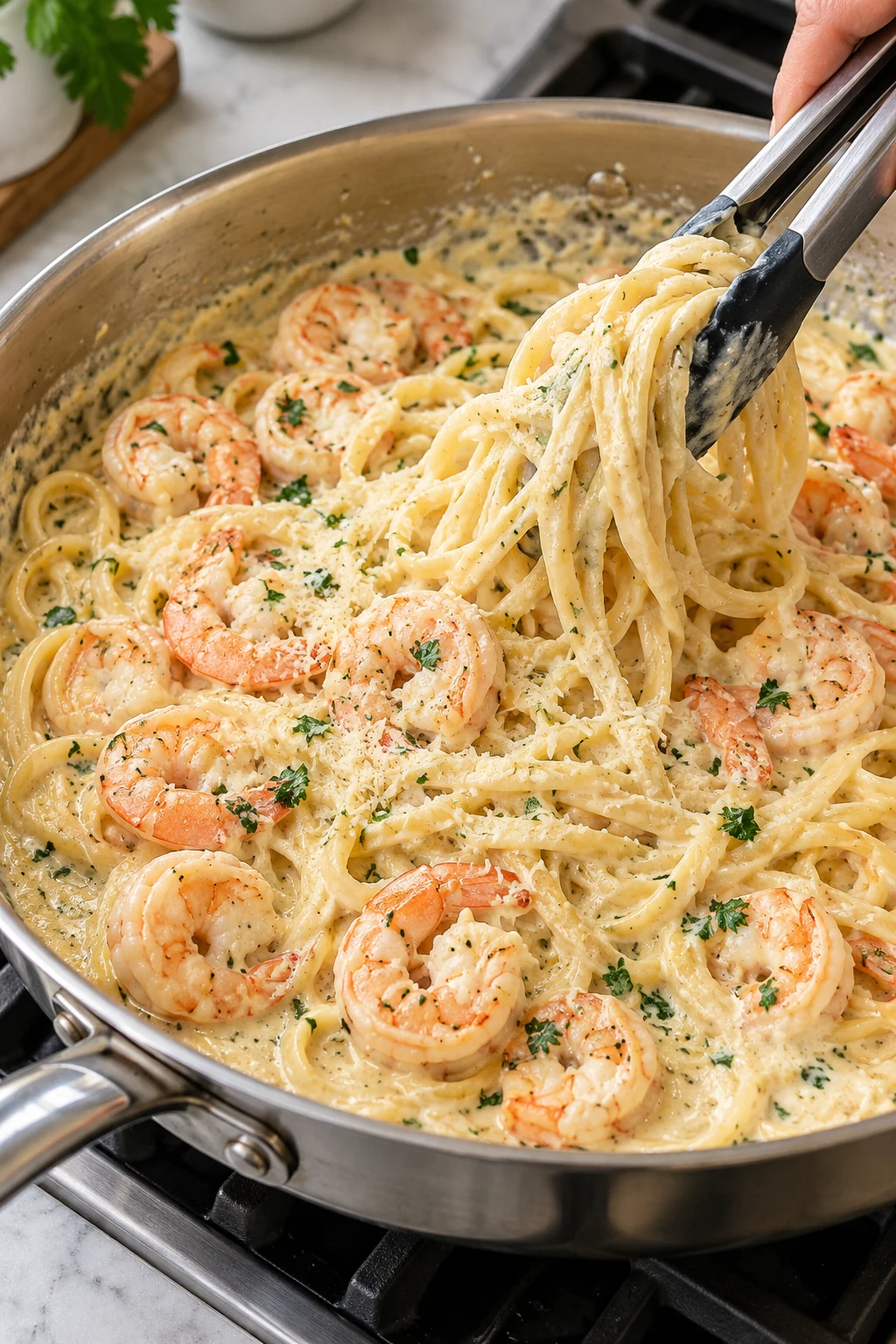
Remove from the heat, taste, and adjust seasoning. Add the chopped parsley and serve immediately. A final spoonful of pasta water can loosen the sauce if it thickens before reaching the table.
How to Avoid Rubbery Shrimp
Dry shrimp, a properly heated skillet, and enough room are essential. Shrimp cook in only a few minutes. Remove them as soon as the thickest part turns opaque; tightly curled O-shaped shrimp are often overcooked. The residual heat on the plate and final toss in the sauce finish them gently.
Use pieces of similar size so they finish together. If a few shrimp are substantially smaller, remove them first. Never leave cooked shrimp simmering while the Parmesan sauce reduces.
Expert Tips for Silky Sauce
- Reserve pasta water before draining. It is the easiest way to adjust consistency.
- Use freshly grated Parmesan. It melts more smoothly and tastes fresher.
- Keep cream at a gentle simmer. Aggressive boiling can separate the sauce.
- Add cheese gradually. Small additions melt without clumping.
- Toss pasta in the skillet. This distributes starch and sauce evenly.
- Serve promptly. Cream sauce thickens as it stands.
Variations and Substitutions
For more heat, add crushed red pepper with the garlic or choose Cajun seasoning. Lemon zest or a small squeeze of lemon added off heat brightens the richness. Avoid boiling lemon juice in the cream, which can encourage curdling.
Fettuccine, spaghetti, or another long pasta can replace linguine. Standard wheat linguine means the original recipe is not gluten-free. Gluten-free pasta can be used if cooked according to its package, but its cooking water may behave differently, so add it gradually.
Chicken or sautéed mushrooms can replace shrimp, though their cooking times differ. Spinach may be wilted into the sauce for extra vegetables. Keep additions modest so the half cup of cream still coats the pasta.
Serving Suggestions
Serve in warmed shallow bowls with extra parsley and Parmesan. Garlic bread is classic, while roasted broccoli, asparagus, or a lemony green salad balances the sauce. A crisp dry white wine pairs well for adults, and sparkling water with lemon offers similar freshness.
Prepare sides before starting the sauce so the pasta can be eaten immediately. For another quick skillet dinner, try Turkey Sweet Potato Skillet. For a creamy baked meal, Fajita Chicken Casserole is a useful make-ahead alternative.
Make-Ahead Guidance
This pasta is best cooked and served fresh, but ingredients can be prepared earlier. Peel, devein, and dry shrimp up to one day ahead and keep refrigerated. Grate Parmesan, chop parsley, and mince garlic shortly before cooking. Measure cream and seasonings so the sauce comes together without pauses.
Avoid making the complete cream sauce hours in advance; reheating can cause separation and overcook the shrimp. If timing is tight, cook the pasta just shy of al dente and finish it directly in the freshly made sauce.
Storage and Reheating
Refrigerate leftovers in an airtight container for up to two days. Seafood quality declines quickly, so cool the pasta promptly. Reheat gently in a skillet over low heat with a splash of cream, milk, or water, stirring until the shrimp and sauce reach 165°F.
The microwave is convenient but can toughen shrimp. Use medium power in short intervals and stir between them. Freezing is not recommended because cream sauce may separate and shrimp can become rubbery after thawing.
Common Mistakes to Avoid
Wet shrimp steam instead of sear. An overcrowded skillet lowers the heat. Cooking shrimp through twice makes them rubbery, and boiling the Parmesan sauce can turn it grainy.
Do not forget the pasta water, rinse the cooked linguine, or add all the reserved liquid at once. Avoid relying on pre-grated shelf-stable cheese for the sauce. Finally, do not let finished pasta wait in the skillet while sides are prepared.
Frequently Asked Questions
Can I use frozen shrimp?
Yes. Thaw completely in the refrigerator or under cold running water, drain, and pat very dry before seasoning and cooking.
Why is my sauce too thick?
The pasta absorbed liquid as it sat. Toss in reserved pasta water one tablespoon at a time over low heat until the sauce becomes silky again.
Why did the sauce turn grainy?
The heat was probably too high or the cheese was added too quickly. Lower the heat and stir freshly grated Parmesan in gradually.
Can I use milk instead of heavy cream?
Milk does not have the same fat content or stability and creates a thinner sauce. Heavy cream gives the most reliable result for this formula.
Is this recipe gluten-free?
Not with standard linguine. Use certified gluten-free pasta and verify every seasoning label if you need a gluten-free version.
Choosing the Right Pan and Tools
A 12-inch skillet gives one pound of shrimp enough room to sear and later holds the linguine for tossing. Stainless steel creates excellent browned flavor, while a heavy nonstick pan makes the sauce easy to manage. Use silicone-tipped tongs for turning shrimp and pasta, a flexible spatula for scraping the fond, and a fine grater for Parmesan.
The pasta pot should be large enough for linguine to move freely. Crowded noodles cook unevenly and release excessive starch in one area. A heatproof measuring cup makes it easy to reserve cooking water safely. Have every tool ready before the shrimp reaches the pan because the cooking stages move quickly.
Sauce Consistency Checkpoints
Before the cheese is added, the warm cream should flow easily and carry the browned seasoning from the pan. After Parmesan melts, the sauce should coat the back of a spoon but slowly run when tilted. It should not resemble a thick paste because the linguine will absorb additional moisture.
Add pasta water in small increments while tossing. A sauce that looks slightly loose in the skillet often becomes perfect in the serving bowl. If it is oily, lower the heat and toss with a spoonful of starchy water to help the fat and liquid reunite. If it is thin, simmer briefly before returning the shrimp rather than cooking seafood in the reducing sauce.
Seafood Safety
Keep raw shrimp cold and separate from cooked pasta, herbs, and serving utensils. Wash hands and any board or bowl that contacted raw seafood. Cook shrimp until the flesh is opaque and reaches 145°F, then reheat leftovers to 165°F. Discard shrimp with a strong ammonia odor or an unusually slimy texture.
Move leftovers into shallow containers and refrigerate within two hours. Cream sauce and seafood should not sit on a warm table for extended periods. These practices protect the delicate flavor as well as food safety.
Final Thoughts
Creamy Garlic Shrimp Pasta succeeds when every fast-cooking component is handled separately and brought together at the end. Dry and sear the shrimp, reserve the pasta water, simmer the cream gently, melt Parmesan gradually, and serve as soon as the linguine is coated. The result is a rich but balanced 25-minute dinner with tender seafood and a smooth garlic sauce.
Print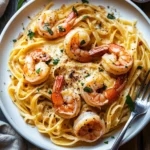
Creamy Garlic Shrimp Pasta: Elevate Dinner Tonight!
- Prep Time: 10 minutes
- Cook Time: 15 minutes
- Total Time: 25 minutes
- Yield: 4 servings 1x
- Category: Main Course
- Method: Stovetop
- Cuisine: Italian-Inspired
Description
A delicious and creamy pasta dish featuring shrimp, garlic, and Parmesan cheese, perfect for elevating your dinner.
Ingredients
- 8 oz (225 g) linguine pasta
- 1 tbsp olive oil
- 1½ tbsp butter (divided)
- 1 lb (450 g) raw shrimp (peeled and deveined; thaw if frozen)
- ½ tsp salt
- ¼ tsp black pepper
- 1 tbsp Old Bay seasoning (or substitute with smoked paprika or Cajun seasoning)
- 1 clove garlic, minced
- ½ cup (120 ml) heavy cream (double cream if in the UK)
- ½ cup (40 g) grated Parmesan cheese
- ¼ cup fresh parsley, chopped
Instructions
- Bring a medium pot of salted water to a boil. Add linguine and cook until al dente, following package directions. Reserve 1 cup of the pasta water, then drain the rest.
- In a large skillet over medium heat, melt 1 tablespoon of butter with olive oil. Add shrimp and cook for about 1 minute. Season with salt, pepper, and Old Bay (or paprika/Cajun). Continue cooking until shrimp turns pink—work in batches if needed to avoid overcrowding. Remove shrimp from pan and set aside.
- In the same skillet, melt the remaining butter. Add garlic and sauté for about 30 seconds until fragrant. Pour in the heavy cream and deglaze the pan using a spatula.
- Stir in Parmesan and let it melt into the sauce. Add a bit of the reserved pasta water (start with a few tablespoons) to loosen the sauce and let it simmer for a minute. Taste and adjust seasoning if needed.
- Toss the cooked pasta in the sauce until well coated. Return the shrimp to the skillet and gently heat through. Garnish with chopped parsley and serve immediately.
Notes
- For a spicier kick, add red pepper flakes to the sauce.
- Feel free to substitute shrimp with chicken or vegetables for a different variation.
- This dish is best served fresh but can be stored in the refrigerator for up to 2 days.
Nutrition
- Serving Size: 1 serving
- Calories: 550
- Sugar: 1g
- Sodium: 800mg
- Fat: 30g
- Saturated Fat: 15g
- Unsaturated Fat: 10g
- Trans Fat: 0g
- Carbohydrates: 50g
- Fiber: 2g
- Protein: 25g
- Cholesterol: 200mg