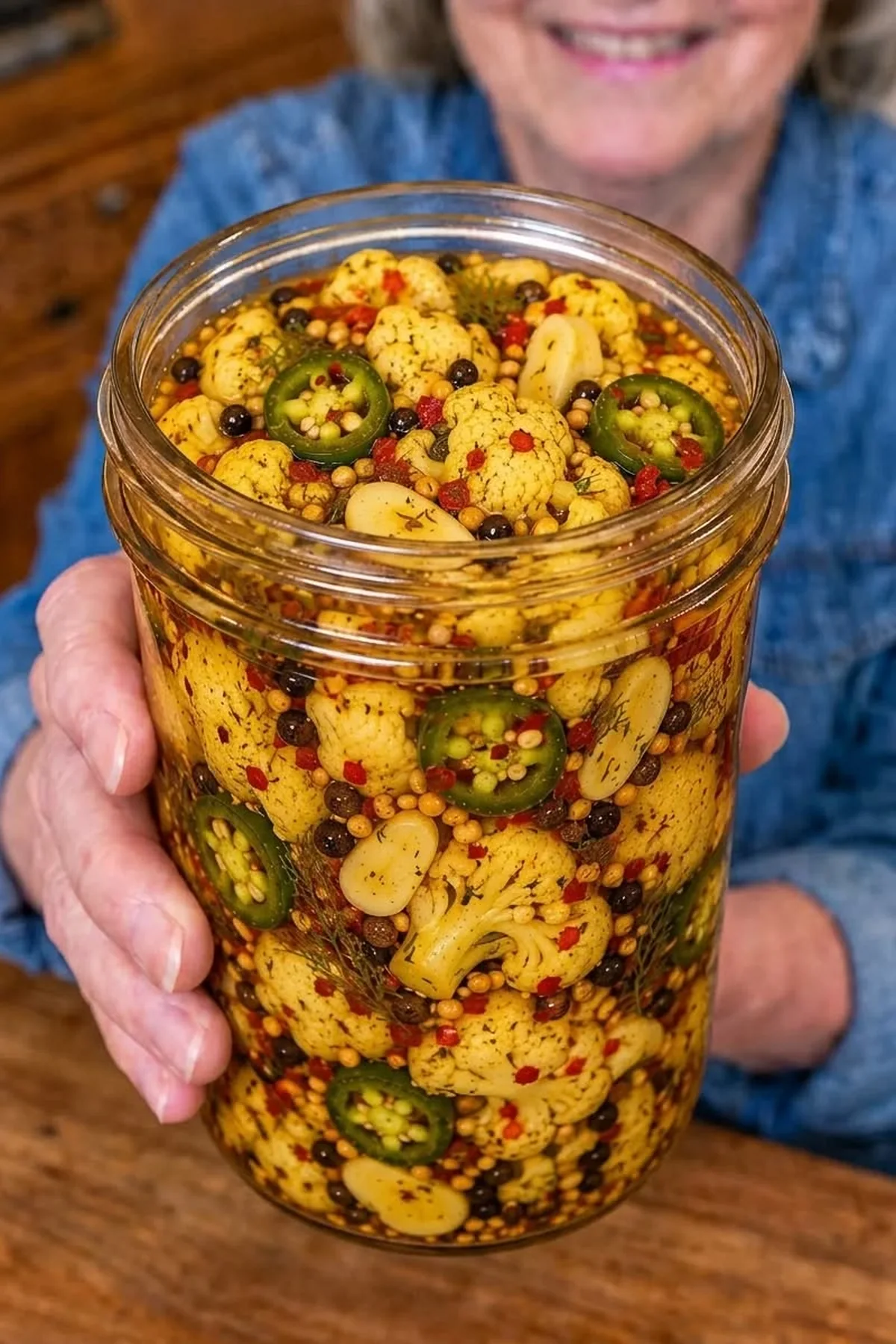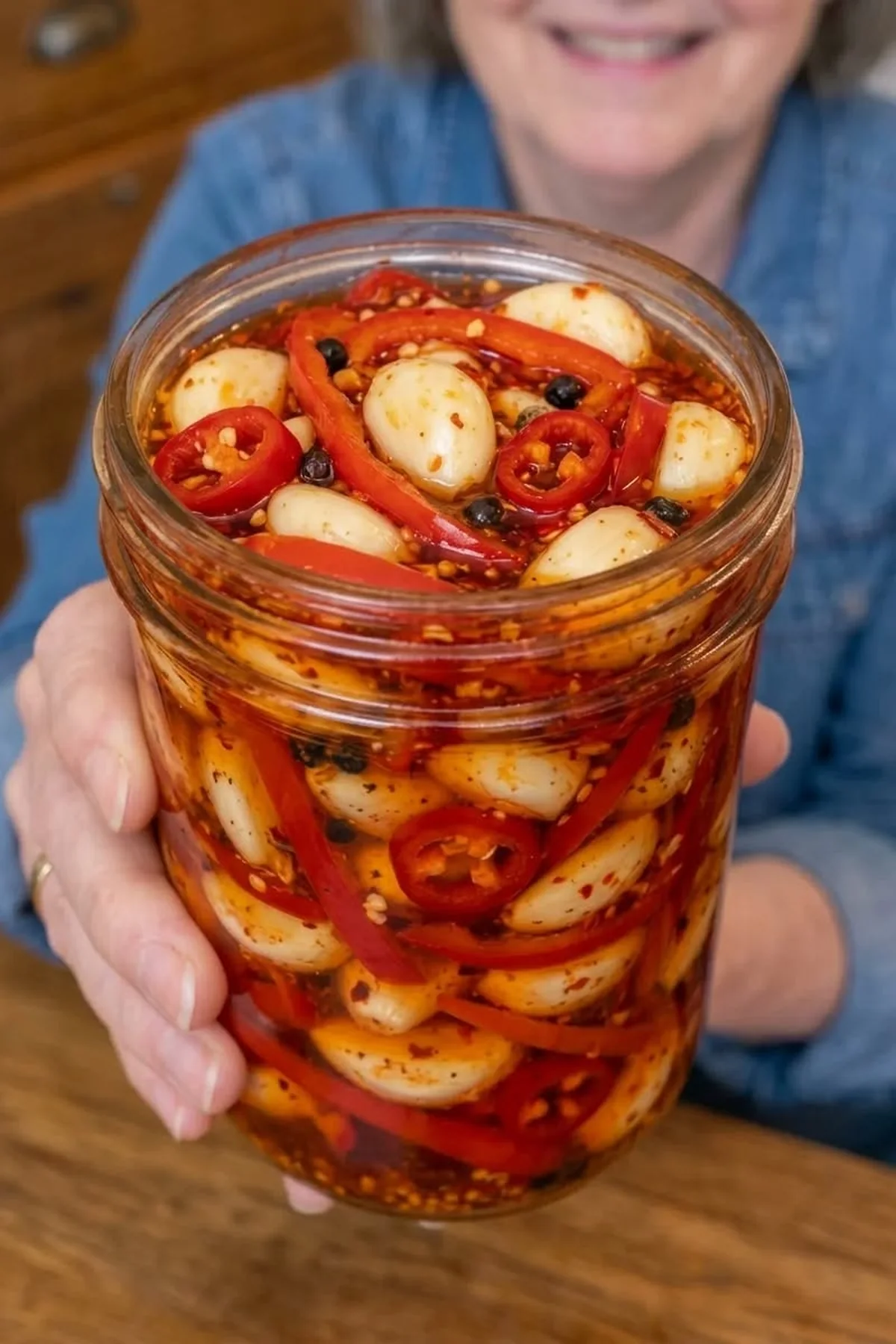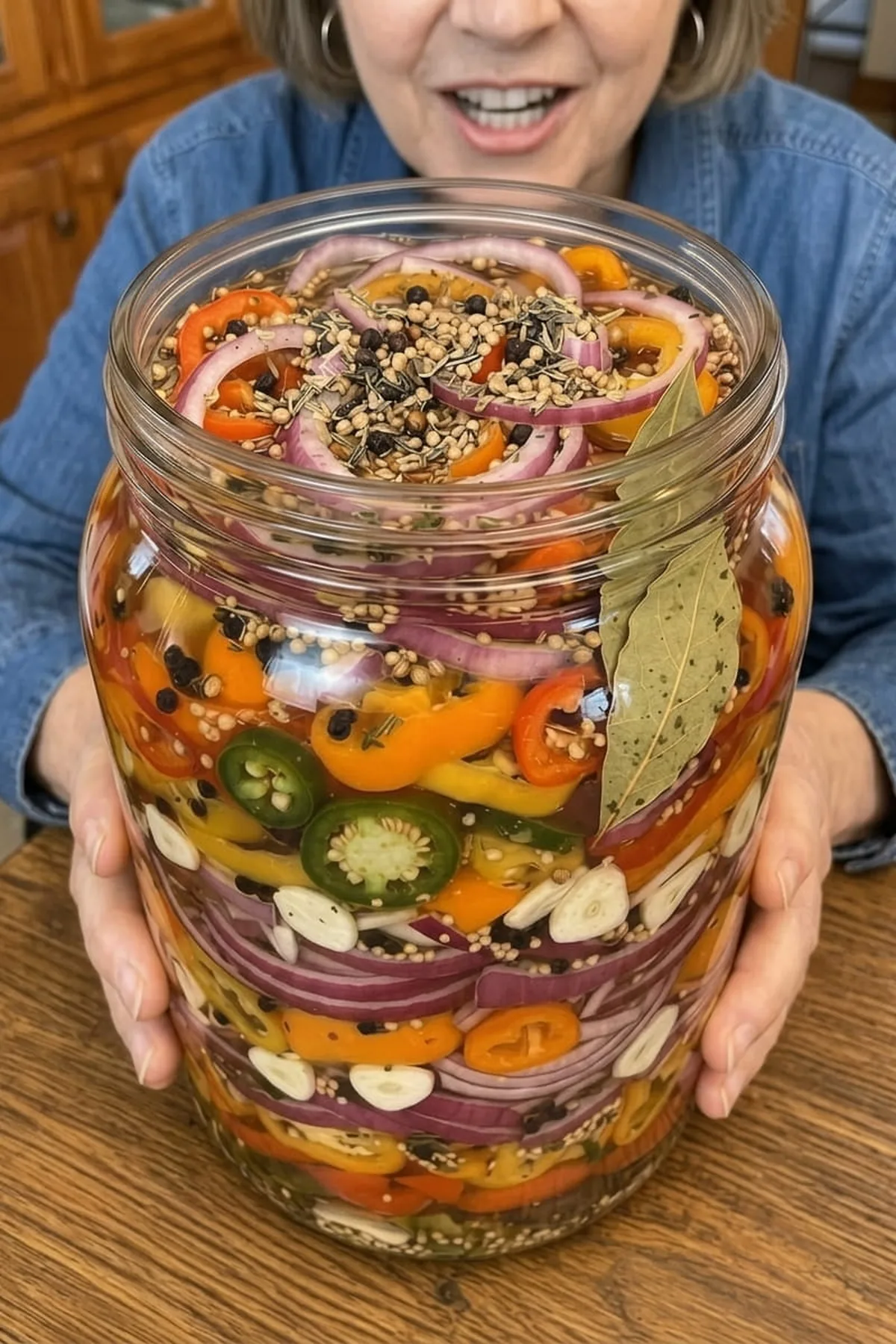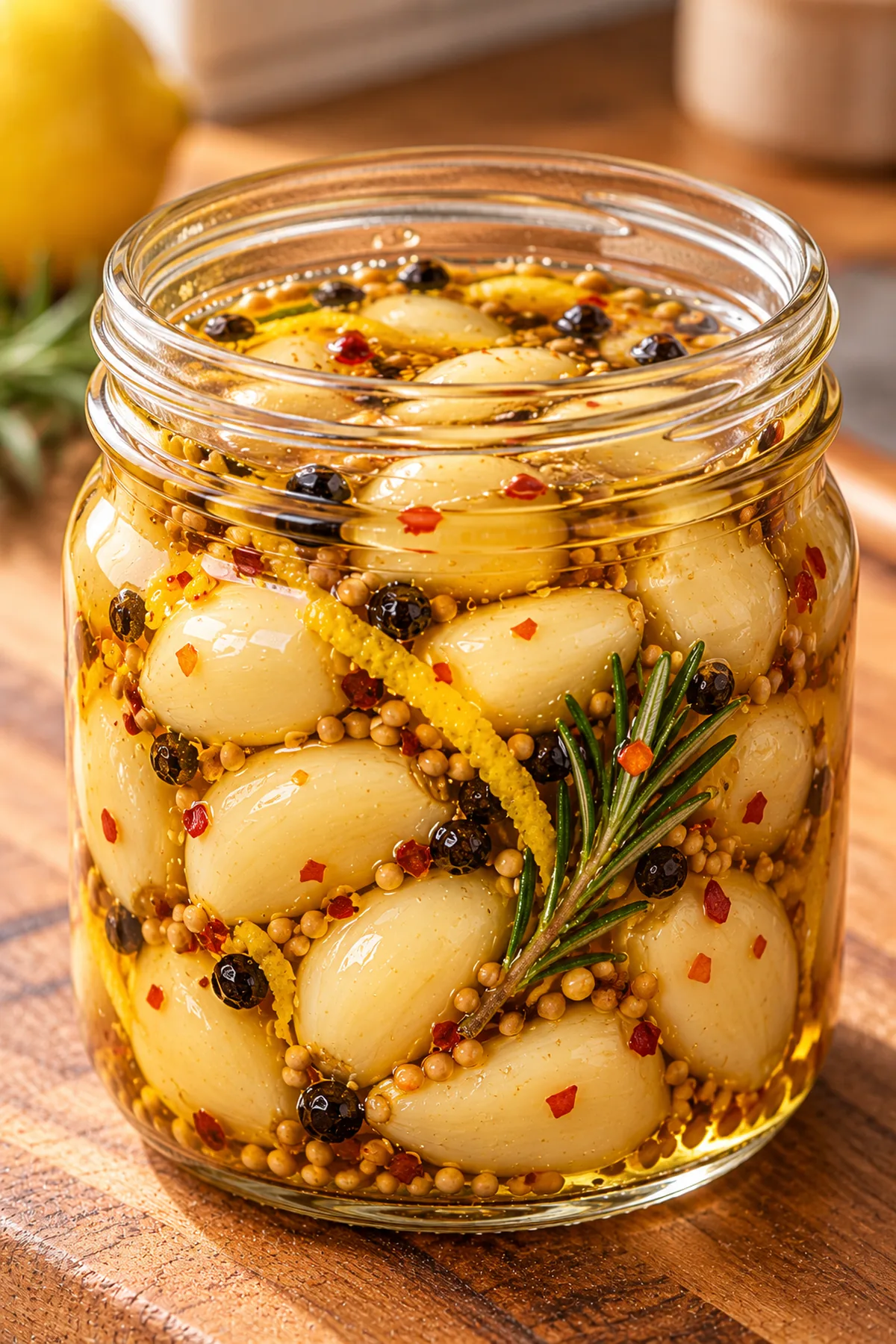

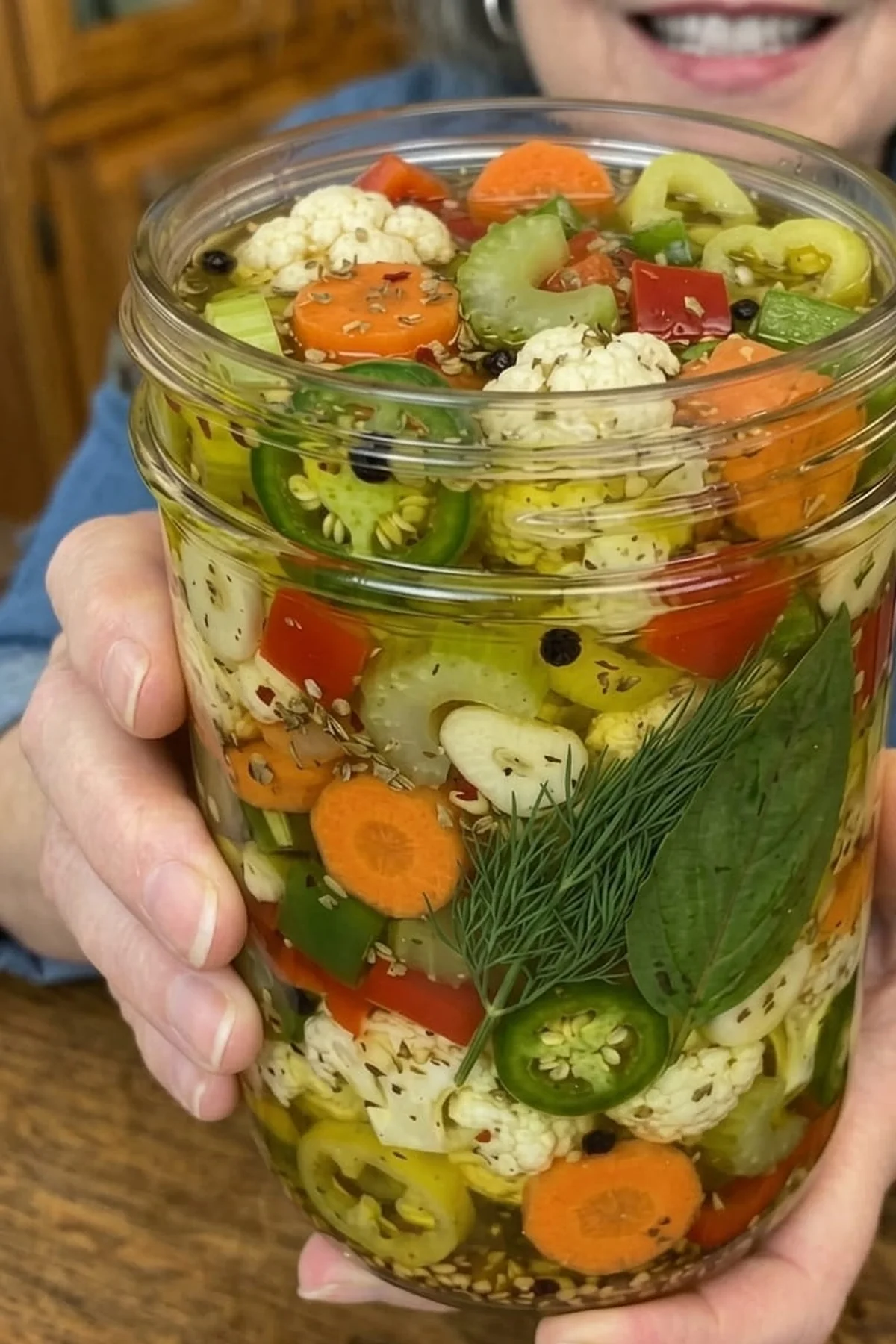
Italian giardiniera is a colorful refrigerator pickle filled with crunchy cauliflower, carrots, celery, sweet bell peppers, optional jalapeños, green olives, garlic, and aromatic spices. A hot vinegar brine gives the vegetables a clean tang while oregano, mustard seeds, peppercorns, red pepper flakes, and bay leaves build familiar Italian-American flavor. After a day or two in the refrigerator, every bite tastes bright, savory, lightly spicy, and satisfyingly crisp.
This easy homemade giardiniera is ideal for antipasto platters, Italian beef sandwiches, subs, charcuterie boards, salads, and casual snacking. The recipe makes approximately two quart-size jars and requires only about 20 minutes of active preparation. It is strictly a refrigerator pickle, not a shelf-stable canning recipe, so the jars must stay at 40°F or below and should be used within approximately two weeks.
What Is Giardiniera?
The name comes from the Italian word for garden, which suits this lively mixture of vegetables. Versions vary by region and household. Some Italian preparations are mild and vinegary, while Chicago-style giardiniera is often chopped finely, spicy, and packed in oil. This recipe lands in the Italian-American refrigerator-pickle tradition: larger, colorful pieces are submerged in a vinegar brine and served crisp.
Because the stored jars contain vinegar brine rather than oil, the vegetables remain fresh-tasting and versatile. If you want a Chicago-inspired presentation, finely chop a serving and dress that individual portion with olive oil immediately before eating. Do not pour oil into the main storage jars; keeping oil separate preserves the intended refrigerator-pickle formula and makes the two-week guidance easier to follow.
Why This Homemade Giardiniera Works
The vegetables offer a deliberate mix of textures and flavors. Cauliflower absorbs seasoning while staying firm. Carrots bring sweetness, celery contributes a clean savory crunch, and red and green peppers add color. Jalapeños and red pepper flakes supply adjustable heat. Green olives add briny richness, and sliced garlic perfumes the whole jar.
The brine uses equal amounts of 5% acidity white vinegar and water. That creates an assertive but approachable tang. Kosher salt seasons the vegetables, and one tablespoon of sugar rounds the vinegar without making the pickles sweet. Heating the brine dissolves the salt and sugar, wakes up the dried oregano, and helps flavor penetrate the raw vegetables.
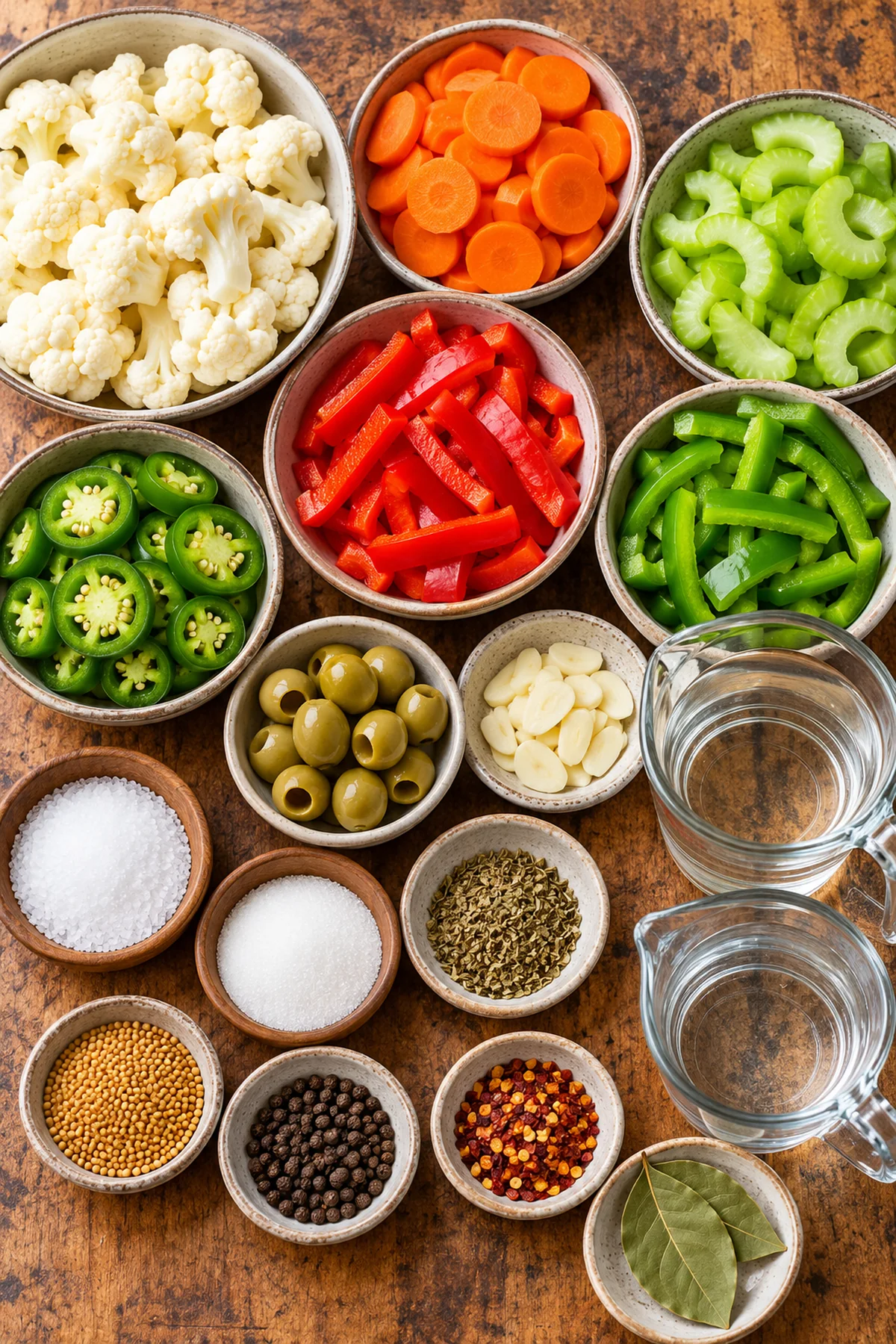
Ingredient Details and Best Choices
Cauliflower, Carrots, and Celery
Choose a firm cauliflower head with creamy florets and no soft patches. Cut two cups into small, bite-size pieces that fit easily on a fork or sandwich. Slice the carrots thinly so they soften slightly during marinating without losing their snap. Celery should be crisp and pale green; slice it into pieces similar in thickness to the carrots for an even texture.
Red and Green Bell Peppers
Using both colors makes the jars look especially vibrant and adds subtle flavor contrast. Red pepper is sweeter, while green pepper is grassier and more assertive. Remove stems, seeds, and pale membranes, then cut the peppers into short strips or bite-size squares. Pieces that are too large are awkward on sandwiches; pieces that are extremely small can soften too quickly.
Jalapeños, Garlic, and Olives
Two sliced jalapeños make a moderately spicy giardiniera. Remove the seeds and white inner ribs for less heat, or omit the jalapeños entirely for a mild version. Wear gloves if your skin is sensitive. Four sliced garlic cloves give the brine a savory edge. Use drained green olives, preferably pitted, so the giardiniera is easy and safe to eat.
White Vinegar, Water, Salt, and Sugar
Use commercially bottled white vinegar clearly labeled 5% acidity. Its neutral flavor lets the vegetables and herbs remain distinct. Do not substitute homemade vinegar or reduce the measured amount. Kosher salt works well, although pickling salt can also be used. Avoid heavily iodized salt because it may cloud the brine. The small amount of sugar balances sharpness rather than creating a sweet pickle.
Oregano and Pickling Spices
Dried oregano gives the jar its unmistakable Italian-American aroma. Mustard seeds add gentle earthy bite, peppercorns provide warmth, and crushed red pepper reinforces the jalapeño heat. Bay leaves contribute subtle herbal depth. Use reasonably fresh dried seasonings; they should smell fragrant when rubbed between your fingers.
How to Make Italian Giardiniera
Prepare the Vegetables
Wash all produce thoroughly and let it drain. Cut the cauliflower into small florets, slice the carrots and celery, and cut both bell peppers into bite-size pieces. Slice the jalapeños and garlic. Keep the pieces relatively uniform so they marinate at a similar rate and are easy to layer into jars.
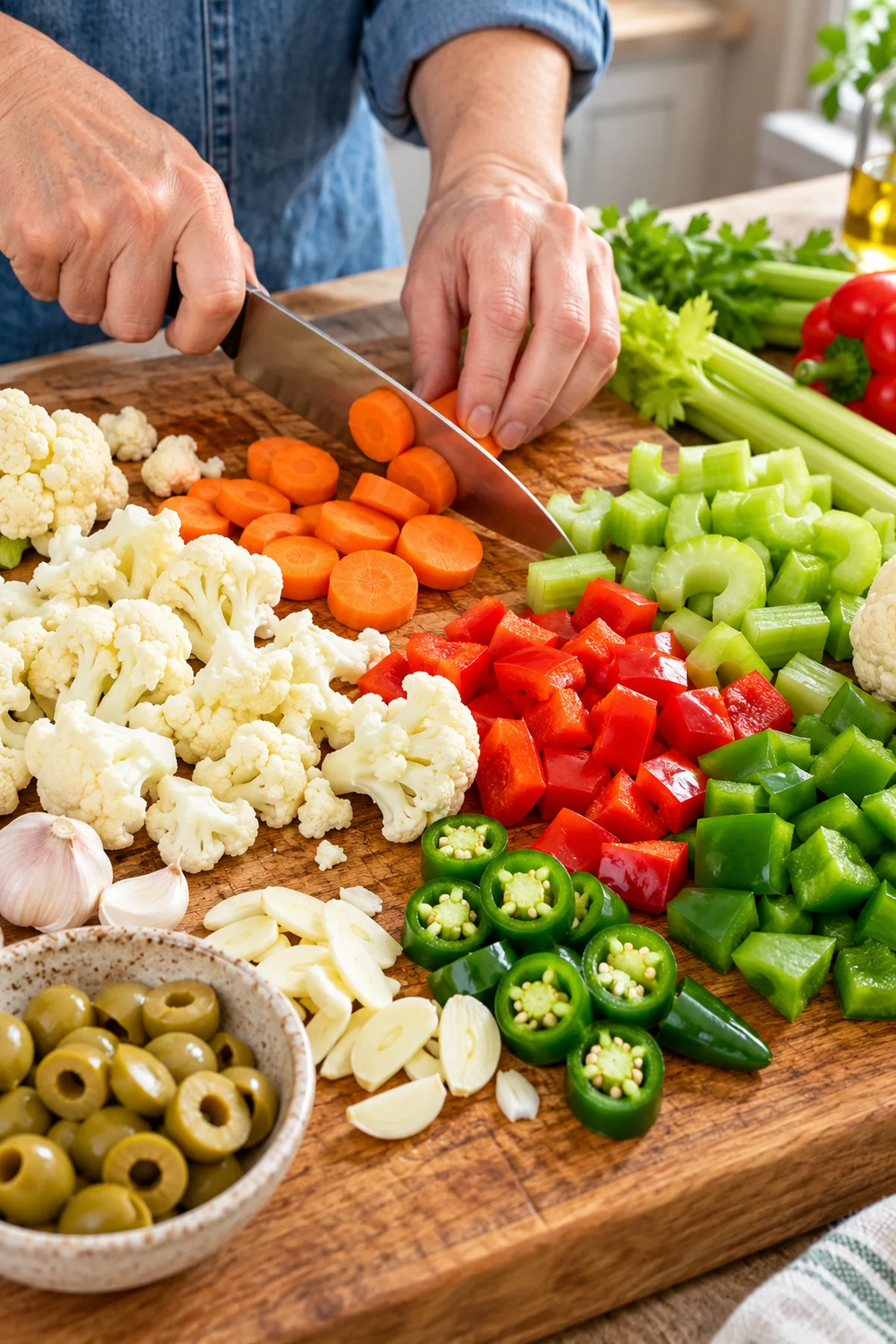
Unlike some giardiniera methods, this version does not blanch the vegetables. Packing them raw produces the firmest crunch. Thin, consistent cutting is therefore important, particularly for the carrots. Set out every prepared ingredient before heating the brine so the jars can be filled efficiently.
Prepare and Pack the Jars
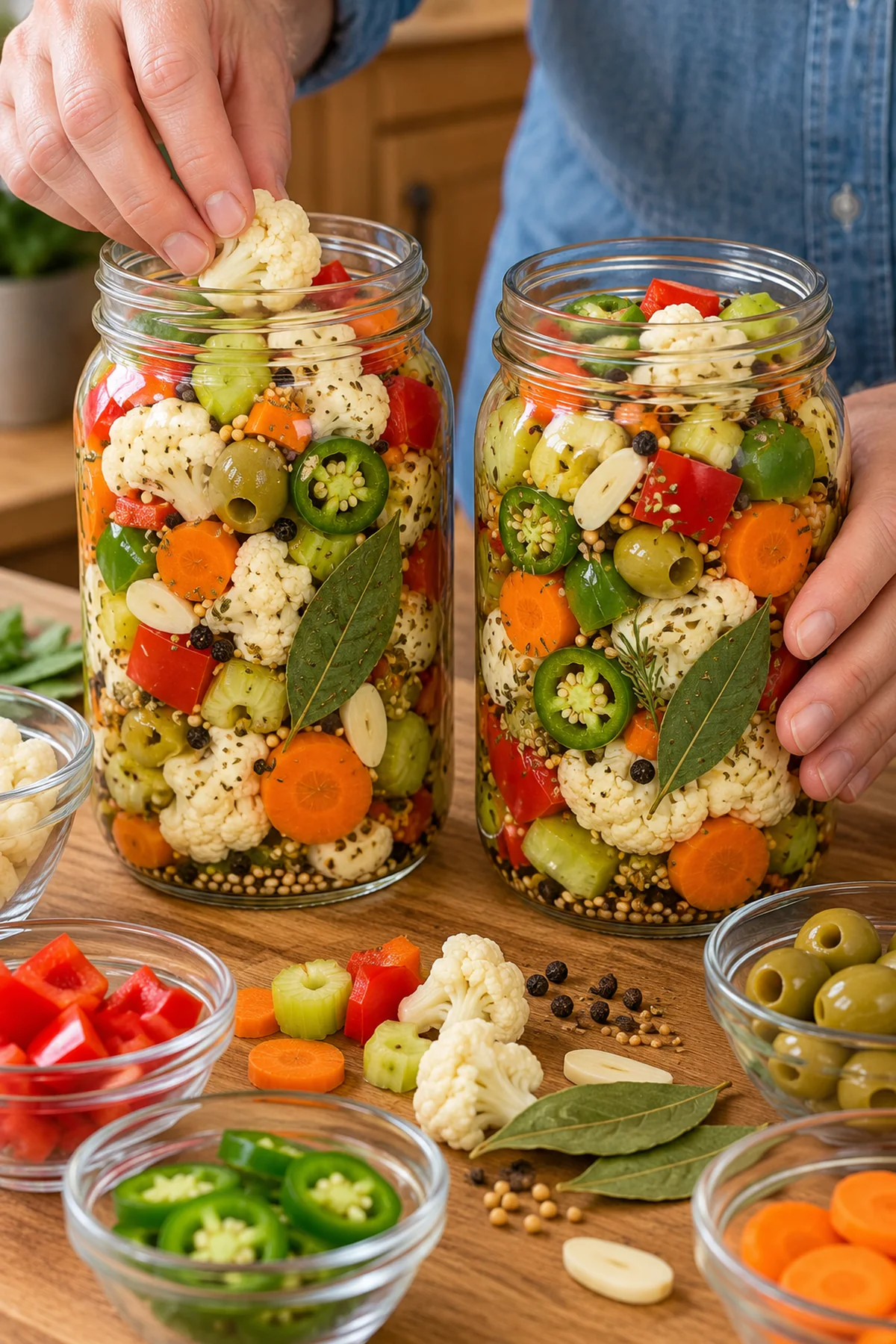
Wash two quart-size, heat-safe glass jars and their lids thoroughly in hot, soapy water. Rinse well and let them drain. Divide the cauliflower, carrots, celery, bell peppers, jalapeños, green olives, and garlic evenly between the jars. Alternate colors and shapes as you pack so each jar receives a balanced mixture.
Pack the vegetables snugly but not forcefully. Brine needs space to flow around every piece. Leave a little room at the top and tuck one bay leaf into each jar if practical. The remaining dried spices can be distributed directly between the jars or carried in with the hot brine.
Make the Oregano Pickling Brine
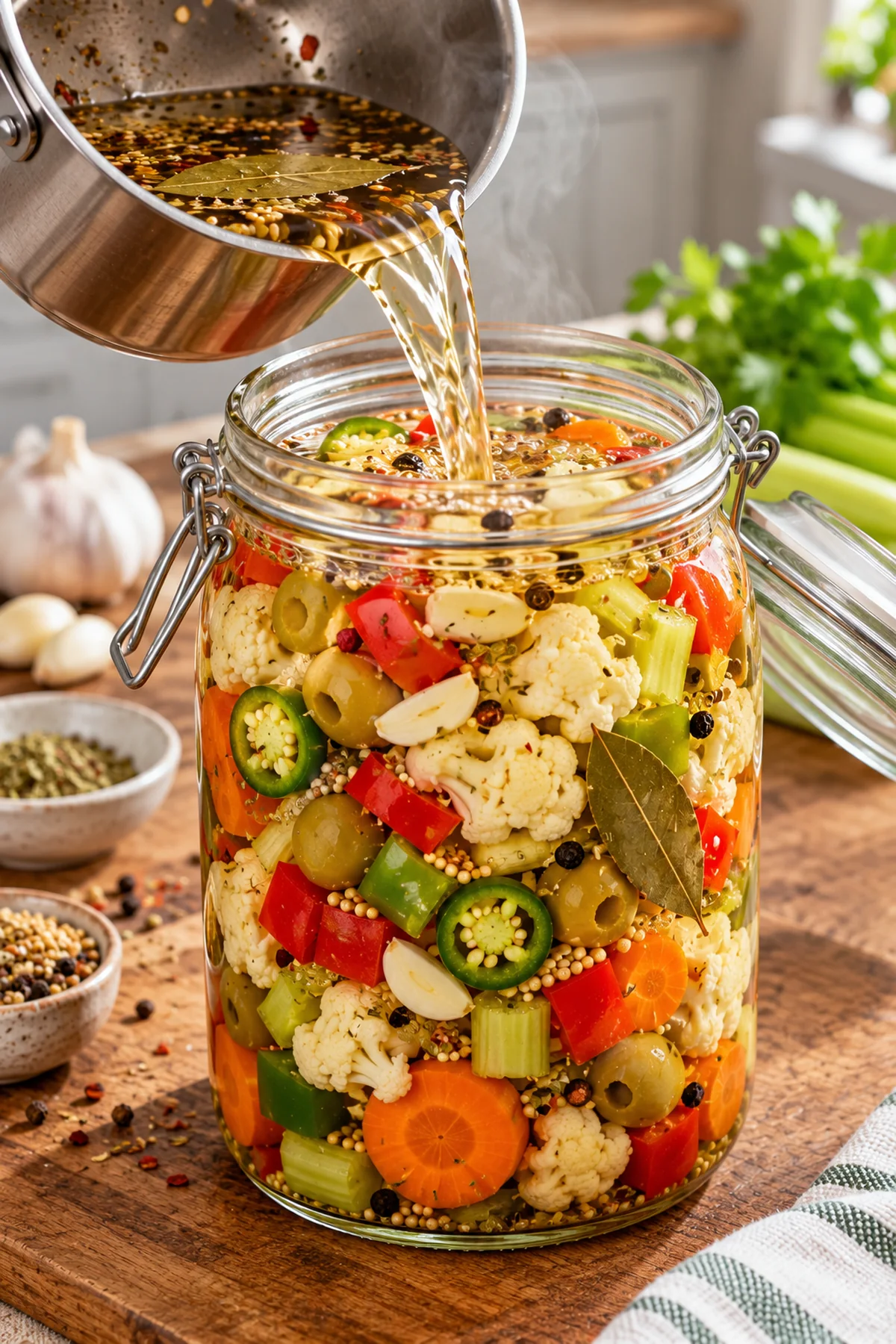
Combine the white vinegar, water, kosher salt, sugar, oregano, mustard seeds, black peppercorns, crushed red pepper flakes, and bay leaves in a saucepan. Bring the mixture to a gentle simmer over medium heat, stirring until the salt and sugar dissolve completely. A hard, prolonged boil is unnecessary; gentle heat is enough to dissolve and infuse.
Pour, Cool, and Refrigerate
Set the jars on a folded kitchen towel to protect the counter and reduce temperature shock. Carefully pour the hot brine over the vegetables until they are completely submerged. Slide a clean chopstick or thin spatula around the inside to release trapped air bubbles, then add more brine if necessary.
Let the jars cool briefly at room temperature, then cover tightly and refrigerate promptly. Do not leave them out for hours. Wait at least 24 hours before serving. Forty-eight hours produces a more integrated flavor because the garlic, oregano, chiles, and vinegar have more time to season the vegetables.
Expert Tips for Crisp, Flavorful Giardiniera
Cut vegetables evenly. Thin carrots and celery absorb brine faster than thick chunks, while tiny cauliflower crumbs soften sooner than proper florets. Aim for pieces that are small enough for sandwiches but substantial enough to remain crisp for two weeks.
Keep every vegetable submerged. Pieces floating above the brine can discolor and deteriorate sooner. A small food-safe pickle weight can help, but sensible packing and a narrow jar shoulder are often sufficient. Press floating pieces down only with a clean utensil.
Give the jars time. Giardiniera tasted immediately after filling will seem sharply vinegary and the vegetables will taste separate. After 24 hours the flavors begin to connect; after 48 hours the oregano, garlic, olives, and pepper heat become noticeably rounder and more balanced.
Variations
Spicy Giardiniera
Leave the jalapeño seeds and membranes intact, add another sliced jalapeño, or increase the crushed red pepper. Heat intensifies during marinating, so make measured changes. A sliced serrano creates a sharper chile kick.
Chicago-Style Serving Variation
Finely chop a drained portion of finished giardiniera and stir it with enough olive oil to lightly coat. Serve immediately on Italian beef, sausage sandwiches, pizza, or subs. Add oil only to the portion being eaten, never to the refrigerator storage jars.
Classic Mild Giardiniera
Omit the jalapeños and crushed red pepper flakes. The black peppercorns still provide mild warmth, while oregano, garlic, mustard seeds, olives, and bay leaves keep the mixture flavorful.
Serving Suggestions
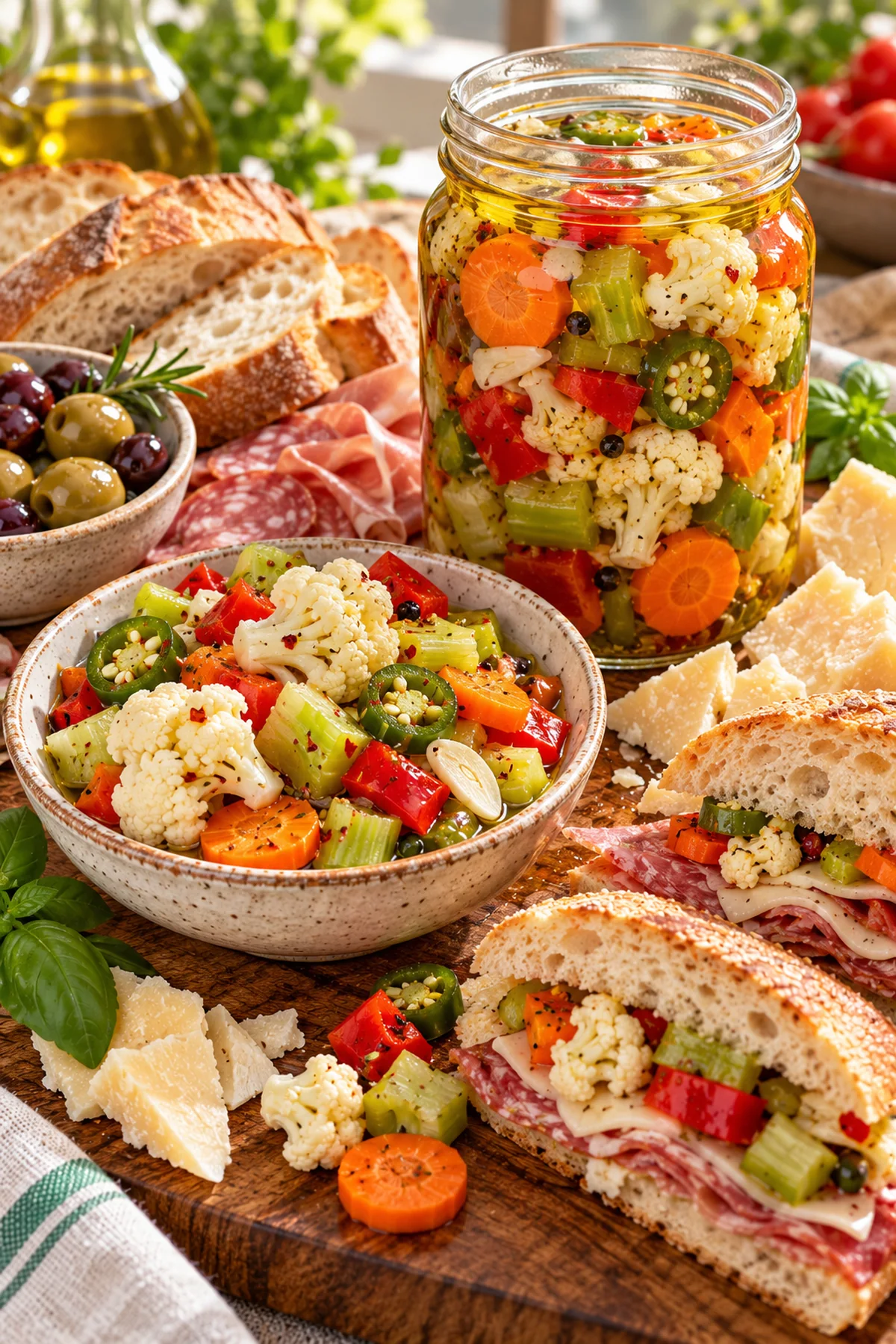
Giardiniera belongs naturally on an antipasto platter. Drain the vegetables briefly and arrange them with Italian cheeses, olives, cured meats, roasted peppers, crusty bread, and crackers. The vinegar cuts through rich cheese and salami, and the bright colors make the board look generous and festive.
For sandwiches, chop the vegetables into smaller pieces so every bite receives a little cauliflower, carrot, pepper, celery, olive, and garlic. Pile them onto Italian beef, meatball subs, turkey sandwiches, grilled sausage, or roasted vegetable wraps. The briny crunch is especially useful with fatty or slow-cooked meats.
Add drained giardiniera to pasta salad, grain bowls, chopped salads, tuna salad, or white beans. Serve it beside grilled chicken, pork chops, burgers, or barbecue. A clean spoonful of the brine can brighten vinaigrette or sandwich spread, but never return removed brine to the jar.
Make-Ahead and Storage Instructions
Prepare the jars one or two days before serving so the flavors have time to develop. For a party, transfer only the amount you expect guests to eat into a serving bowl and keep the main jars cold. Do not return vegetables from the shared platter to the storage jar.
Keep the jars tightly covered at 40°F or below and use within approximately two weeks. Always use a clean fork or spoon and return the jars to the refrigerator promptly. Label each jar with the preparation date so the storage window is easy to track.
Discard the giardiniera if you see mold, unusual foaming, persistent bubbling, slime, a leaking lid, or an unpleasant odor. Do not taste questionable food to determine whether it is safe. This refrigerator recipe has not been tested for water-bath canning and must not be stored in a pantry.
Common Mistakes to Avoid
Do not use vinegar with unknown acidity, reduce the vinegar, or add oil to the storage jars. Avoid packing the vegetables so tightly that brine cannot circulate. Do not pour very hot liquid into cold or unsuitable glass; use heat-safe jars placed on a towel.
Another mistake is serving too soon and concluding that the flavor is harsh. The 24-to-48-hour marinating period is part of the recipe. Also avoid oversized pieces, especially carrots, because they will remain much firmer than the rest of the mixture.
Frequently Asked Questions
How soon can I eat homemade giardiniera?
It can be served after 24 hours, but 48 hours gives the vegetables a more balanced oregano, garlic, vinegar, and chile flavor.
Should the vegetables be blanched?
Not for this version. The vegetables are packed raw for maximum crunch. Slice firm vegetables thinly and give them the full marinating time.
Can I add olive oil?
Add olive oil only to an individual drained portion immediately before serving. Do not add it to the stored jars, which are designed around a vinegar-and-water refrigerator brine.
Can I reuse the brine?
Do not reuse it for another batch because vegetable moisture dilutes the original acidity. A clean spoonful can be used promptly in dressing or sauce while the jar is fresh.
Is this safe for shelf-stable canning?
No. This is an Italian-American refrigerator pickle. Keep it at 40°F or below and use it within approximately two weeks unless you follow a separately tested canning recipe.
A Colorful Pickle for Sandwiches and Appetizer Boards
Homemade Italian giardiniera brings crisp garden vegetables, savory olives, garlic, oregano, and lively vinegar together in one versatile jar. The method is simple, the colors are beautiful, and the flavor improves while the jars rest. Keep the vegetables submerged and refrigerated, then reach for them whenever sandwiches, salads, grilled dinners, or antipasto boards need a crunchy, tangy finish.
Print
Italian Giardiniera – Homemade Pickled Vegetables
- Prep Time: 20 minutes
- Marinating Time: 24 hours
- Cook Time: 5 minutes
- Total Time: 24 hours 25 minutes
- Yield: Approximately 2 quart-size jars 1x
- Category: Appetizer
- Method: Refrigerator Pickling
- Cuisine: Italian-American
- Diet: Vegan
Description
Crunchy mixed vegetables, green olives, and garlic in a tangy oregano-spiced Italian-American refrigerator brine.
Ingredients
- 2 cups cauliflower florets
- 2 carrots, thinly sliced
- 2 celery stalks, sliced
- 1 red bell pepper, sliced
- 1 green bell pepper, sliced
- 2 jalapeños, sliced, optional
- 1/2 cup green olives, drained
- 4 garlic cloves, sliced
- 2 cups white vinegar (5% acidity)
- 2 cups water
- 2 tablespoons kosher salt
- 1 tablespoon granulated sugar
- 1 teaspoon dried oregano
- 1 teaspoon mustard seeds
- 1/2 teaspoon whole black peppercorns
- 1/2 teaspoon crushed red pepper flakes
- 2 bay leaves
Instructions
- Wash all vegetables thoroughly. Cut the cauliflower into small florets, thinly slice the carrots, slice the celery, cut the bell peppers into bite-size pieces, and slice the optional jalapeños and garlic.
- Wash two quart-size, heat-safe glass jars and their lids thoroughly in hot, soapy water. Rinse well and let drain.
- Combine the white vinegar, water, kosher salt, sugar, oregano, mustard seeds, peppercorns, crushed red pepper flakes, and bay leaves in a saucepan.
- Bring to a gentle simmer over medium heat, stirring until the salt and sugar dissolve completely.
- Divide the cauliflower, carrots, celery, red and green bell peppers, optional jalapeños, green olives, and sliced garlic evenly between the two jars.
- Carefully pour the hot brine and spices over the vegetables until everything is completely submerged.
- Run a clean chopstick or thin spatula around the inside to release air bubbles, then add more brine if necessary.
- Allow the jars to cool briefly, then cover tightly and refrigerate promptly.
- Marinate for at least 24 hours before serving; for the best flavor, wait 48 hours.
Notes
- This is a refrigerator pickle and is not a shelf-stable canning recipe.
- Keep refrigerated at 40°F or below with all vegetables submerged and use within approximately 2 weeks.
- Use commercially bottled white vinegar labeled 5% acidity; do not reduce the vinegar.
- For Chicago-style serving, finely chop a drained individual portion and add olive oil immediately before eating; do not add oil to the storage jars.
- Always use a clean utensil and discard the batch if you notice mold, unusual bubbling, slime, or an unpleasant odor.
- Refrigerate tightly covered at 40°F or below for approximately 2 weeks.
- Keep all vegetables submerged and return jars to the refrigerator promptly.
- Do not store at room temperature or process for pantry storage without a tested canning procedure.
Nutrition
- Serving Size: 1/16 of recipe
- Calories: 35
- Sugar: 3 g
- Sodium: 890 mg
- Fat: 1 g
- Carbohydrates: 7 g
- Fiber: 2 g
- Protein: 1 g