
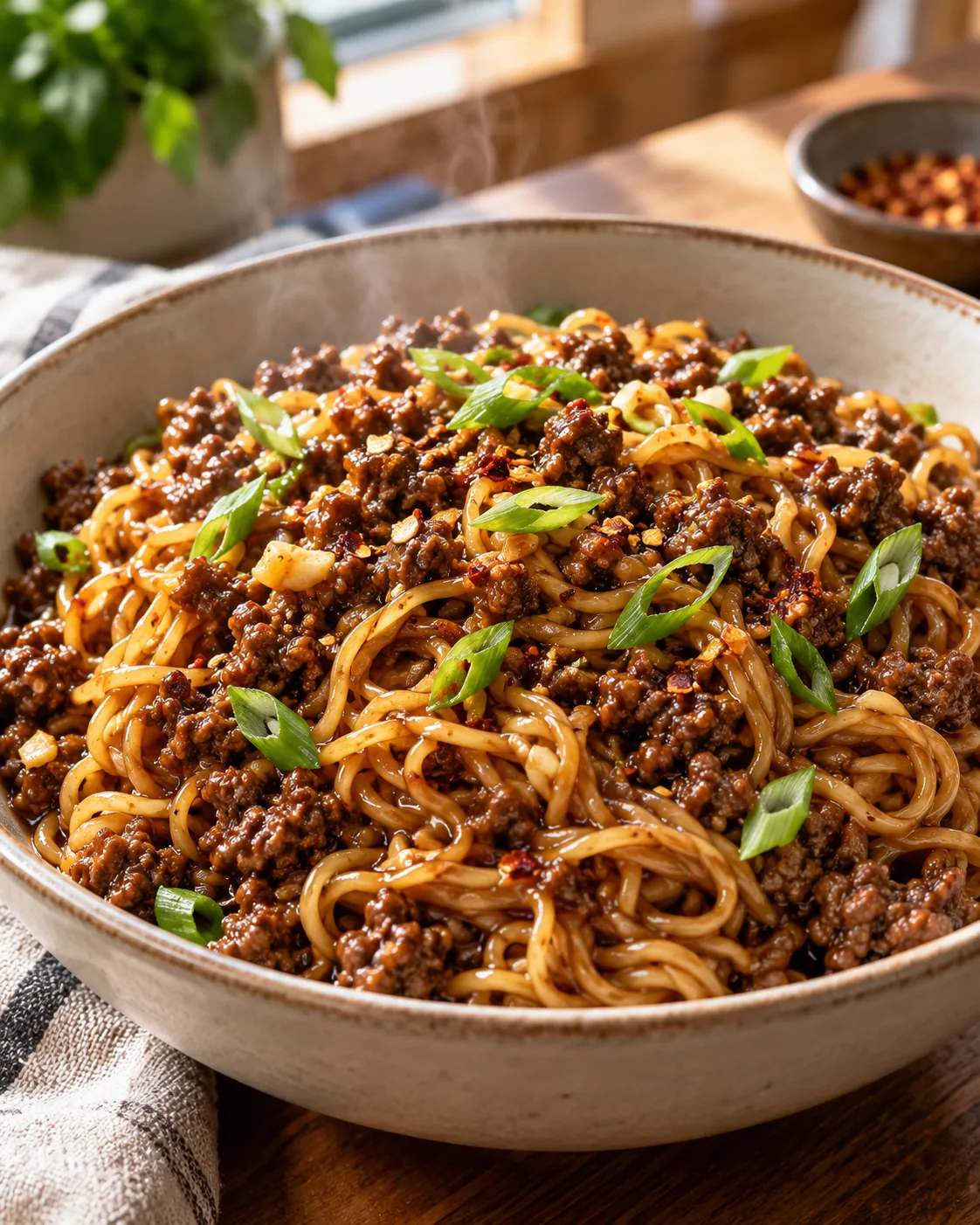
Savory Mongolian Noodles with Ground Beef turn a short list of weeknight staples into a glossy, satisfying dinner in about 25 minutes. The noodles soak up a sweet-savory sauce built from soy sauce, hoisin, brown sugar, garlic, and sesame oil, while crumbled ground beef makes the dish hearty enough to serve as a complete meal. It has the comforting flavor people look for in takeout-style noodles, but the preparation is simple, economical, and easy to manage in one skillet after the noodles are cooked.
This version is deliberately streamlined. It does not require a long marinade, a wok, or specialty cuts of meat. Browning ground beef creates flavorful caramelized bits quickly, and thin noodles provide plenty of surface area for the sauce. The optional cornstarch slurry lets you control the final consistency, and optional crushed red pepper flakes make it easy to keep the dish mild for the family or give it a noticeable kick.
Why This Mongolian Noodle Recipe Works
The recipe succeeds because every ingredient has a clear job. Soy sauce supplies salt and deep savory flavor. Hoisin adds sweetness, body, and a gentle fermented complexity. Brown sugar rounds out the sharper edges of the soy sauce and helps the mixture cling to the noodles. Fresh garlic brings aroma, while sesame oil added near the end preserves its toasted fragrance. Ground beef contributes richness and makes the sauce feel substantial without requiring extra simmering time.
Timing matters just as much as the ingredient list. Thin noodles cook quickly and can become soft if they sit in hot water or simmer too long in the sauce. Draining them when they are just tender gives them enough structure to survive the final toss. The beef should be browned rather than merely steamed, so a wide, properly heated skillet is useful. Once the sauce enters the pan, a brief simmer is all it needs before the noodles are added.
This is also a flexible dinner formula. Ramen, lo mein, rice noodles, or thin spaghetti can all work when cooked according to their individual package directions. The exact absorption varies, so the cook can loosen the skillet with a spoonful of warm water if necessary. That small adjustment is better than adding extra soy sauce, which may make the finished dish too salty.
Ingredients for Savory Mongolian Noodles
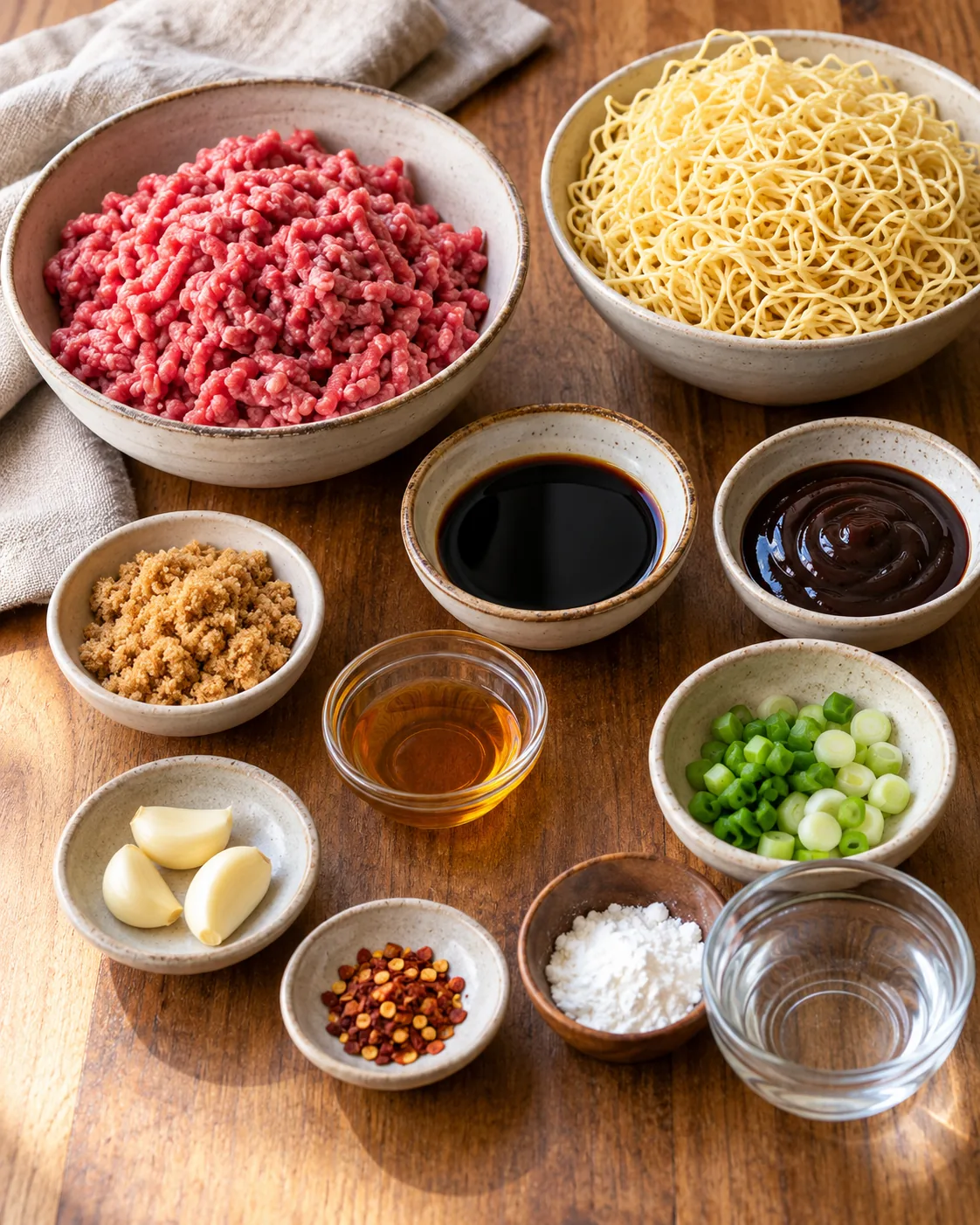
- 2–3 packets ramen noodles or about 6 ounces dry thin noodles
- 1 pound ground beef
- 3 garlic cloves, minced
- ¼ cup soy sauce
- 2 tablespoons hoisin sauce
- 1 tablespoon brown sugar
- 1 tablespoon sesame oil
- Crushed red pepper flakes, optional
- ½ onion, chopped, for garnish
- 1 tablespoon cornstarch mixed with 2 tablespoons water, optional
Choosing the Noodles
Instant ramen noodles are convenient because they cook in only a few minutes; discard the seasoning packets because the sauce provides all the flavor needed. Fresh lo mein noodles give the dish a springy, restaurant-style texture, while thin spaghetti is a practical pantry alternative. Rice noodles can be used for a different texture, but they should be soaked or cooked according to the package and handled gently. Whatever you choose, stop cooking at the just-tender stage and drain thoroughly.
Ground Beef and Aromatics
An 85% to 90% lean ground beef works well. It has enough fat to brown attractively without leaving the finished noodles greasy. If the skillet contains a large amount of rendered fat, spoon off the excess after browning, leaving only a light coating for flavor. Mince the garlic shortly before cooking so its aroma remains fresh. The chopped onion listed for garnish adds a crisp, sharp contrast; green onion is especially attractive, although finely chopped sweet onion can also be used.
Understanding the Sauce
Regular soy sauce produces the boldest result, but low-sodium soy sauce is a good choice when the hoisin sauce is also salty. Hoisin is thick, sweet, and savory; measure it rather than estimating because too much can make the noodles heavy. Packed brown sugar dissolves quickly and contributes a subtle molasses note. Toasted sesame oil is powerful, so one measured tablespoon is enough. Add it during the final toss instead of frying it at high heat, which can dull its aroma.
The cornstarch slurry is optional because hoisin already gives the sauce some body. Use it when you want a thicker, shinier coating or when your noodles release very little starch. Stir the slurry again immediately before adding it; cornstarch settles quickly. If the sauce already clings to the beef and spatula, skip it. A sauce that is slightly loose in the skillet often becomes perfect after the noodles absorb a little moisture.
How to Make Mongolian Noodles with Ground Beef
1. Prepare the Sauce and Noodles
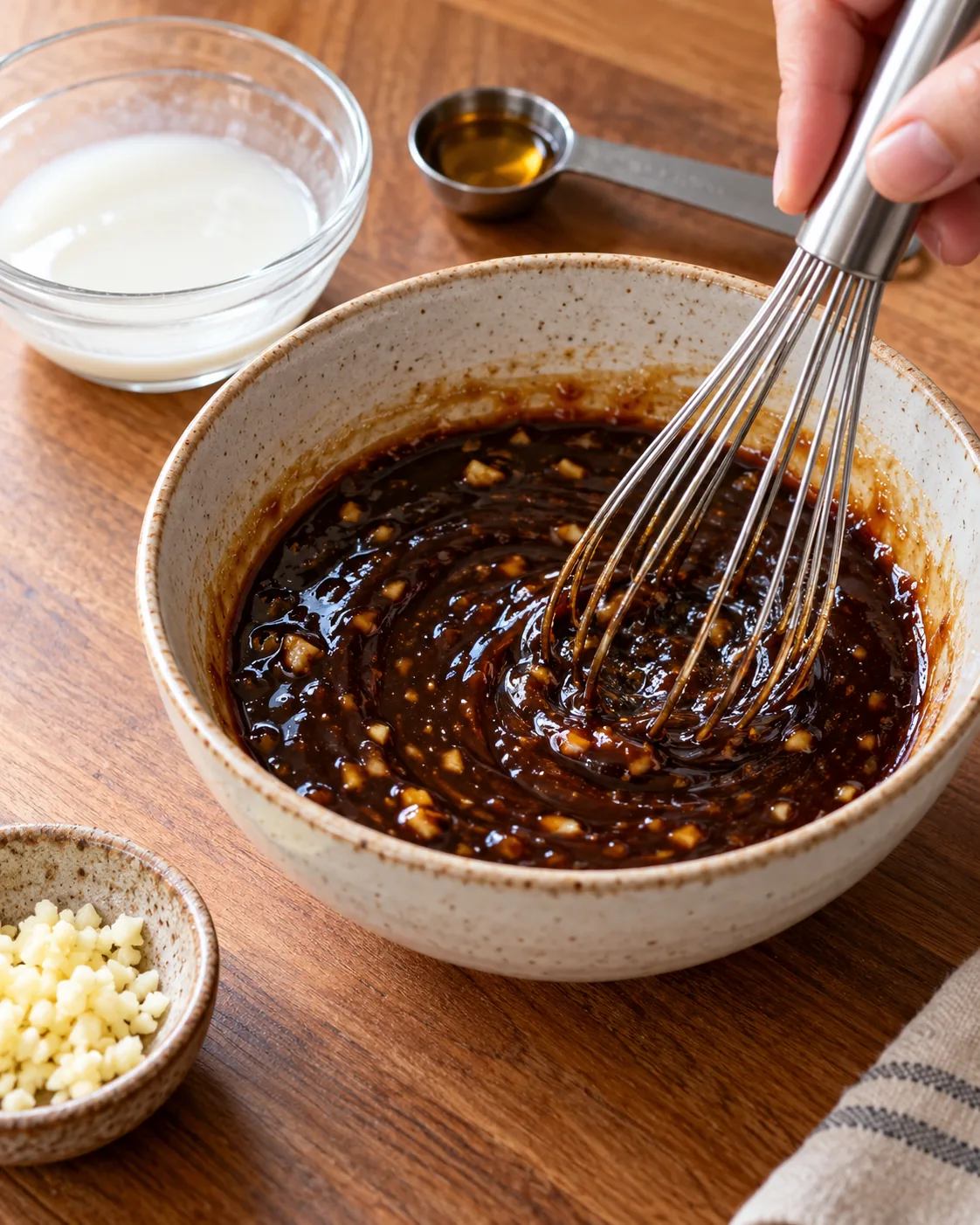
Bring the noodle water to a boil while you measure the sauce ingredients. In a small bowl, combine the soy sauce, hoisin sauce, and brown sugar. Mince the garlic, chop the garnish, and mix the cornstarch with two tablespoons of cold water if you plan to use it. Having everything ready is important because the skillet portion moves quickly once the beef is browned.
Cook the noodles according to the package directions, aiming for the firm end of the recommended time. Drain them promptly and do not rinse wheat-based noodles unless the package specifically directs you to do so. If they will wait more than a minute or two, toss them gently so they do not compact into one solid mass. Reserve a few tablespoons of warm noodle water before draining; it is useful for adjusting the sauce later.
2. Brown the Ground Beef
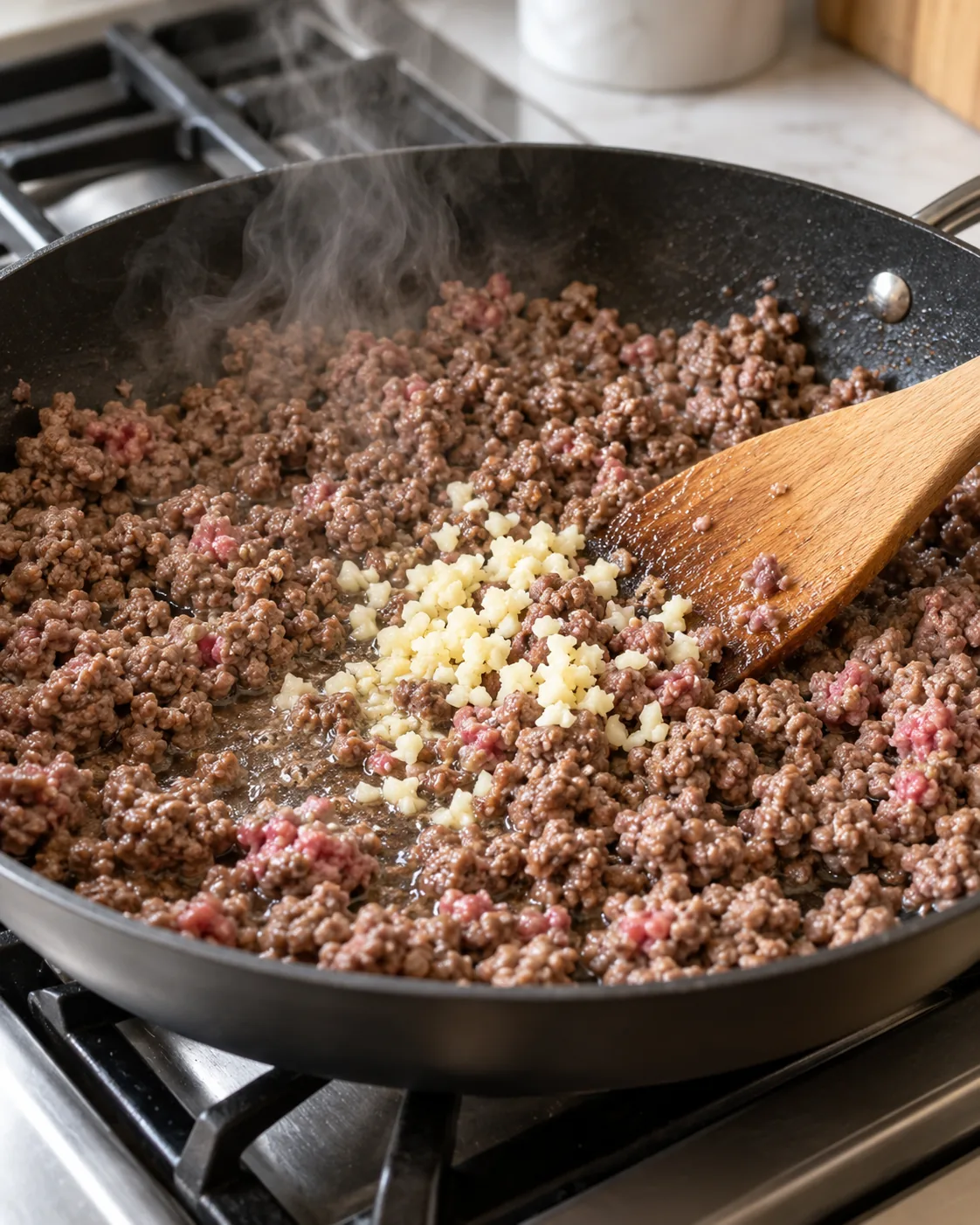
Heat a wide skillet over medium-high heat. Add the ground beef and spread it across the hot surface. Let it sit briefly before breaking it apart so some pieces develop browned edges. Continue cooking and crumbling until no pink remains and the beef reaches a safe internal temperature of 160°F. Drain excess fat if needed, but avoid rinsing the meat because that removes flavor and cools the pan.
3. Add Garlic and Build the Sauce
Reduce the heat to medium, add the minced garlic, and stir for about 30 seconds to one minute. The garlic should smell fragrant but should not turn dark brown. Pour in the soy-hoisin mixture and scrape the bottom of the skillet to release the browned bits. Let the sauce bubble gently for a minute so the sugar dissolves completely and the flavors coat the beef.
If you want a thicker sauce, stir the cornstarch slurry once more and drizzle it into the simmering skillet while stirring. The change happens quickly, generally within one to two minutes. Stop when the sauce lightly coats a spoon. If it becomes too thick, add reserved noodle water one tablespoon at a time. The goal is a glossy coating, not a paste.
4. Toss and Finish
Add the drained noodles to the skillet and use tongs to lift and fold them through the beef. Drizzle in the sesame oil and continue tossing until every strand looks evenly coated. Add crushed red pepper flakes now if desired. Keep the heat moderate and work gently so thin noodles do not break. If the pan looks dry before the noodles are coated, add a spoonful of reserved water rather than more oil.
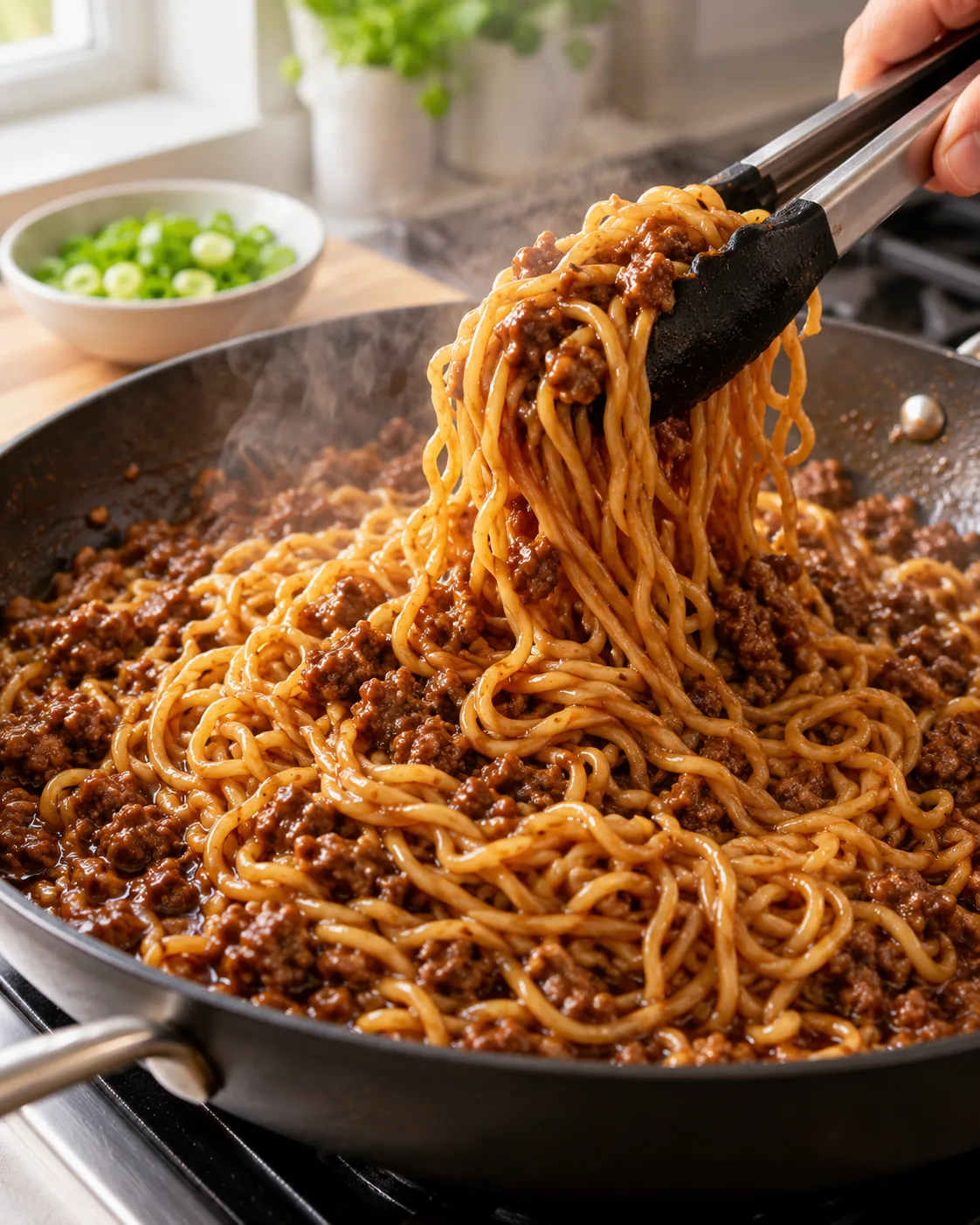
Remove the skillet from the heat as soon as the noodles are hot and glossy. Taste one strand before adding any extra seasoning; soy and hoisin sauces vary considerably in saltiness. Finish with the chopped onion and serve immediately. The contrast between hot saucy noodles and fresh crisp garnish makes the simple dish feel complete.
Expert Tips for the Best Texture
- Use a wide skillet. More surface area helps the beef brown instead of steaming in its own juices.
- Do not overcook the noodles. They continue softening when tossed with the hot sauce.
- Measure the sauces. Soy sauce and hoisin are concentrated, so casual pouring can upset the salt-sweet balance.
- Add garlic after browning. Garlic burns before beef finishes cooking if both enter the pan at the same time.
- Use the slurry only when needed. Noodles absorb sauce as they sit, and an over-thickened skillet can become sticky.
- Finish with sesame oil off the highest heat. This protects its nutty aroma.
Variations and Thoughtful Substitutions
Ground turkey, chicken, or pork can replace the beef in the same quantity. Poultry is leaner, so a lightly oiled skillet may be necessary, and it must be cooked to 165°F. Plant-based ground also works when prepared according to its package directions. For a mushroom version, brown sliced cremini mushrooms in batches so they release moisture and develop color before the sauce is added.
Vegetables can make the meal larger without changing its identity. Thin bell-pepper strips, shredded carrots, snow peas, mushrooms, cabbage, or baby spinach are good choices. Cook firm vegetables after browning the beef and before adding the sauce; add spinach during the final toss. Limit the total to about two cups so the original amount of sauce can still coat everything evenly.
For more heat, add extra crushed red pepper, chili-garlic sauce, or a small drizzle of chili oil at the table. For a gluten-free version, use gluten-free noodles, tamari certified gluten-free, and a gluten-free hoisin sauce. Check every label because traditional soy and hoisin sauces commonly contain wheat. A lower-sodium variation begins with reduced-sodium soy sauce; do not compensate with extra hoisin until the finished skillet has been tasted.
Serving Suggestions
Serve these noodles straight from the skillet while the sauce is glossy and the garnish is crisp. Four moderate bowls make a satisfying dinner. For a larger meal, pair them with quickly steamed broccoli, roasted green beans, sautéed bok choy, or a cool cucumber salad. Keep side dishes simply seasoned because the noodles already provide plenty of savory-sweet flavor.
A family-style table works especially well: place the skillet in the center with extra green onion and red pepper flakes in small bowls so everyone can adjust the garnish. Chopsticks are fun, but a fork handles the ground beef and thin noodles more easily. Warm bowls help the food stay hot, especially if you are serving several people.
If you enjoy quick ground-beef dinners, pair your meal planning with another easy Cooking Layer option such as Ground Turkey Zucchini Chickpea Skillet. For a make-ahead breakfast that balances a busy week, the Sausage, Egg and Cream Cheese Hashbrown Casserole is another practical choice.
Make-Ahead, Storage, and Reheating
For efficient preparation, mix the soy sauce, hoisin, and brown sugar up to two days ahead and refrigerate the mixture in a covered container. Mince the garlic and chop the garnish on the day you cook. You can brown the beef one day ahead, cool it promptly, and refrigerate it separately. Cook the noodles just before serving because their texture is best when fresh.
Store leftovers in a shallow airtight container in the refrigerator for up to four days. Refrigerate within two hours of cooking. The noodles will continue absorbing sauce, so leftovers become a little softer and drier. Reheat individual portions in the microwave in short intervals, stirring between each, or warm them in a covered skillet over medium-low heat. Add one or two teaspoons of water or broth per portion to restore moisture.
The dish can be frozen for one to two months, although the noodles will be softer after thawing. Cool completely, divide into meal-size freezer containers, and remove excess air. Thaw overnight in the refrigerator before reheating. Do not repeatedly cool and reheat the same batch; warm only the amount you plan to eat.
Common Mistakes to Avoid
Boiling the noodles too long is the most common problem. Soft noodles turn mushy during the skillet toss. Crowding a small pan causes the beef to steam, limiting the browned flavor that balances the sweet sauce. Adding garlic too early can make it bitter, while pouring in unmeasured soy sauce can make the entire dish too salty.
Another mistake is assuming every batch needs cornstarch. Hoisin and noodle starch may provide enough body on their own. Watch the sauce rather than using the slurry automatically. Finally, do not leave the finished noodles over high heat while setting the table. Remove them as soon as they are coated and have plates ready so the texture stays springy.
Frequently Asked Questions
Are Mongolian noodles traditionally Mongolian?
This is an American takeout-inspired recipe rather than a traditional dish from Mongolia. The name describes the familiar sweet-savory soy and hoisin flavor profile often associated with Mongolian-style restaurant dishes.
Can I use fresh noodles?
Yes. Fresh lo mein or yakisoba-style noodles are excellent. Follow their package instructions and avoid overcooking. Some fresh noodles only need a brief rinse or quick boil before they enter the skillet.
What can replace hoisin sauce?
Hoisin provides a distinctive combination of sweetness, savoriness, and body, so a commercial substitute gives the most consistent result. In a pinch, combine a little soy sauce, honey, and smooth peanut butter, then use only enough to replace the two measured tablespoons. The flavor will be different, so taste before adding more salt or sugar.
How do I keep the noodles from sticking?
Do not let drained noodles sit in a compact mound. Loosen them gently, prepare the sauce before cooking them, and transfer them to the skillet promptly. If they begin to cling, a spoonful of reserved cooking water usually loosens them without making the dish oily.
Can I double the recipe?
Yes, but brown two pounds of beef in batches and use a very large skillet or Dutch oven for the final toss. Overcrowding prevents browning and makes it difficult to coat the noodles evenly. Double every sauce ingredient proportionally, then decide whether the full amount of slurry is necessary.
Is the recipe spicy?
It is mild when the optional crushed red pepper is omitted. Add a pinch for gentle warmth or serve chili oil at the table for people who want more heat. This keeps the base recipe family-friendly.
Final Thoughts
Savory Mongolian Noodles with Ground Beef prove that a fast dinner can still have carefully balanced flavor and satisfying texture. Brown the beef well, keep the noodles firm, measure the concentrated sauce ingredients, and stop cooking as soon as the strands are glossy. Those small decisions create a much better result than simply simmering everything together.
With pantry-friendly ingredients and an adaptable level of heat, this is the kind of recipe that earns a reliable place in a weeknight rotation. Serve it immediately, keep any vegetable additions modest, and save a little noodle water for the final adjustment. The result is a skillet of tender beef and saucy noodles that tastes comforting, looks inviting, and comes together without unnecessary complication.
Print
Savory Mongolian Noodles with Ground Beef
- Prep Time: 10 minutes
- Cook Time: 15 minutes
- Total Time: 25 minutes
- Yield: 4 servings 1x
- Category: Dinner
- Method: Stovetop
- Cuisine: Asian-Inspired
Description
These Savory Mongolian Noodles with Ground Beef are an absolute weeknight game-changer. Ground beef adds richness, hoisin and soy bring the umami, and the noodles? They soak up all that sweet-savory goodness like a dream.
Ingredients
Ramen noodles (or any thin noodles) – 2–3 packets or ~6 oz dry
1 lb ground beef
3 cloves garlic, minced
¼ cup soy sauce
2 tbsp hoisin sauce
1 tbsp brown sugar
1 tbsp sesame oil
Crushed red pepper flakes (optional)
½ onion, chopped (for garnish)
1 tbsp cornstarch mixed with 2 tbsp water (optional, for thickening)
Instructions
Prepare noodles according to the package instructions. Drain and set aside.
Heat a large skillet over medium-high heat. Add the ground beef and cook, breaking it up with a spatula until fully browned and cooked through.
Add minced garlic and cook for 1–2 minutes until fragrant. Then stir in soy sauce, hoisin sauce, and brown sugar.
If a thicker sauce is desired, stir in the cornstarch slurry. Simmer for 1–2 minutes until slightly thickened.
Add the cooked noodles to the skillet. Drizzle in sesame oil and toss everything together until evenly coated.
Stir in red pepper flakes if using. Remove from heat, top with chopped onion, and serve immediately
Notes
Soy sauce: Use low-sodium if you’re watching salt intake.
Noodles: Ramen, lo mein, rice noodles, or even spaghetti all work.
Hoisin tip: If you’re running low, mix a little soy sauce + honey + peanut butter for a quick substitute.
Vegetarian option: Swap beef for sautéed mushrooms or plant-based ground.