
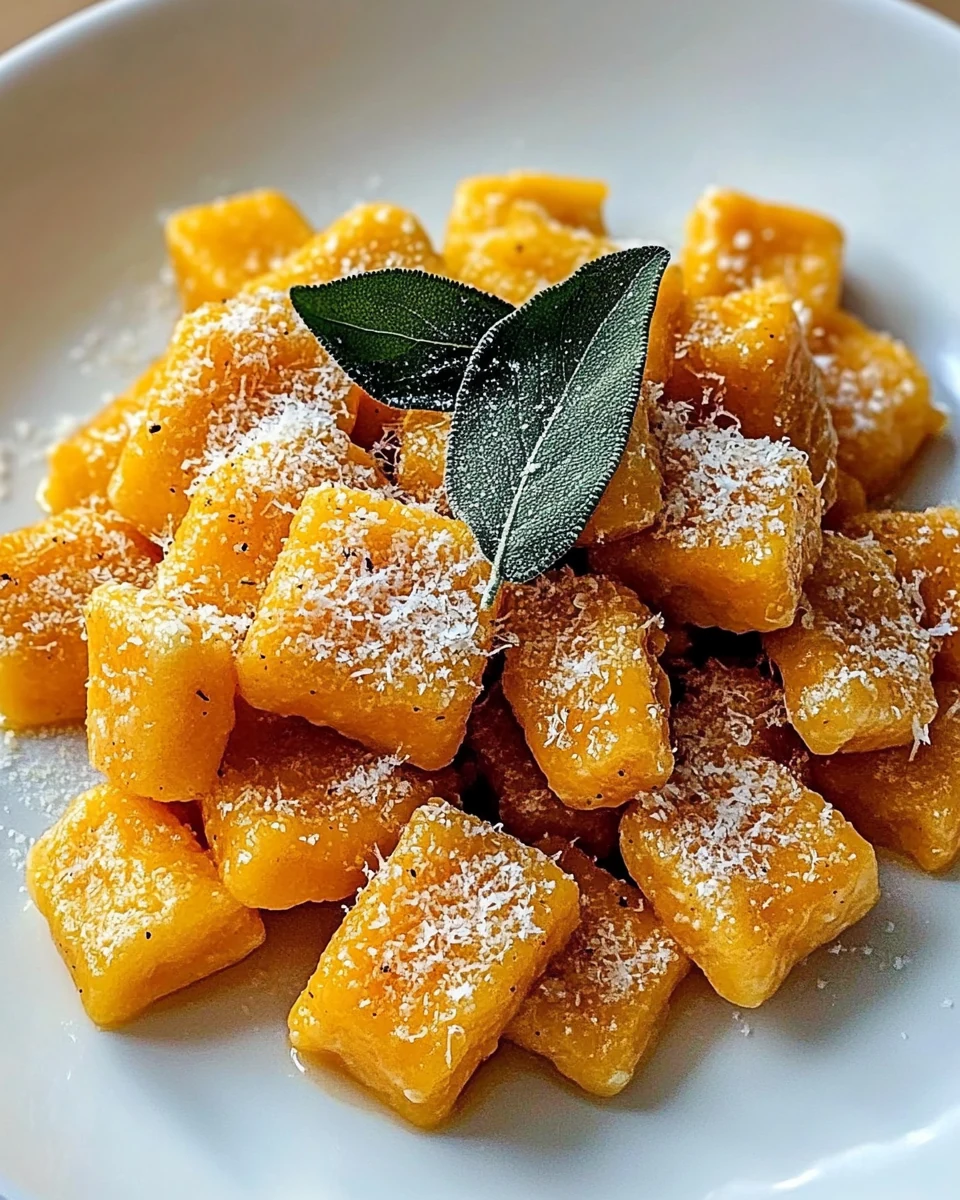
Homemade butternut squash gnocchi turns roasted squash, creamy ricotta, flour, and egg into tender golden dumplings finished in fragrant sage butter. The squash brings gentle sweetness and a beautiful autumn color, while nutmeg, crisp sage, and Parmesan keep the finished dish savory and balanced. It is an inviting meatless main course for fall dinners, holidays, or any evening when you want a hands-on kitchen project with a comforting result.
This version begins with one whole butternut squash and follows a true homemade method from start to finish. Roasting concentrates flavor and removes moisture; a light touch keeps the dough delicate; and a brief boil sets the gnocchi before they are tossed in butter. The process takes about 1 hour 15 minutes, but much of that time is hands-off while the squash roasts.
Why This Butternut Squash Gnocchi Recipe Works
Roasting the squash instead of boiling it is the first important choice. Boiled squash absorbs water, which forces you to add more flour and can make the dumplings dense. Roasted flesh becomes sweet, concentrated, and easy to mash. Ricotta adds richness and tenderness without hiding the squash flavor, and one egg supplies enough structure for the dough to hold together.
Two cups of flour provide a practical starting point, but squash and ricotta vary in moisture. The goal is not a dry bread-like dough. It should remain soft and slightly tacky while still being manageable on a generously floured surface. Adding flour gradually lets you stop as soon as the dough can be rolled.
The finishing sauce is deliberately simple. Butter becomes nutty as it cooks, fresh sage turns crisp and aromatic, and Parmesan contributes salt and umami. Because there is no heavy sauce, the flavor and pillowy texture of the gnocchi remain the focus.
Choosing and Preparing the Best Squash
Butternut squash is available in many sizes, so choose by quality rather than trying to find an exact weight. The neck should feel solid, the skin should be uniformly tan, and the stem should be dry and intact. Avoid squash with punctures, damp patches, or deep green areas that suggest it was harvested before fully mature. A squash with a long, thick neck gives you more usable flesh and a smaller seed cavity.
After roasting, measure moisture by appearance and texture. Properly roasted flesh should be soft enough to mash with a fork but should not release a puddle of liquid. If it seems wet, spread it on a plate or return the mashed flesh to the warm turned-off oven for several minutes. This step is more effective than compensating with large amounts of flour later.
A potato ricer creates an especially fine texture, but a fork or masher works well when the squash is fully tender. Avoid using a blender or food processor, which can make the flesh gluey and incorporate unnecessary moisture. Smooth, cool squash gives the dough an even color and prevents firm lumps from tearing the shaped gnocchi.
Ingredients for Homemade Butternut Squash Gnocchi
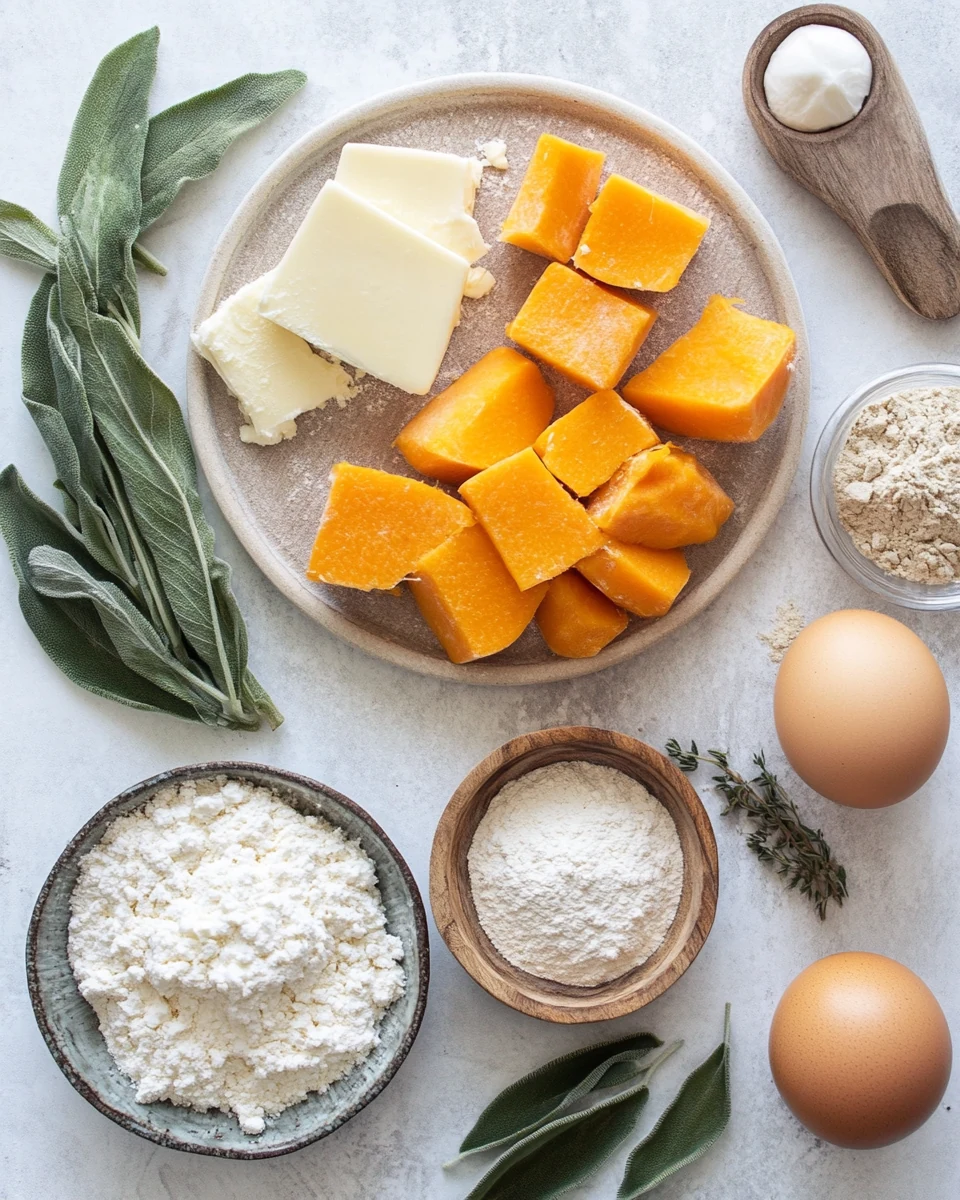
- 1 butternut squash
- 1 cup ricotta cheese
- 2 cups all-purpose flour, plus more for the work surface
- 1 large egg
- 1 teaspoon salt
- ¼ teaspoon ground nutmeg
- 4 tablespoons butter
- Fresh sage leaves
- Freshly grated Parmesan cheese, for serving
Butternut Squash
Choose a squash that feels heavy for its size and has firm, matte skin without soft spots. A medium squash generally provides enough flesh for this recipe. Roasting the halves cut-side down traps steam while allowing moisture to escape around the edges. Once tender, scoop out the flesh and mash it until no firm pieces remain.
Ricotta, Egg, and Flour
Whole-milk ricotta gives the best flavor, although part-skim works. If it looks wet, drain it in a fine-mesh strainer while the squash roasts. The egg binds the dough, and all-purpose flour supplies structure. Measure flour by spooning it into the cup and leveling it rather than packing it, then add it in stages.
Sage Butter and Parmesan
Fresh sage is worth seeking out because its earthy aroma is a classic partner for squash. Use enough leaves to perfume the butter and provide a few crisp pieces for each serving. Freshly grated Parmesan melts slightly over the hot gnocchi and tastes cleaner than shelf-stable powdered cheese.
How to Make Butternut Squash Gnocchi
1. Roast and Mash the Squash
Heat the oven to 400°F and line a rimmed baking sheet with parchment. Carefully halve the squash lengthwise and scoop out the seeds and stringy center. Set the halves cut-side down and roast for about 30 minutes, or until a knife slides easily through the thickest part.
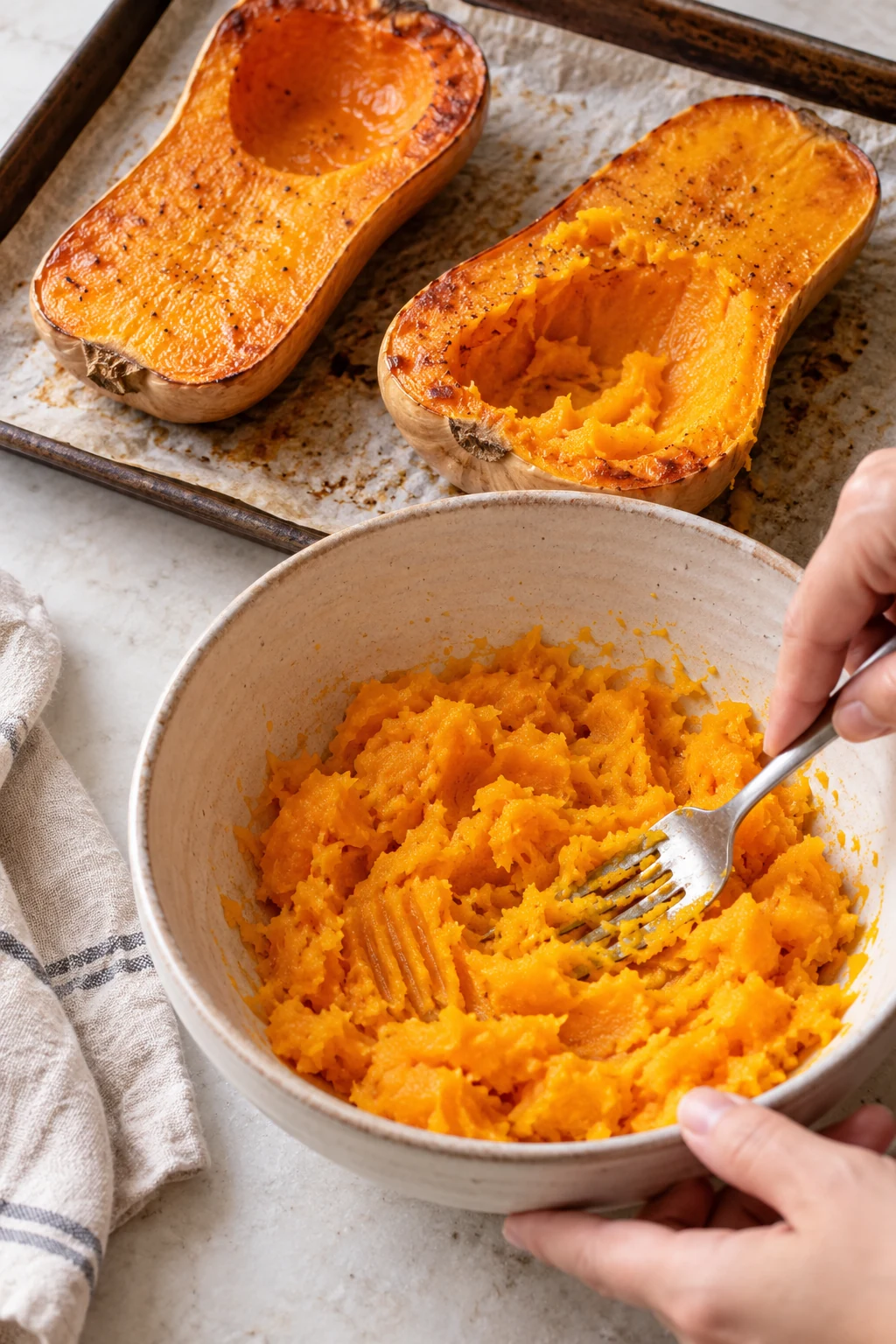
Let the squash cool until safe to handle. Scoop the flesh away from the skin, then mash it very smoothly. Spread the mash in a shallow bowl for a few minutes if it looks steamy or wet; allowing excess moisture to evaporate helps keep the gnocchi light.
2. Mix a Soft Dough
Combine the mashed squash, ricotta, egg, salt, and nutmeg in a large bowl. Stir until evenly blended. Add the flour gradually, folding rather than beating. Stop when a soft, slightly sticky dough forms and holds together. Do not knead it as you would bread dough, because excess mixing develops gluten and makes the gnocchi chewy.
Flour the work surface and your hands. Divide the dough into manageable portions and roll each gently into a rope about ½ inch thick. Cut the ropes into bite-size pieces. Press each piece lightly against the back of a fork if you want ridges; the grooves help the sage butter cling, but plain pillows taste just as good.
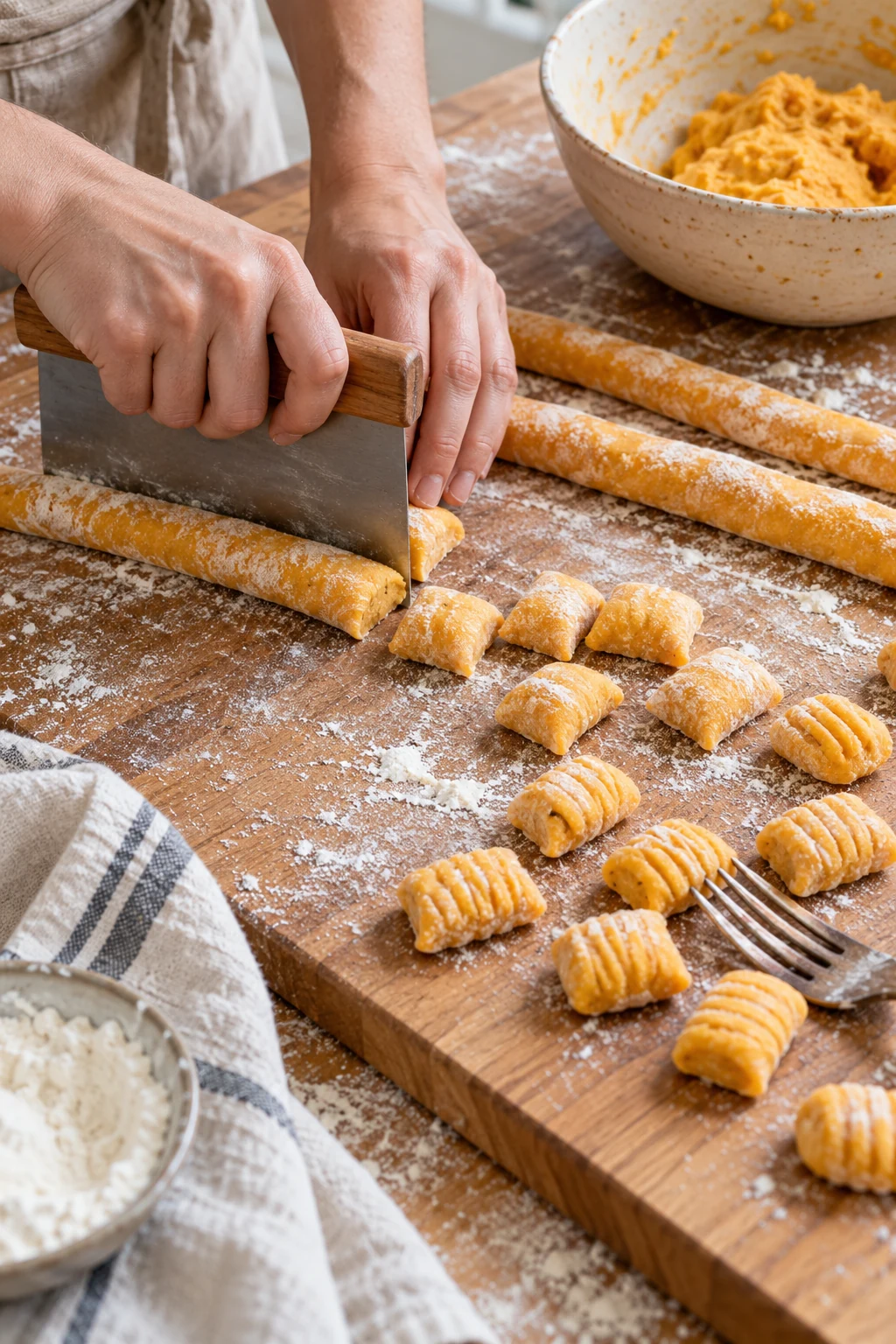
3. Boil the Gnocchi in Batches
Bring a wide pot of generously salted water to a gentle boil. Lower in one batch without crowding. Stir once carefully so pieces do not stick to the bottom. When the gnocchi float, let them cook for about 30 seconds more, then lift them out with a slotted spoon. Transfer to a lightly buttered tray while the remaining batches cook.
Keep the water at a steady simmer instead of an aggressive rolling boil. Homemade gnocchi are delicate, and turbulent water can break them apart. If you are uncertain about the dough, cook one tester first. If it dissolves, fold a little more flour into the remaining dough.
4. Finish in Sage Butter
Melt the butter in a large skillet over medium heat. Add the sage leaves and cook until fragrant and crisp around the edges. The milk solids may turn lightly golden and smell nutty; reduce the heat if they darken rapidly.
Add the boiled gnocchi and toss gently for 1 to 2 minutes, coating every piece and allowing a few sides to become lightly golden. Do not stir aggressively. Slide or shake the skillet and use a flexible spatula to turn the dumplings without crushing them.
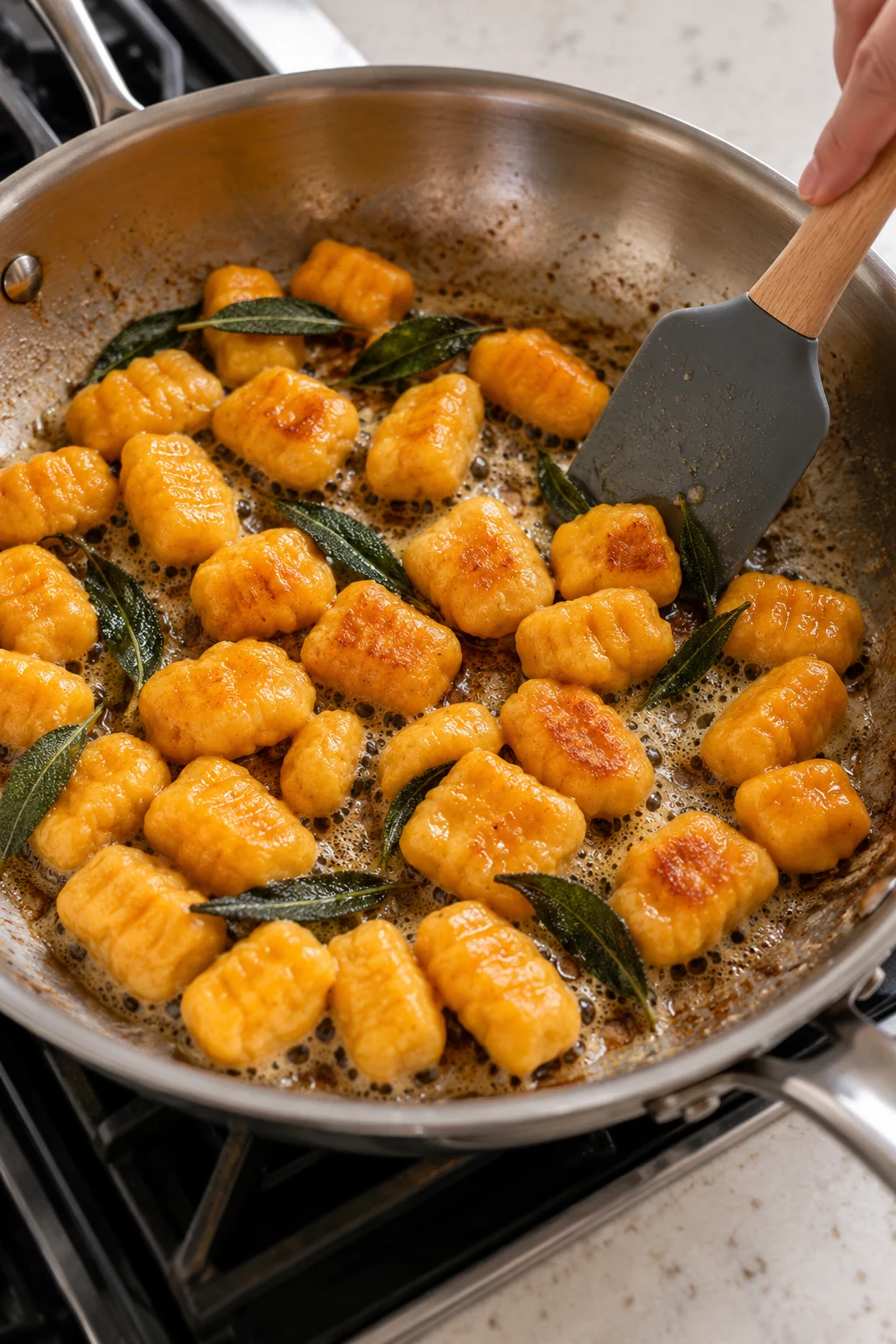
Divide among warm bowls, spoon the sage butter over the top, and finish with Parmesan. Taste before adding extra salt because the cooking water and cheese already season the dish.
Expert Tips for Light, Tender Gnocchi
- Control moisture. Roast rather than boil the squash, drain wet ricotta, and cool the mash before mixing.
- Add flour gradually. Use only enough to make the dough workable; too much produces heavy dumplings.
- Handle gently. Fold, roll, and cut without vigorous kneading.
- Cook a tester. One trial gnocchi reveals whether the dough needs a touch more flour.
- Use a gentle boil. Strong turbulence can damage soft homemade gnocchi.
- Work in batches. Crowding cools the water and encourages sticking.
How to Judge the Dough
Gnocchi dough is intentionally softer than pasta dough. It should look cohesive, feel moist, and release from floured hands with gentle handling. A little tackiness is preferable to dryness. If it smears across the counter and cannot hold a rope, fold in flour one tablespoon at a time.
Temperature matters too. Warm squash softens the dough and may create the illusion that more flour is necessary. Let the mash cool to room temperature before adding the egg and ricotta. Once shaped, keep the pieces in a single layer on a floured tray so their cut sides do not fuse together.
Variations and Substitutions
Add a pinch of crushed red pepper to the sage butter for gentle heat, or include a small amount of fresh thyme with the sage. Toasted walnuts or hazelnuts provide crunch, and a spoonful of browned pancetta can turn the vegetarian dish into a heartier meal.
Pumpkin or another winter squash can replace butternut, but moisture varies considerably. Roast and drain the puree as needed, then judge the dough by feel. Gluten-free all-purpose flour may work, but different blends absorb liquid differently and the original recipe has not been formulated as a certified gluten-free dish.
For a brighter finish, add a little lemon zest after the skillet comes off the heat. Avoid adding lots of lemon juice directly to hot butter, which can dominate the mild squash and cause splattering.
Serving Suggestions
Serve the gnocchi as a meatless main course with an arugula salad, roasted broccoli, or garlicky green beans. A crisp salad with apple and a sharp vinaigrette balances the sweet squash and rich butter. For a larger dinner, offer smaller portions alongside roast chicken or pork.
Warm shallow bowls keep the butter fluid. Garnish with the crisp sage, finely grated Parmesan, black pepper, and optional toasted nuts. For another comforting dinner, try Creamy Garlic Shrimp Pasta. If you prefer a quick skillet meal, Turkey Sweet Potato Skillet uses similar cool-weather flavors.
Make-Ahead Instructions
The squash can be roasted, mashed, cooled, and refrigerated in a covered container one day ahead. Drain the ricotta at the same time. Mix and shape the dough close to cooking for the lightest texture, or freeze the shaped uncooked pieces if you need a longer head start.
To freeze, arrange uncooked gnocchi in one layer on a flour-dusted parchment-lined tray. Freeze until firm, then transfer to an airtight freezer container for up to two months. Boil directly from frozen in batches; do not thaw, because thawed pieces become sticky and difficult to handle.
Storage and Reheating
Refrigerate cooked leftovers in an airtight container within two hours and use within three days. Reheat gently in a covered skillet over low heat with a small pat of butter or splash of water. Turn occasionally until hot throughout. A skillet restores better texture than a microwave.
If using the microwave, cover loosely and heat in short intervals at medium power. Overheating can make the dumplings tough and cause the butter to separate. Cooked gnocchi can be frozen, but the texture is generally better when frozen before boiling.
Common Mistakes to Avoid
Starting with watery squash leads to excess flour. Mixing while the mash is hot softens the dough. Kneading aggressively develops gluten, and crowding the pot makes pieces stick while lowering the water temperature.
Do not assume the full flour amount must be forced into the dough if it already feels workable, and do not pour shaped gnocchi into a violent boil. In the skillet, watch the butter carefully: golden milk solids taste nutty, while blackened butter tastes bitter.
Frequently Asked Questions
Can I use canned squash puree?
Fresh roasted squash provides the best flavor and lets you control moisture. A thick canned puree may work, but avoid watery puree and expect to adjust the flour gradually.
Why did my gnocchi fall apart?
The dough may have been too wet, the water may have boiled too hard, or the pieces may have been handled roughly. Cook one tester and add a tablespoon or two of flour if needed.
Why are my gnocchi dense?
Too much flour or overmixing is the usual cause. Cool and drain the moist ingredients so the dough needs less flour, then fold only until combined.
Do I have to make fork ridges?
No. Ridges help hold butter and look traditional, but simple cut pillows are faster and equally delicious.
How do I know the gnocchi are cooked?
They rise to the surface as they cook. Once floating, give them about 30 additional seconds before lifting them out with a slotted spoon.
Can I make the recipe without sage?
Yes. Fresh thyme or rosemary can flavor the butter, though rosemary should be finely chopped and used sparingly because it is more assertive.
Food Safety and Kitchen Notes
Use a stable cutting board and a sharp chef’s knife when halving the firm squash. If it is difficult to cut, pierce the skin and microwave it briefly to soften the exterior, then handle carefully. Keep raw egg away from ready-to-eat ingredients, wash hands and utensils after mixing, and cook the dumplings promptly.
Refrigerate ricotta until needed and discard it if it has an off odor or visible mold. Leftovers should not remain at room temperature for more than two hours. These simple practices protect both the flavor and safety of the dish.
Final Thoughts
Butternut squash gnocchi rewards patience with tender texture, warm color, and a balance of sweet squash, creamy ricotta, nutmeg, sage, and Parmesan. Roast the squash to limit moisture, mix the dough lightly, test one piece before cooking the batch, and finish everything gently in sage butter. Those small choices turn a short ingredient list into a memorable homemade dinner.
Print
Butternut squash gnocchi dish that delights your taste buds!
- Prep Time: 25 minutes
- Cook Time: 50 minutes
- Total Time: 1 hour 15 minutes
- Yield: 4 servings 1x
- Category: Main Course
- Method: Roasting, Boiling, and Sautéing
- Cuisine: Italian-Inspired
- Diet: Vegetarian
Description
A delightful butternut squash gnocchi dish that combines the sweetness of squash with the richness of ricotta and the aromatic flavor of sage.
Ingredients
- 1 butternut squash
- 1 cup ricotta cheese
- 2 cups flour
- 1 egg
- 1 tsp salt
- 1/4 tsp nutmeg
- 4 tbsp butter
- Fresh sage leaves
- Parmesan cheese
Instructions
1. Preheat the oven to 400°F. Halve the butternut squash lengthwise, remove the seeds, and place cut-side down on a parchment-lined baking sheet. Roast for about 30 minutes, until tender. Cool enough to handle, scoop out the flesh, and mash until smooth.
2. In a large bowl, combine the mashed squash, ricotta, egg, salt, and nutmeg. Gradually mix in the flour just until a soft, slightly sticky dough forms. Do not overwork it.
3. Bring a large pot of salted water to a gentle boil. On a floured surface, divide the dough and roll each portion into a rope about 1/2 inch thick. Cut into bite-size pieces and press lightly with a fork to create ridges.
4. Boil the gnocchi in batches. When they float to the surface, cook for about 30 seconds more, then lift them out with a slotted spoon.
5. Meanwhile, melt the butter in a large skillet over medium heat. Add the fresh sage leaves and cook until fragrant and crisp.
6. Transfer the cooked gnocchi to the sage butter. Toss gently and sauté for 1 to 2 minutes, until coated and lightly golden in spots.
7. Serve hot with the crisp sage and freshly grated Parmesan cheese.
Notes
Roast the squash until fully tender, then cool and mash it smoothly. Add only enough flour to make the dough workable; too much flour makes dense gnocchi. Keep the water at a gentle boil and cook in batches. Freeze uncooked gnocchi in a single layer before transferring to a freezer container.
Nutrition
- Serving Size: 1 serving
- Calories: 350
- Sugar: 3g
- Sodium: 400mg
- Fat: 15g
- Saturated Fat: 8g
- Unsaturated Fat: 5g
- Trans Fat: 0g
- Carbohydrates: 45g
- Fiber: 3g
- Protein: 10g
- Cholesterol: 70mg