
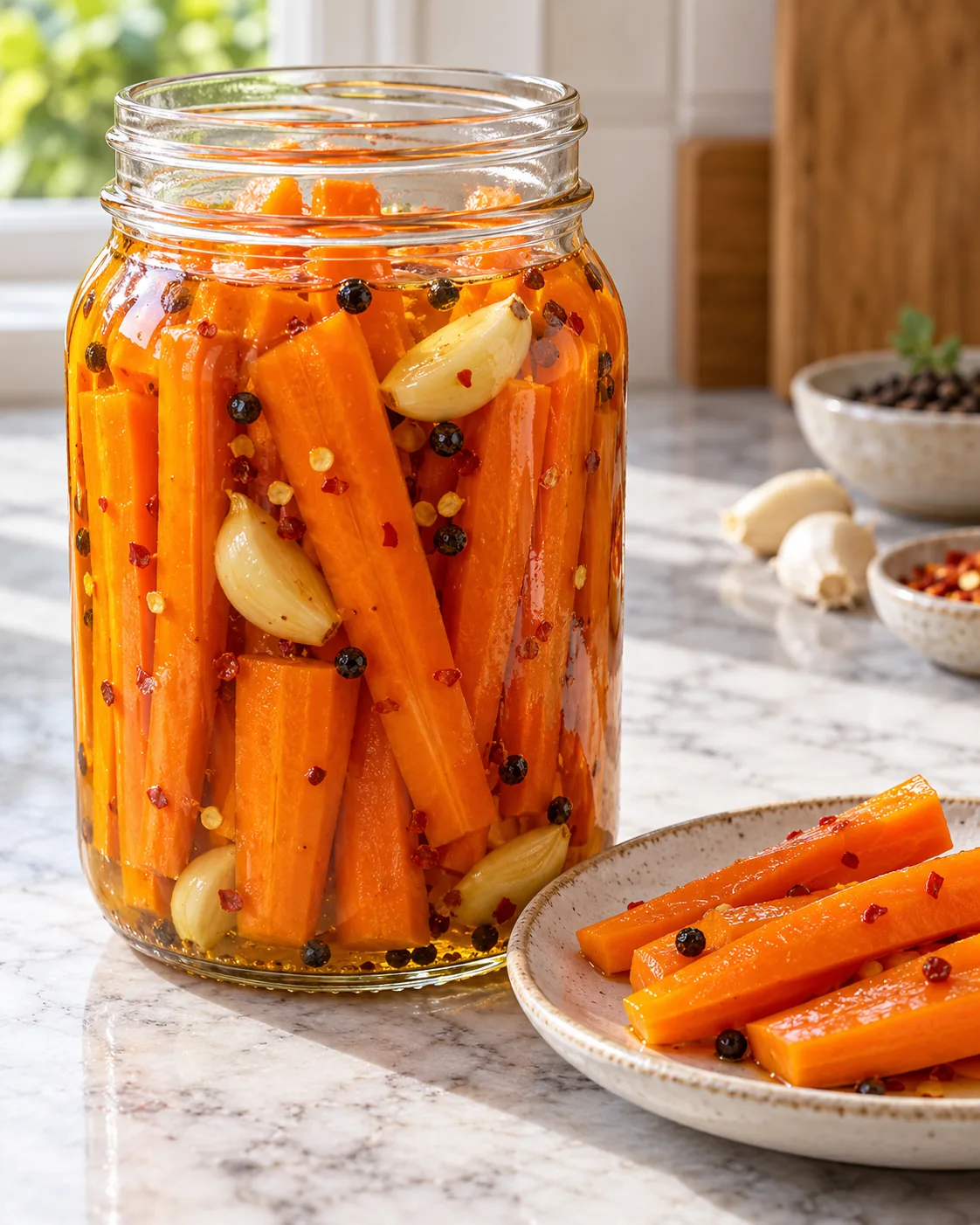
Easy Hot Honey Pickled Carrots are crisp refrigerator pickles with a balanced combination of tangy apple cider vinegar, floral honey, garlic, black peppercorns, and red pepper flakes. The carrots soften only slightly in the warm brine, keeping the fresh snap that makes them useful for snacking, sandwiches, grain bowls, cheese boards, and rich roasted meats.
This recipe requires only a few minutes at the stove and one day of refrigerated pickling time. It is designed specifically for refrigerator storage, not shelf-stable canning. Keeping the carrots cold, covered by brine, and handled with clean utensils preserves their flavor and texture while maintaining the safety expectations of a quick pickle.
Why This Hot Honey Carrot Recipe Works
Apple cider vinegar provides acidity and a rounded fruit flavor that pairs naturally with carrots. Honey softens the sharp edge of the vinegar without making the pickle taste like candy. Red pepper flakes bring gradual heat, black peppercorns add earthy spice, and smashed garlic perfumes the brine while remaining easy to remove or serve.
The carrots are added directly to the hot brine after the honey and salt dissolve. Brief contact with heat helps them absorb flavor but does not cook them until soft. Cooling for about 10 minutes before jarring protects their crunch and avoids trapping excessive steam inside the container.
Uniform carrot sticks are important. Pieces of similar thickness pickle at the same rate and fit neatly in the jar. After 24 hours, the flavor is noticeably developed; another day makes the garlic and chile more pronounced. Because the recipe is refrigerated, you can taste and enjoy it without processing jars in a water bath.
Ingredients for Hot Honey Pickled Carrots
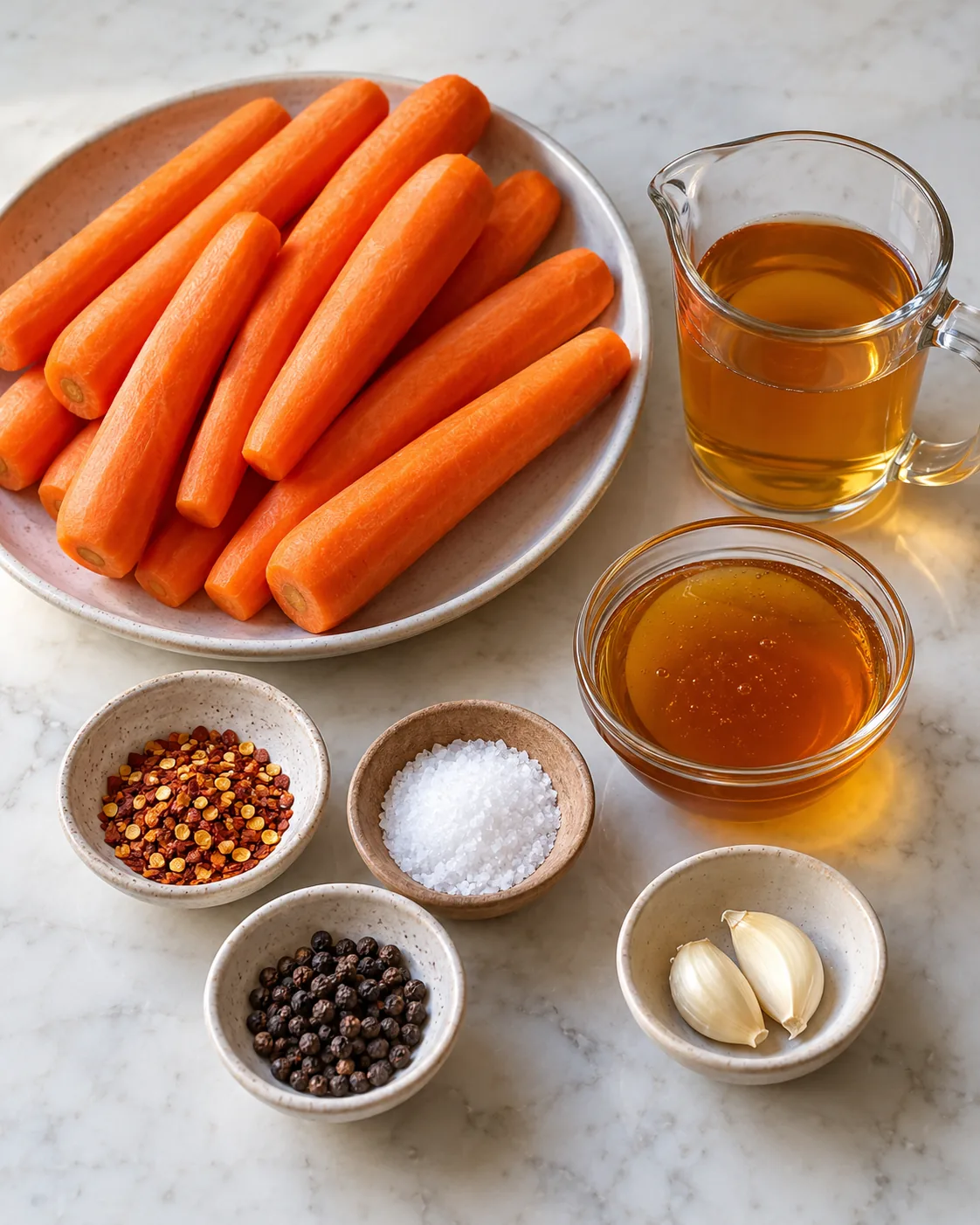
- 1 pound carrots, peeled and cut into sticks
- 1 cup apple cider vinegar
- ½ cup honey
- 1 teaspoon red pepper flakes, or more to taste
- 1 teaspoon kosher salt
- 1 teaspoon whole black peppercorns
- 2 garlic cloves, smashed
Choosing and Cutting the Carrots
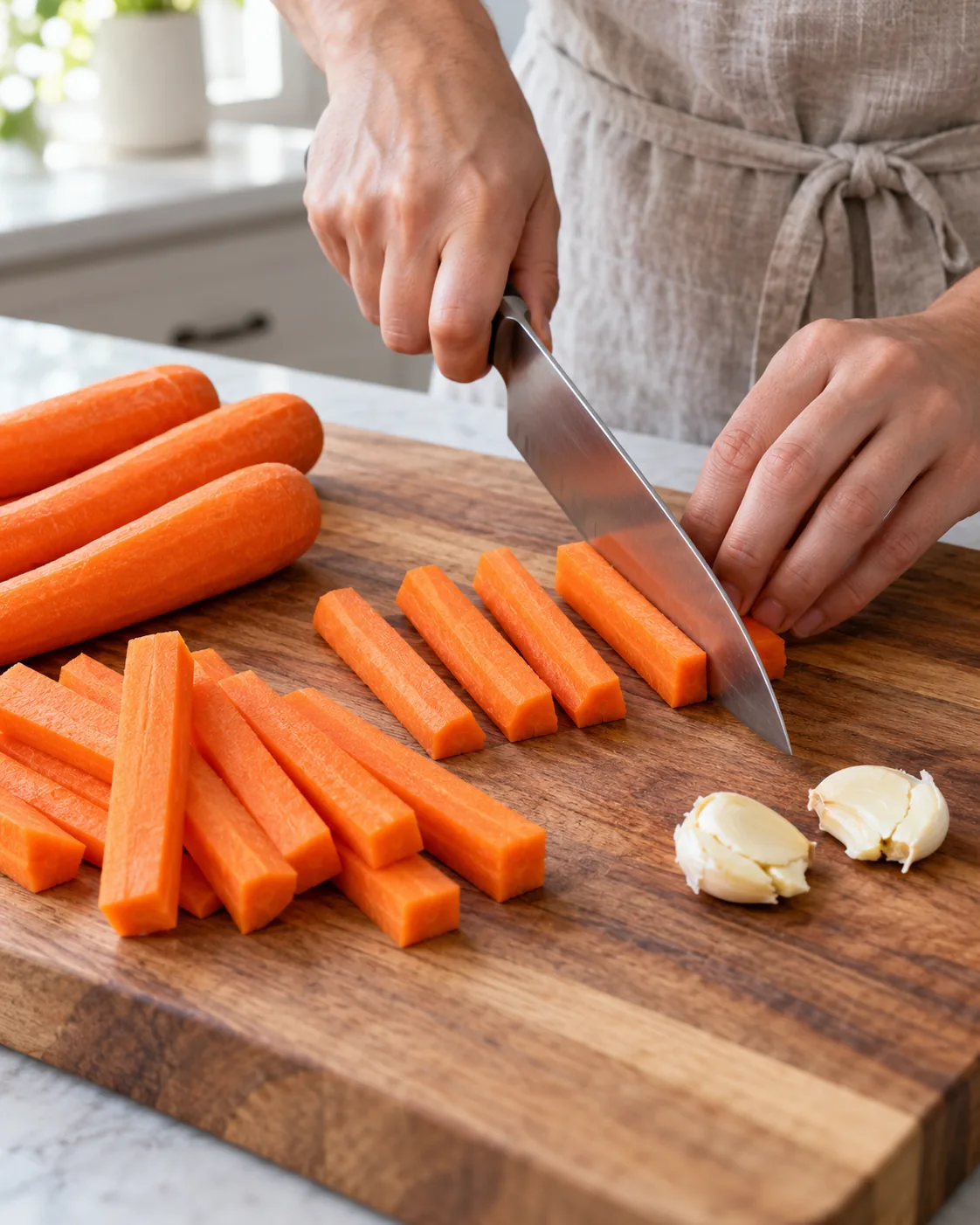
Choose firm carrots with smooth surfaces and no soft spots. Medium carrots are easy to shape into even sticks. Peel them, trim both ends, and cut pieces short enough to sit below the jar’s shoulder. Aim for roughly quarter-inch thickness. Very thin matchsticks soften quickly, while thick spears need more time for the brine to reach the center.
Apple Cider Vinegar and Honey
Use standard apple cider vinegar with 5 percent acidity. Its flavor is more rounded than plain white vinegar and works well with honey. Measure the full cup; reducing vinegar changes both the flavor and the preservation conditions of this refrigerator recipe. A mild honey lets the carrot and spices remain clear, while a dark honey gives a stronger molasses-like note.
Red Pepper, Peppercorns, and Garlic
One teaspoon red pepper flakes creates noticeable but manageable heat. The spice continues infusing in the refrigerator, so the carrots may taste hotter on day three than on day one. Whole black peppercorns add flavor without clouding the brine. Smashing the garlic exposes enough surface area for infusion while keeping the cloves large and easy to identify.
How to Make Hot Honey Pickled Carrots
1. Prepare the Carrots and Jar
Wash, peel, and trim the carrots. Cut them into uniform sticks and test one against the clean glass jar to ensure it fits below the rim. Smash the garlic cloves with the flat side of a knife and gather the spices. Wash the jar and lid thoroughly with hot soapy water, rinse, and let them drain.
This is not a shelf-stable canning recipe, so the jar does not undergo a canning process. It should still be clean and heat-safe because warm brine will be added. Avoid pouring hot liquid into a cold, fragile, or damaged container. A wide-mouth quart jar makes arranging and removing the carrot sticks easier.
2. Make the Hot Honey Brine
Combine the apple cider vinegar, honey, red pepper flakes, kosher salt, black peppercorns, and smashed garlic in a medium saucepan. Place over medium heat and stir until the honey and salt dissolve. Bring the mixture only to a gentle simmer; vigorous boiling drives off liquid and concentrates the brine unnecessarily.
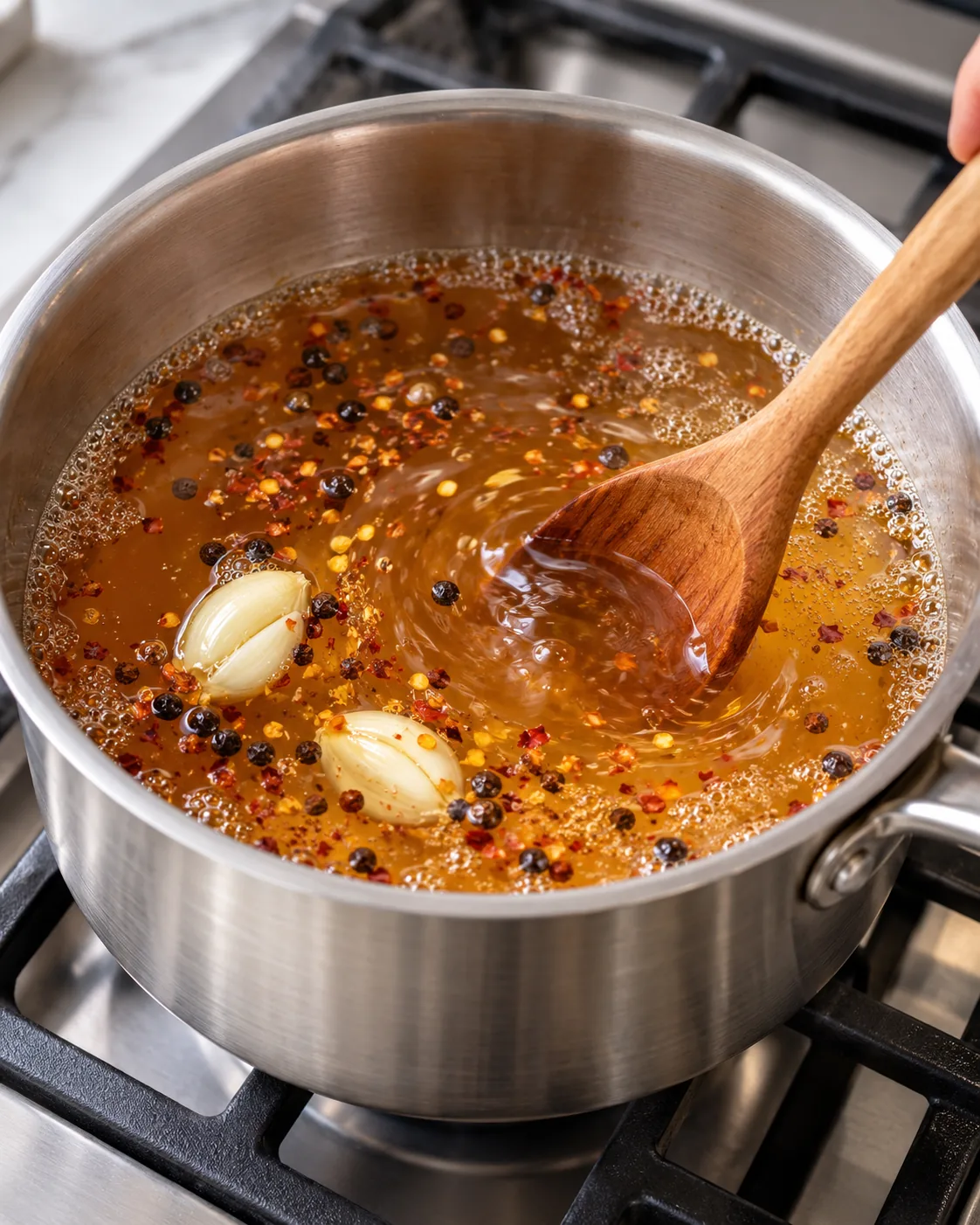
Honey settles toward the bottom at first, so scrape the base of the pan as you stir. When the brine looks uniform and no salt crystals remain, add the prepared carrot sticks. Turn them gently with tongs or a heat-safe spoon until every piece is coated.
3. Cool, Jar, and Refrigerate
Remove the saucepan from the heat immediately after adding the carrots. Let everything cool on the counter for about 10 minutes. This short contact with the warm brine begins the pickling process without cooking away the crunch. Do not leave the mixture at room temperature for an extended period.
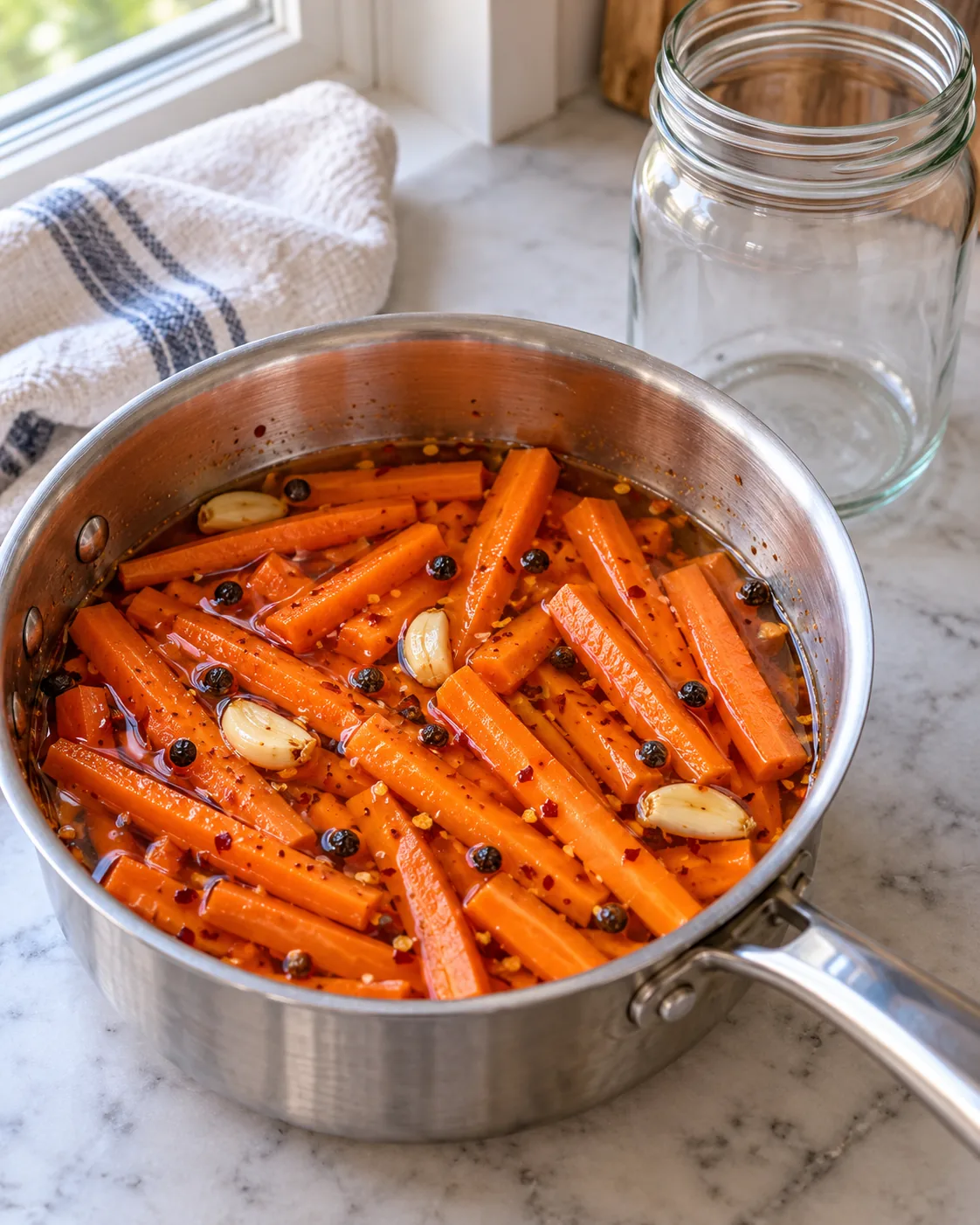
Transfer the carrots, garlic, peppercorns, and brine to the clean jar. Press gently so the carrots sit below the liquid. If the shape of the jar causes pieces to float, use a clean small weight intended for food or rearrange the sticks. Cover and refrigerate promptly. Wait at least 24 hours before serving.
Adjusting the Sweetness and Heat
The listed half cup of honey creates a clearly sweet-and-tangy pickle. The vinegar still leads, but the sweetness rounds it out. For the first batch, follow the recipe so you understand the intended balance. On later batches, small adjustments to pepper flakes can tailor the heat without changing the liquid ratio.
Remember that chile flavor intensifies during storage. If serving spice-sensitive guests, use slightly less red pepper rather than trying to remove flakes later. For stronger heat, add another pinch after tasting the fully chilled carrots. Distributing extra flakes through cold brine gives a slower, more controlled increase than adding fresh hot pepper.
Expert Tips for Crisp Pickled Carrots
- Cut uniformly. Equal thickness means equal texture and flavor.
- Use 5 percent acidity vinegar. Do not dilute or reduce the listed amount.
- Simmer gently. Hard boiling unnecessarily reduces the brine.
- Do not cook the carrots. Add them, coat, remove from heat, and cool briefly.
- Keep the vegetables submerged. Turn the jar occasionally if a few pieces rise.
- Use clean utensils. Never reach into the jar with fingers or a used fork.
Variations
A strip of lemon peel can brighten the brine, and a small sprig of fresh rosemary provides an herbal note. Keep additions modest so they do not overpower the honey. Mustard seeds add mild warmth and visual interest. Use whole spices rather than ground versions, which can make the brine cloudy and settle heavily on the carrots.
For extra garlic flavor, add one more smashed clove. Thin rounds can replace sticks when the carrots will be used on sandwiches or salads, but they soften faster and may be ready sooner. Baby carrots are convenient, though their varied thickness can lead to uneven pickling; halve thick pieces lengthwise.
Do not convert this refrigerator formula into a pantry canning recipe by simply processing the jar. Shelf-stable preservation requires a tested canning formula with approved jar sizes, headspace, processing time, and acid balance. Keep this version refrigerated from preparation through serving.
Serving Suggestions
Serve the carrots as a sharp, sweet counterpoint to grilled chicken, pulled pork, burgers, or rich casseroles. Chop them for grain bowls and salads, or tuck thin pieces into sandwiches. Their orange color and glossy brine make them attractive on cheese and charcuterie boards beside sharp cheddar, creamy cheeses, crackers, and nuts.
The leftover brine can be whisked in small amounts into salad dressing after the carrots are gone, provided it has been continuously refrigerated and remains fresh. Do not reuse it to pickle another full batch because its acidity and seasoning have changed. Discard brine that looks, smells, or tastes unusual.
For a comfort-food meal, these carrots add welcome acidity beside Loaded Cowboy Cheeseburger Casserole. They also work as a bright snack before a rich dessert such as Coconut Cream Lush.
Make-Ahead Timing
Prepare the carrots at least one full day before serving. They are flavorful after 24 hours and continue developing over the next several days. For a party, make them two or three days ahead, keep the jar closed and refrigerated, and transfer only the amount needed to a clean serving bowl.
You can peel and cut the carrots one day ahead, store them in a covered container in the refrigerator, and make the brine later. Keep the cut vegetables dry rather than submerged in plain water, which can dilute flavor and alter texture.
Storage and Food Safety
Store the sealed jar at 40°F or below with the carrots covered by brine. Use clean tongs or a fork every time. For best quality, enjoy the pickles within about two weeks. Texture gradually softens, and the garlic and pepper flavors continue to intensify.
Discard the batch if you notice mold, unexpected fizzing, a bulging lid, unpleasant odor, or slimy texture. These carrots are not fermented and should not develop gas. Never store them at room temperature, and do not serve them if they were left unrefrigerated for an unsafe period.
Common Mistakes to Avoid
Cutting inconsistent sticks creates mixed textures. Boiling the carrots makes them soft instead of crisp. Reducing the vinegar changes the intended brine, and using an unclean or temperature-sensitive jar introduces avoidable risk.
Do not taste the carrots immediately and assume the seasoning is weak; the brine needs at least 24 hours. Avoid leaving pieces above the liquid for long periods. Finally, do not confuse refrigerator pickling with canning. A sealed lid does not make this recipe shelf stable.
Frequently Asked Questions
How soon can I eat the carrots?
Wait at least 24 hours. The carrots need time to absorb the sweet, spicy, garlicky brine. Flavor is often even better after two or three days.
Can I use white vinegar?
White vinegar with 5 percent acidity is sharper and less fruity but can work. Apple cider vinegar gives the intended rounded flavor with honey.
Why are my carrots soft?
They may have been cut too thin, simmered in the brine, or stored for a long time. Add them only after the brine reaches a gentle simmer, then remove the pan from heat.
Can I reduce the honey?
The honey controls sweetness rather than acidity, but large changes alter the intended balance. Make the recipe once as written, then adjust only modestly in a future batch.
Can I can these for pantry storage?
No. This recipe is designed only for refrigeration. Use a laboratory-tested canning recipe from a reliable preservation authority when shelf-stable carrots are the goal.
What to Expect as the Pickles Mature
During the first 24 hours, the carrot exterior takes on the vinegar, honey, and garlic flavors while the center remains especially crisp. The brine may become slightly tinted from the carrots and spices, which is normal. Turn the closed jar gently once or twice if spices have collected at the bottom, then return it immediately to the refrigerator.
By the second or third day, the sweet and sour flavors move deeper into each stick and the chile heat becomes more noticeable. The garlic aroma also rounds out. This is an excellent stage for serving on a snack board because the vegetables retain plenty of crunch but taste seasoned throughout.
Later in the storage period, the texture gradually becomes more tender. That does not automatically mean the carrots are spoiled, but always inspect the jar and use the conservative storage guidance. Older pickles are useful chopped into salads or sandwiches, where a slightly softer texture is less noticeable.
Useful Tools and Jar Size
A sharp chef’s knife, stable cutting board, medium nonreactive saucepan, heat-safe spoon, and clean quart-size glass jar are sufficient. Stainless steel is a good saucepan choice because acidic vinegar can react with some metals. Avoid aluminum or damaged cookware. A canning funnel is optional but helps move warm brine and spices into the jar without spills.
Final Thoughts
Easy Hot Honey Pickled Carrots deliver crisp texture and a layered sweet, tangy, spicy flavor with very little active work. Cut the carrots evenly, dissolve the brine gently, avoid cooking the vegetables, and refrigerate promptly. After a full day, the jar is ready to add color and contrast to snacks, sandwiches, salads, and savory meals.
Print
Easy Hot Honey Pickled Carrots
- Prep Time: 15 minutes
- Pickling Time: 24 hours
- Cook Time: 5 minutes
- Total Time: 24 hours 20 minutes
- Yield: About 1 quart 1x
- Category: Condiment
- Method: Refrigerator Pickling
- Cuisine: American
Description
If you’ve never tried hot honey pickled carrots, you’re in for a surprise—in the best way possible. They’re crunchy, tangy, sweet, and just a little spicy, all at once. It’s the kind of flavor combination that makes you pause after the first bite and immediately reach for another.
Ingredients
1 pound carrots peeled and cut into sticks
1 cup apple cider vinegar
1/2 cup honey
1 teaspoon red pepper flakes or more to taste
1 teaspoon salt kosher salt recommended
1 teaspoon black peppercorns
2 cloves garlic smashed
Instructions
In a medium saucepan, combine the apple cider vinegar, honey, red pepper flakes, salt, black peppercorns, and the smashed garlic cloves.
Place the pan over medium heat. Stir until the honey and salt completely dissolve and the mixture comes to a gentle simmer.
Add the prepared carrot sticks directly into the saucepan with the hot brine. Stir gently to ensure all carrots are coated.
Remove the pan from the heat and let it sit on the counter to cool for about 10 minutes. This step is crucial for keeping the carrots crunchy.
Carefully transfer the carrots and the brine into a clean glass jar, ensuring the carrots are completely submerged. Seal the jar and refrigerate for at least 24 hours before serving.